
METHOD NOTES 03- Why CCH Is More Than an Art Class
Art as a Medium for Attention, Agency, and Adaptive Thinking
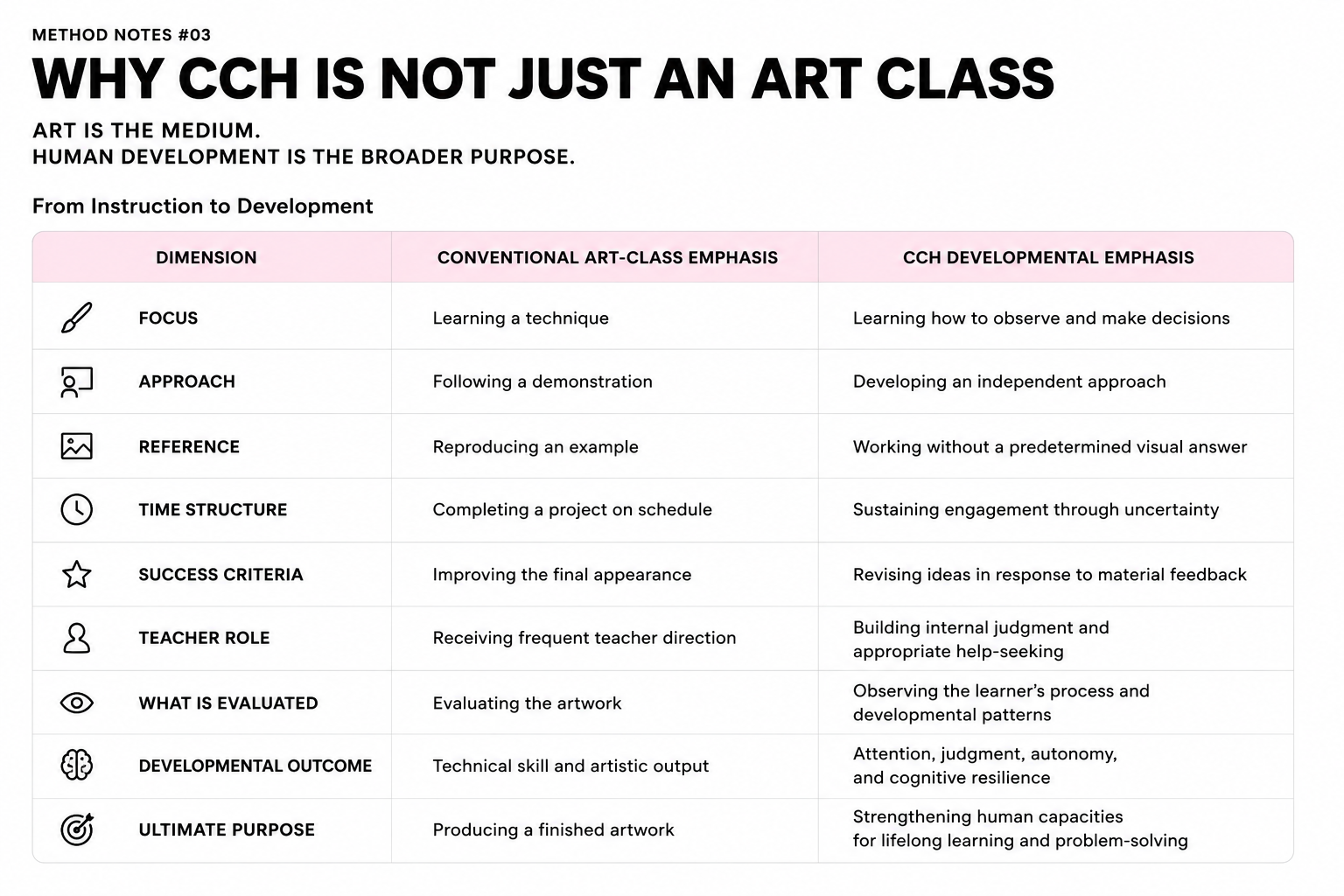
CCH uses artistic practice as a structured environment for human development.
Learners paint, build, cut, connect, revise, and complete artworks. They encounter color, form, texture, balance, scale, sequence, and composition. Technical knowledge remains part of this process, and artistic quality continues to matter.
The broader educational purpose, however, extends beyond producing a visually successful object.
Within sustained studio practice, learners also encounter uncertainty, resistance, interruption, frustration, choice, consequence, and revision. These conditions make it possible to observe how a person begins, maintains attention, responds when a plan changes, asks for support, and assumes ownership of emerging decisions.
Art is therefore both the visible activity and the medium through which broader capacities are exercised.
Technique Expands Possibility
Technical teaching has an important place within art education.
Knowledge of tools, materials, construction methods, color relationships, surface preparation, and image development can expand what a learner is able to imagine and construct. Technique can make an intention more achievable and provide alternatives when the first approach is insufficient.
Within CCH, technique functions as a resource rather than the final destination.
A learner may be shown how to strengthen a joint, control the amount of water in a brush, attach two materials, prepare a surface, or use a tool safely. The educator introduces technical knowledge when it supports continued inquiry or removes an unnecessary barrier.
The learner still remains responsible for deciding how that knowledge will be used.
The central question is therefore broader than:
Can the learner reproduce this technique?
It also includes:
Can the learner recognize when a technique is useful, adapt it to the work, and evaluate what happens after it is applied?
This distinction allows technical development and creative ownership to grow together.
Attention as a Capacity to Remain and Return
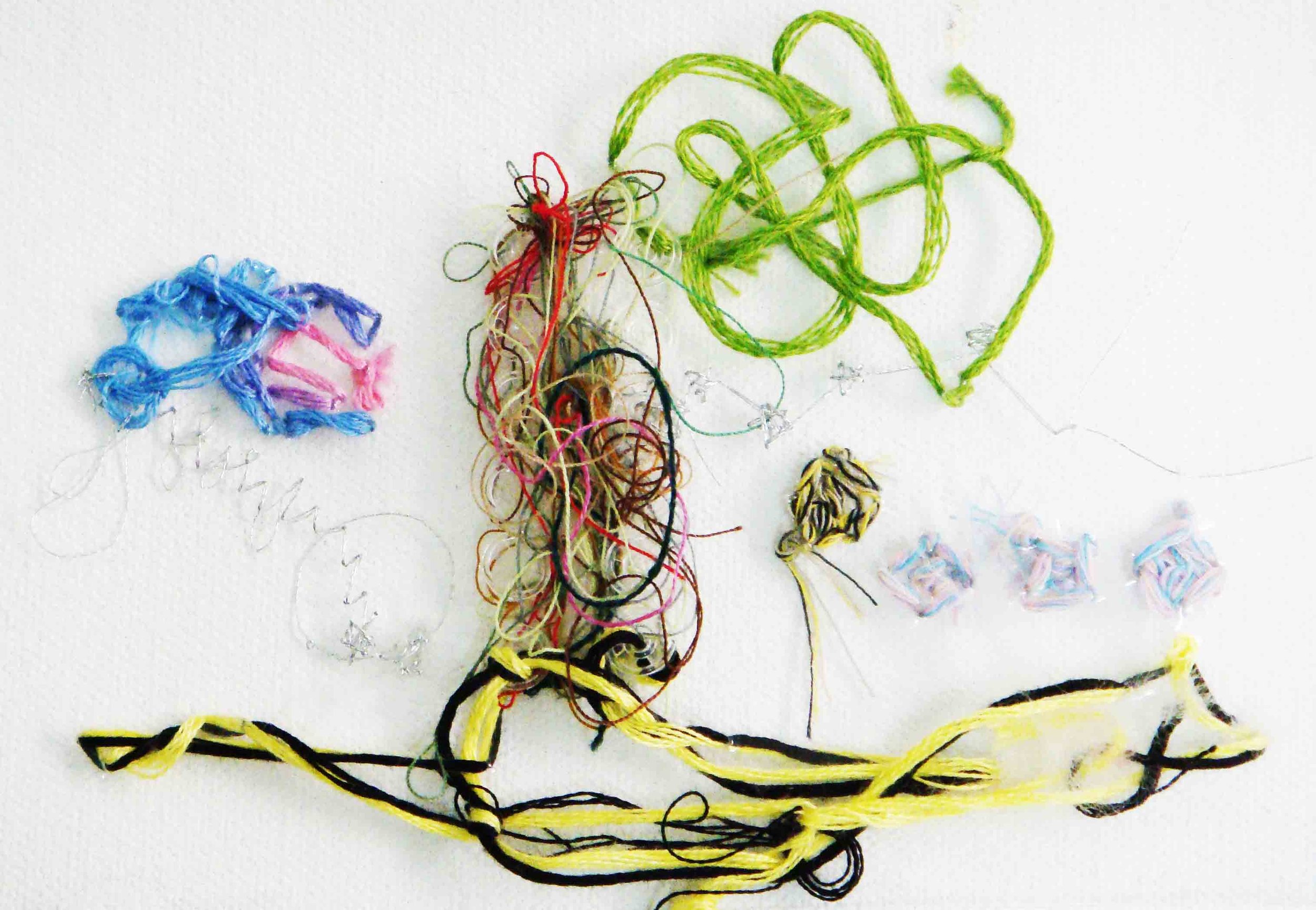
CCH projects often ask learners to remain with one evolving problem for longer than a brief, outcome-driven activity would allow.
During this process, engagement rarely appears as a perfectly continuous state. A learner may move through a sequence such as:
engagement → hesitation → observation → adjustment → renewed engagement
There may be pauses, changes of pace, moments of uncertainty, or temporary movement away from the work. These moments are not automatically treated as a lack of learning.
Attention is understood as more than sitting still, following instructions, or appearing constantly productive.
It may become visible through a learner’s ability to:
remain with a material long enough to understand its behavior;
notice when an approach is no longer working;
return after interruption or frustration;
reorganize the next step;
continue without constant novelty;
preserve continuity across more than one session;
complete a meaningful phase of work without being rushed.
A learner who pauses, observes, and then returns with a more deliberate response may be demonstrating a deeper form of attention than someone who remains physically busy without reconsidering the work.
For this reason, CCH pays attention to the rhythm of engagement, not only its outward appearance.
Visual Reasoning Through Material Consequences
Open-ended studio practice does not mean that every decision produces an equivalent result.
Materials create real conditions.
Paper may tear. Cardboard may bend. A structure may collapse. Water may alter pigment. Adhesive may require time before it can hold weight. A surface may absorb, resist, blur, stain, or crack. An additional layer may strengthen one area while obscuring another.
These responses provide information.
The educator does not need to convert every difficulty into a verbal correction because the material itself already presents evidence. The learner must observe what happened, interpret the result, and decide how to proceed.
This may involve questions such as:
What changed?
Which part of the structure is unstable?
Did the material behave as expected?
Is the original intention still workable?
Should the plan be retained, adapted, or replaced?
What is reversible, and what must now be incorporated?
Which option best supports the developing work?
Through repeated encounters of this kind, learners develop more specific visual and structural reasoning.
They begin to understand that a decision is connected to a consequence, and that the next step can be informed by what the work has already revealed.
Difficulty becomes more than an obstacle. It becomes usable evidence.
Ownership of Creative Direction
Creative agency develops when learners experience genuine responsibility for meaningful decisions.
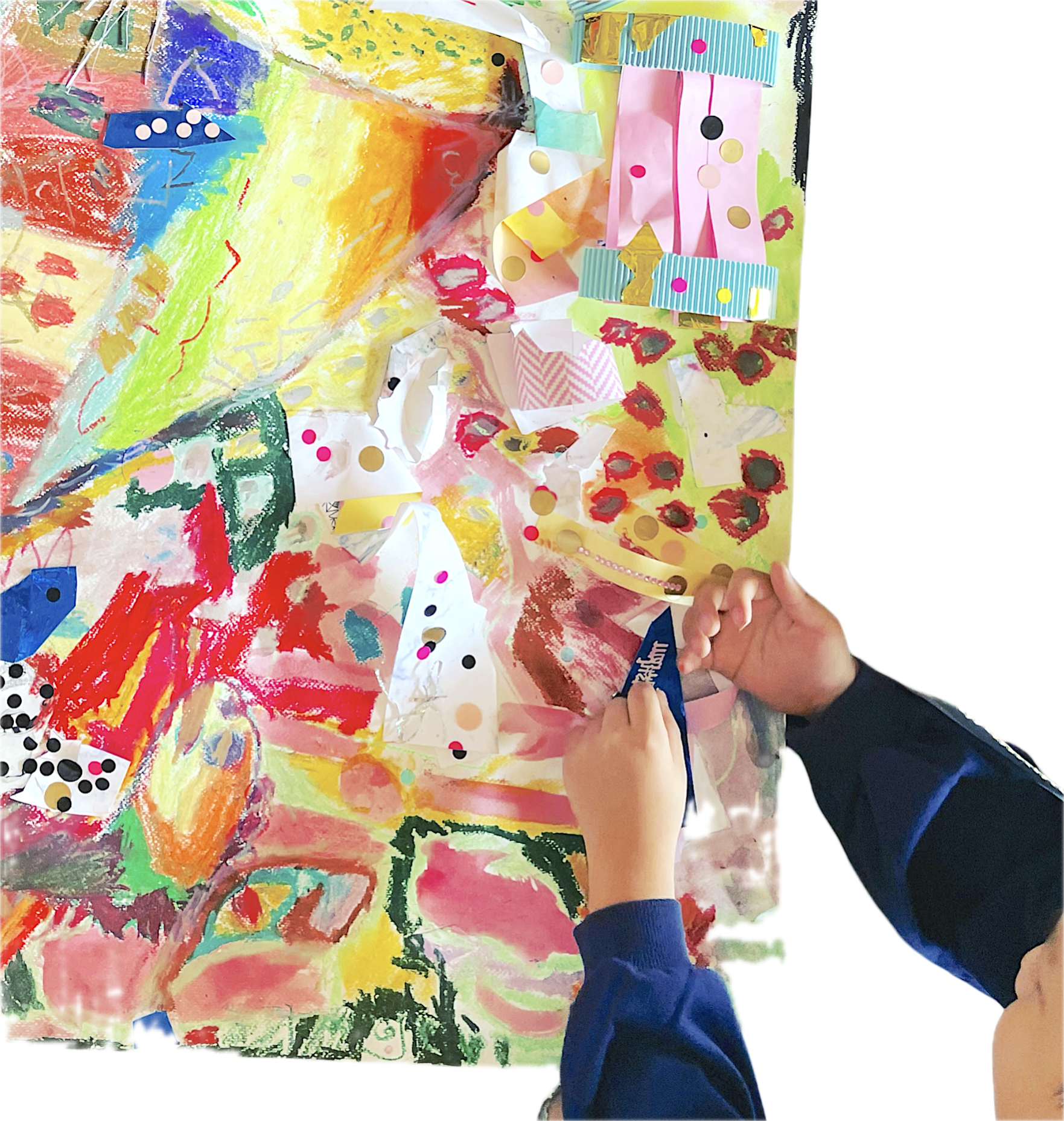
The educator establishes the conditions of the studio. This may include selecting materials, defining safety boundaries, protecting working time, demonstrating a process, asking focused questions, or providing assistance when a task exceeds the learner’s current technical capacity.
At the same time, the educator does not continuously determine:
what the work should become;
which color must be selected;
where every element should be placed;
when every decision should be made;
how the final outcome should look.
This creates space for the learner to develop a more internally generated direction.
At the beginning, a learner may repeatedly ask:
“Is this correct?”
“Do you like it?”
“What should I do next?”
Over time, the language may become more observational and self-directed:
“This side is heavier.”
“The material will not hold unless I change the base.”
“I want to test both possibilities before choosing.”
“Another layer would cover the part I want to keep.”
The shift is not simply from uncertainty to confidence. It is a movement from generalized reassurance-seeking toward more specific observation, comparison, and ownership.
The educator remains available, but responsibility for the work gradually becomes more visible in the learner’s choices.
Adaptive Responses When the First Plan Fails
Creative work regularly includes incomplete information, unexpected results, failed attempts, unfinished ideas, and decisions that cannot be fully reversed.
These experiences can become productive when they are handled with appropriate support.

A learner may practice:
remaining present during temporary frustration;
identifying the actual source of a problem;
separating emotional reaction from material evidence;
reconsidering an earlier assumption;
generating more than one possible response;
asking for focused assistance;
returning after interruption;
revising without treating revision as personal failure;
accepting that some outcomes require adaptation rather than restoration.
The aim is not to force learners to continue indefinitely or to remove every form of support.
The aim is to widen the range of responses available when the original plan no longer works.
Instead of moving immediately from difficulty to abandonment, the learner may gradually develop an expanded sequence:
difficulty → observation → interpretation → support or experimentation → adjustment → return
This process supports adaptive persistence: the capacity to remain responsive without becoming either rigid or passive.
The Artwork Still Matters
CCH does not dismiss artistic quality, technical development, visual coherence, or the significance of completed work.
The artwork is an important record.
It shows accumulated interactions among the learner, the material, the educator, the working environment, and a sequence of decisions. It may reveal increasing control of tools, greater structural complexity, more deliberate visual relationships, or a stronger capacity to sustain an idea across time.
The final object, however, captures only part of the educational process.
Two visually similar works may have emerged through very different forms of engagement.
One learner may have depended heavily on step-by-step adult direction. Another may have tested materials, revised the structure, recovered after difficulty, and independently resolved a series of problems.
The visible outcomes may appear comparable, while the learning processes differ substantially.
For this reason, CCH documents both:
what was made
and
how the learner engaged while making it
The finished work provides evidence of the outcome. Observation of the process helps clarify how that outcome developed.
Process Documentation
CCH studio documentation may attend to recurring areas such as:
entry into the activity;
duration and rhythm of engagement;
response to uncertainty;
interaction with material resistance;
willingness to test alternatives;
use of technical support;
response to interruption or failure;
revision of an earlier decision;
communication of intention;
movement toward meaningful closure;
ownership of the final direction.
These observations are interpreted in context.
A pause does not automatically indicate disengagement. Asking for help does not automatically indicate dependence. Changing direction does not automatically indicate inconsistency. Completing slowly does not automatically indicate limited ability.
The meaning of each behavior depends on what occurred before it, how the learner responded afterward, and whether the interaction supported renewed participation or increased ownership.
This contextual approach prevents the process from being reduced to simple behavioral labels.
From Art Production to Human Capability
The distinction between conventional art instruction and CCH does not depend on rejecting technique, visual quality, or artistic tradition.
It depends on the educational role assigned to studio practice.
A conventional lesson may be organized primarily around a predefined object, a demonstrated sequence, or the acquisition of a particular skill. These structures can be useful and appropriate.
CCH asks an additional set of questions:
How does the learner respond when the outcome is not fully predetermined?
Can attention be sustained without constant stimulation?
What happens when the material interrupts the original plan?
Can the learner interpret consequences before seeking an answer?
How is responsibility retained while support is provided?
Can revision occur without being experienced as failure?
Can the learner recognize when a work has reached meaningful closure?
The artwork remains important, but it is situated within a broader developmental process.
Key Takeaway
CCH uses studio practice to cultivate more than artistic production.
Through sustained material engagement, learners practice remaining with a problem, observing consequences, revising decisions, requesting appropriate support, and developing greater ownership of their creative direction.
The work produced in the studio matters. So does the process through which it emerges.
Art is the medium.
The broader purpose is to create structured opportunities for attention, visual reasoning, agency, self-regulation, and adaptive response—capacities that can remain relevant beyond the completion of a single artwork.
Evidence Boundary
These observations arise from educational and studio-based practice. They describe patterns that may become visible during sustained creative engagement.
They do not constitute clinical assessment, psychological diagnosis, therapeutic treatment, or proof that observed studio behaviors automatically generalize to every context outside the studio.