
Enterprise Collaboration
CCH collaborates with organizations seeking to strengthen human judgment, sustained attention, and decision clarity in environments increasingly shaped by automation.
This work does not focus on artistic production.
Studio-based creative engagement is used as a structured medium for observing how people think, decide, adjust, and sustain responsibility under real constraints.
The emphasis is on long-term human capability rather than short-term performance outcomes.
Why Organizations Engage This Work
Organizations are increasingly operating under conditions of accelerated output, fragmented attention, and decision fatigue.
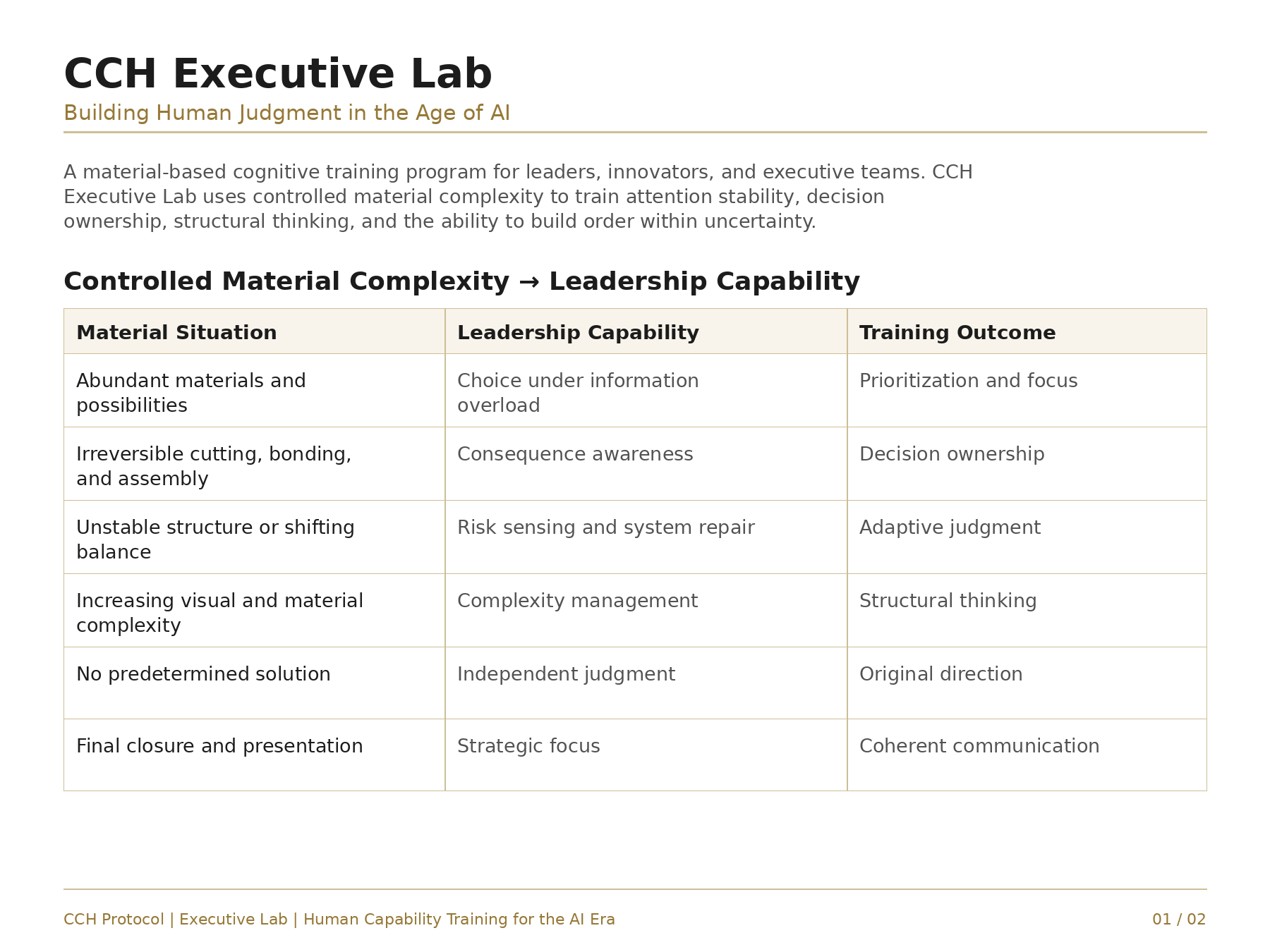
CCH provides a structured environment where participants practice attention stability, decision ownership, and structural thinking under complexity.
The work is designed for teams and leaders who need to build order within uncertainty.
Engagement Models
Collaborations are tailored to organizational context.
Typical formats include:
Studio Immersion Sessions
Short-format engagements designed to observe decision behavior, attention stability, and adaptive thinking in real time.
Leadership Decision Labs
Focused work with founders, executives, or strategy teams exploring judgment patterns under uncertainty.
Institutional Partnerships
Longer-term collaborations supporting capability development across teams or educational divisions.
Method Licensing / Advisory
Selective partnerships exploring integration of CCH principles into existing organizational structures.
All formats prioritize depth of engagement over scale.
Method Overview
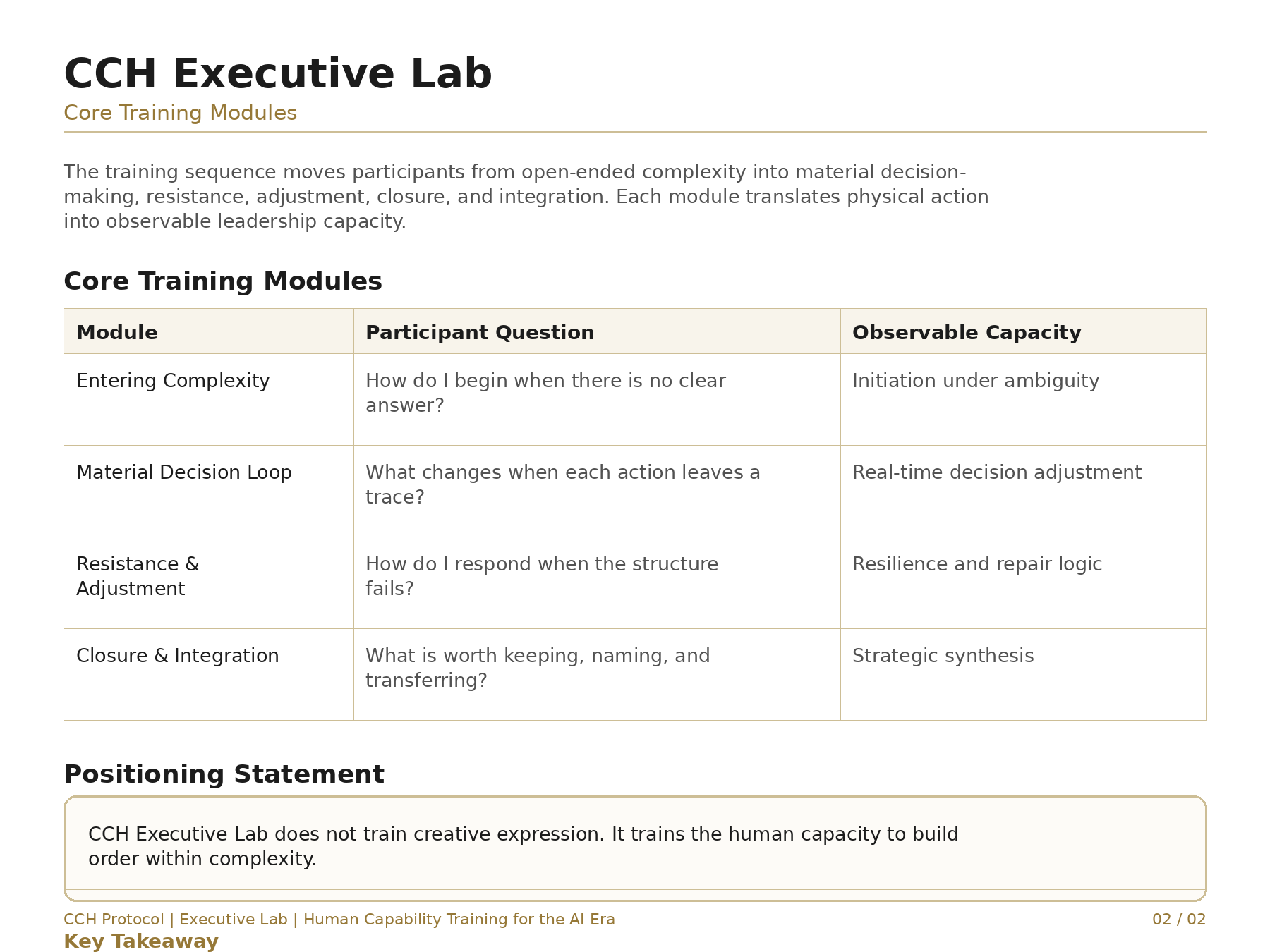
CCH operates through structured studio-based environments where material interaction, time constraints, and decision-making create observable cognitive processes.
Typical participants include:
Typical participants include:
• founders and executive leadership teams
• innovation, research, or strategy groups
• educational institutions and learning organizations
• professionals working under complexity, ambiguity, and organizational pressure
Participants only need openness to material exploration, structured reflection, and decision-making under uncertainty.
Inquiry
Initial inquiries are best made in writing and typically include:
organizational context
intended participants
general timeframe or interest area
Initial inquiries may include a brief description of your organization, intended participants, and the purpose of the engagement.
If alignment is clear, further discussion can follow regarding format, scope, and implementation.