
Adult Studio Practice
Painting, Material Encounter, and the Development of Creative Agency
CCH adult studio practice uses painting and sustained material engagement to examine how adults move beyond inherited artistic expectations, performance pressure, and outcome control. Through observation, experimentation, revision, and reflection, participants gradually develop more responsive relationships with materials and greater ownership of their creative direction.
Why Adult Studio Practice Matters
Adults often enter the studio carrying inherited expectations about what art should look like, how quickly progress should appear, and what counts as a successful result. Professional routines, educational experience, and exposure to polished visual culture may strengthen habits of evaluation, productivity, and outcome anticipation before the creative process has fully begun.
CCH adult studio practice creates room for a different relationship with making. Sustained engagement with painting and materials allows adults to slow perception, remain with uncertainty, test alternatives, and develop greater confidence in their own creative direction.
Core Studio Conditions
CCH adult studio practice is structured around extended working periods, open-ended materials, low digital interference, facilitative guidance, and the preservation of unfinished work across sessions.
These conditions allow the creative process to develop without pressure for immediate resolution. Adults are given time to observe material changes, reconsider earlier decisions, revise emerging structures, and return to a work with renewed perceptual distance.
Technical guidance may be introduced when needed, while ownership of the work remains with the participant. The emphasis is placed on sustained engagement, material responsiveness, and the gradual development of creative agency.
Extended Working Periods
Adult attention often requires time to transition away from professional pace, digital stimulation, self-monitoring, and outcome anticipation.
Longer studio periods allow space for arrival, material testing, uncertainty, revision, renewed engagement, and meaningful closure. The emphasis is not on producing more work, but on giving perception and decision-making enough time to deepen.
Facilitative Guidance
Guidance is responsive rather than prescriptive.
Technical support, focused questions, and material demonstrations may be introduced when needed. The educator helps clarify visual conditions without determining every decision or imposing a fixed outcome.
The goal is to support the adult’s capacity to observe, compare, revise, and develop greater ownership of the creative process.
Open-Ended Materials
Materials are introduced without requiring a single predetermined result.
Paint, collage, surface residue, layering, scraping, transfer, and mixed-media processes provide different forms of visual feedback. These encounters allow the developing work to interrupt the original plan and create new possibilities for response.
Low Digital Interference
The studio reduces dependence on screens, image searches, and constant visual comparison.
This helps adults remain closer to direct perception, bodily action, and the actual behavior of materials. Reference images may be used when relevant, but they do not replace sustained contact with the work itself.
Unfinished Work Preserved Across Sessions
Adult work is not required to reach completion within a single session.
Projects may remain open, allowing time for perceptual distance, reconsideration, and return. Preserving unfinished work helps adults experience continuity and recognize that creative development does not always follow a rapid or linear schedule.
Adult Studio Cases
The following cases examine how these studio conditions operate across different adult creative experiences. Each case focuses on a distinct transition involving artistic expectations, beginning, material responsiveness, imperfection, and personal creative direction.
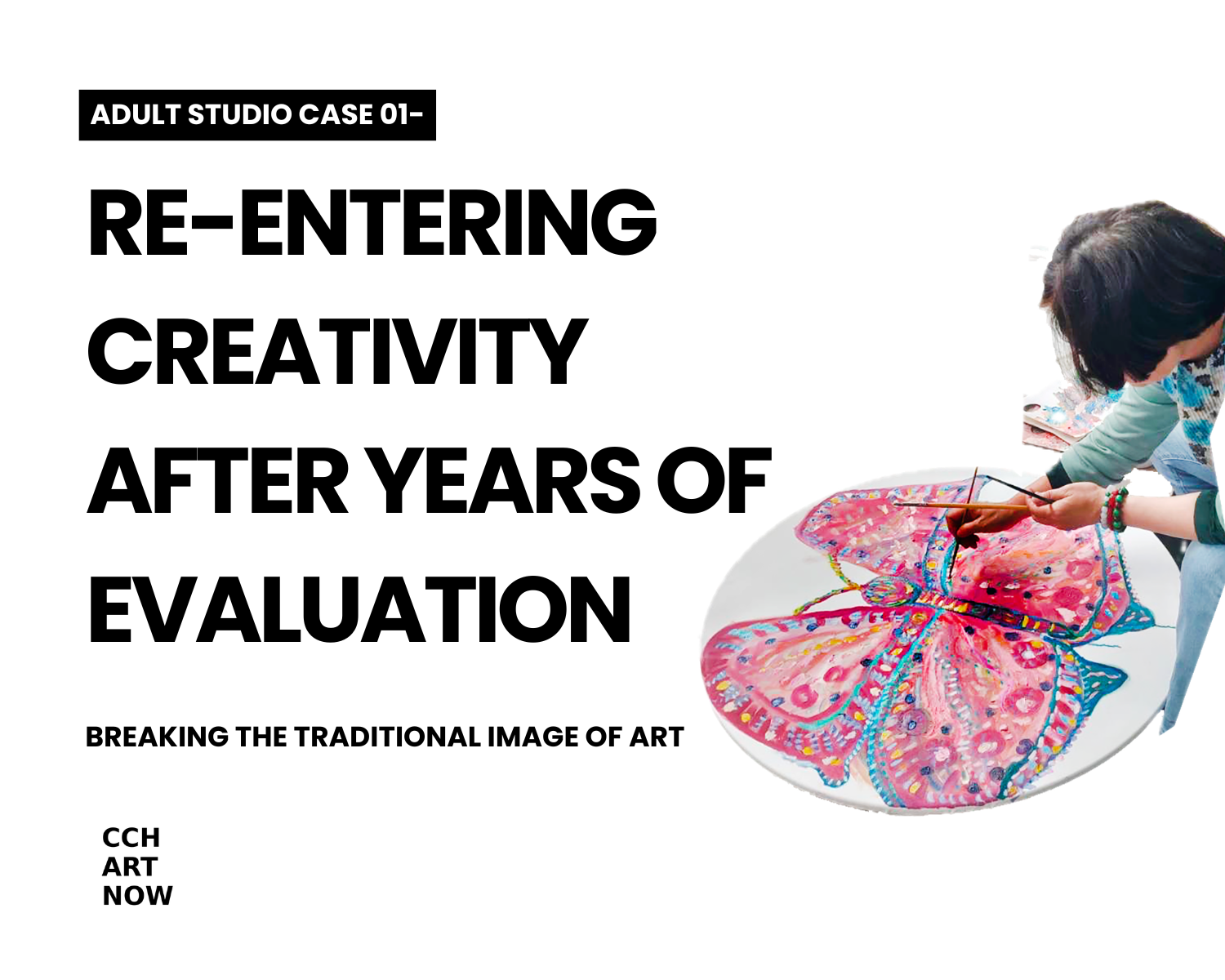
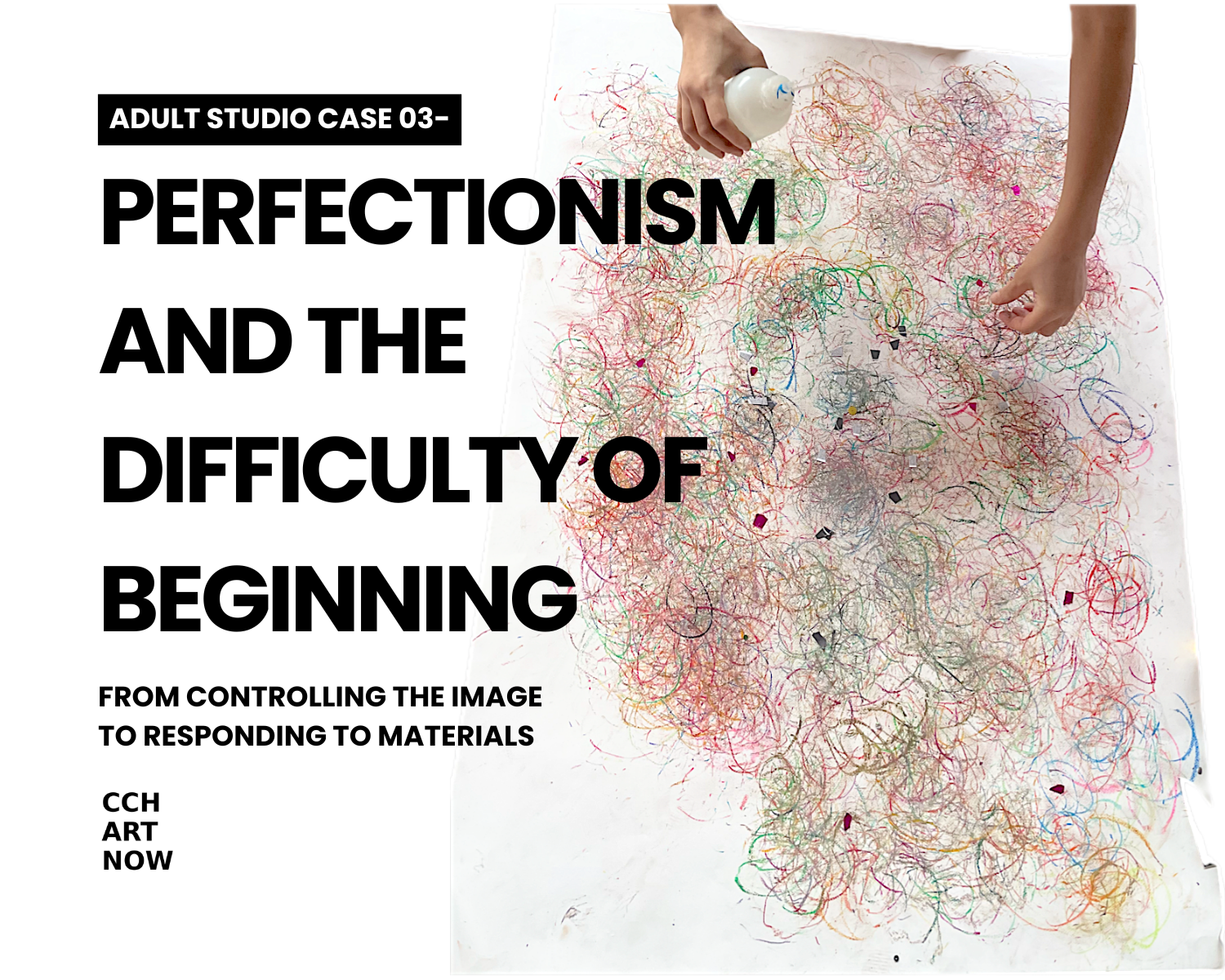
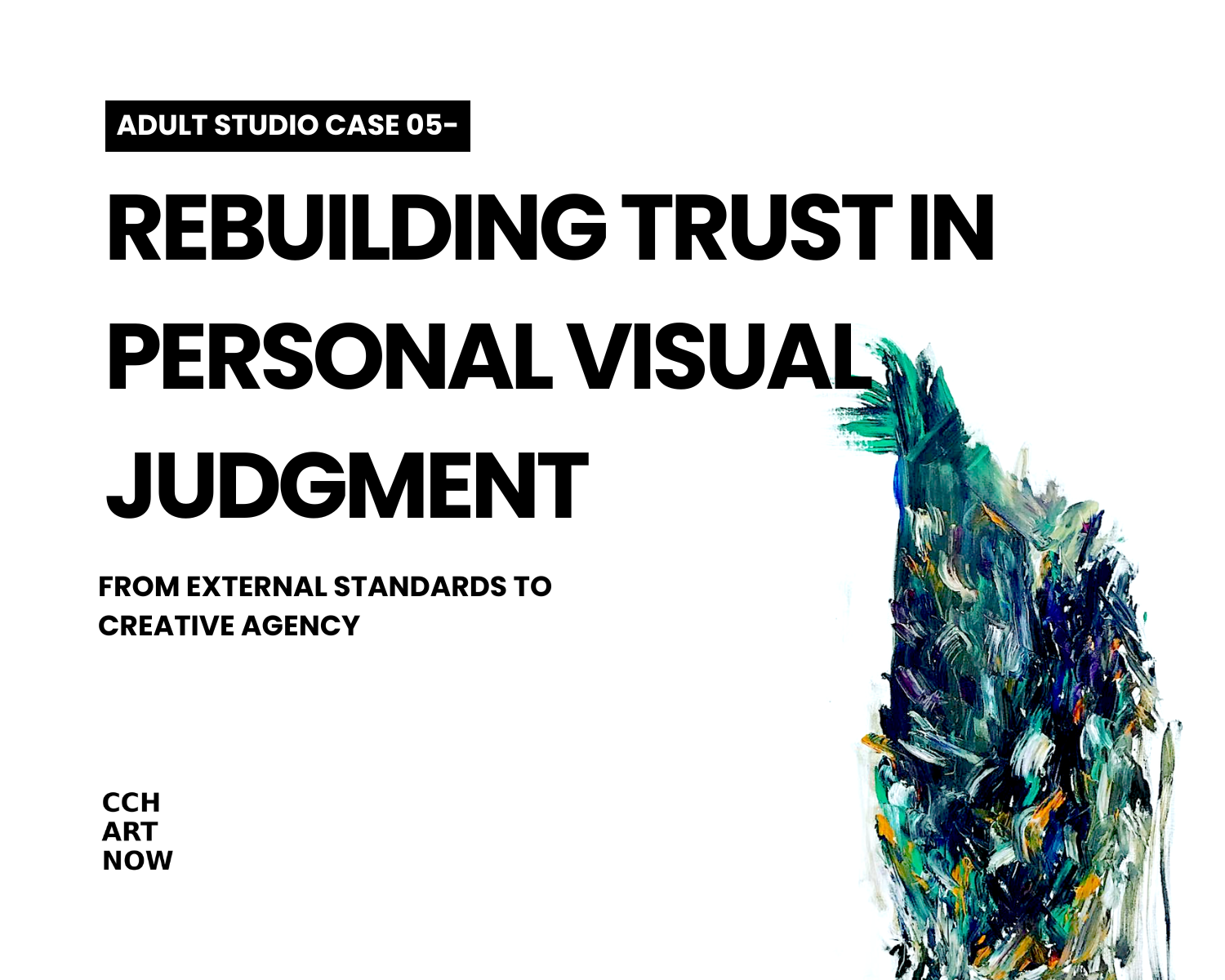
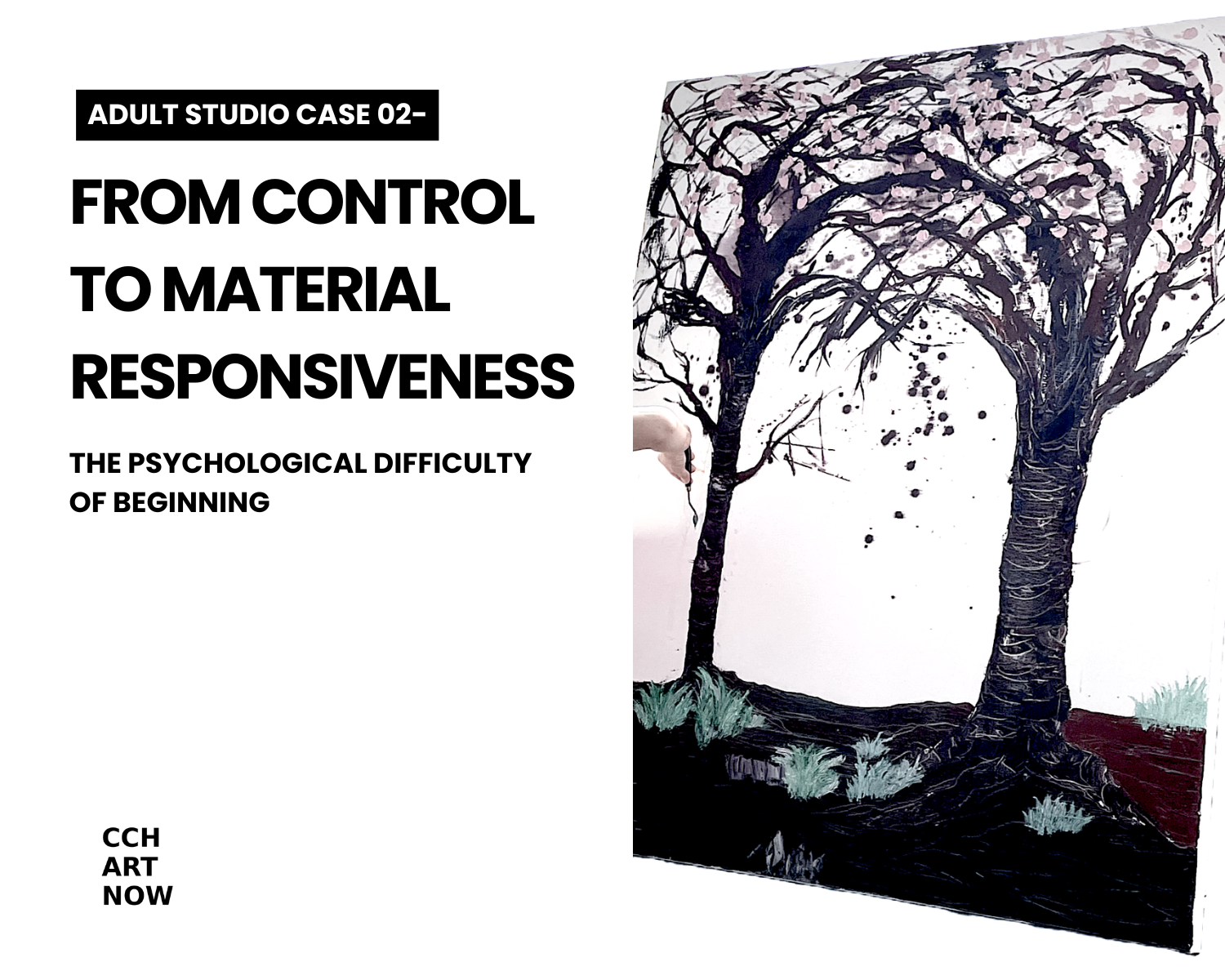
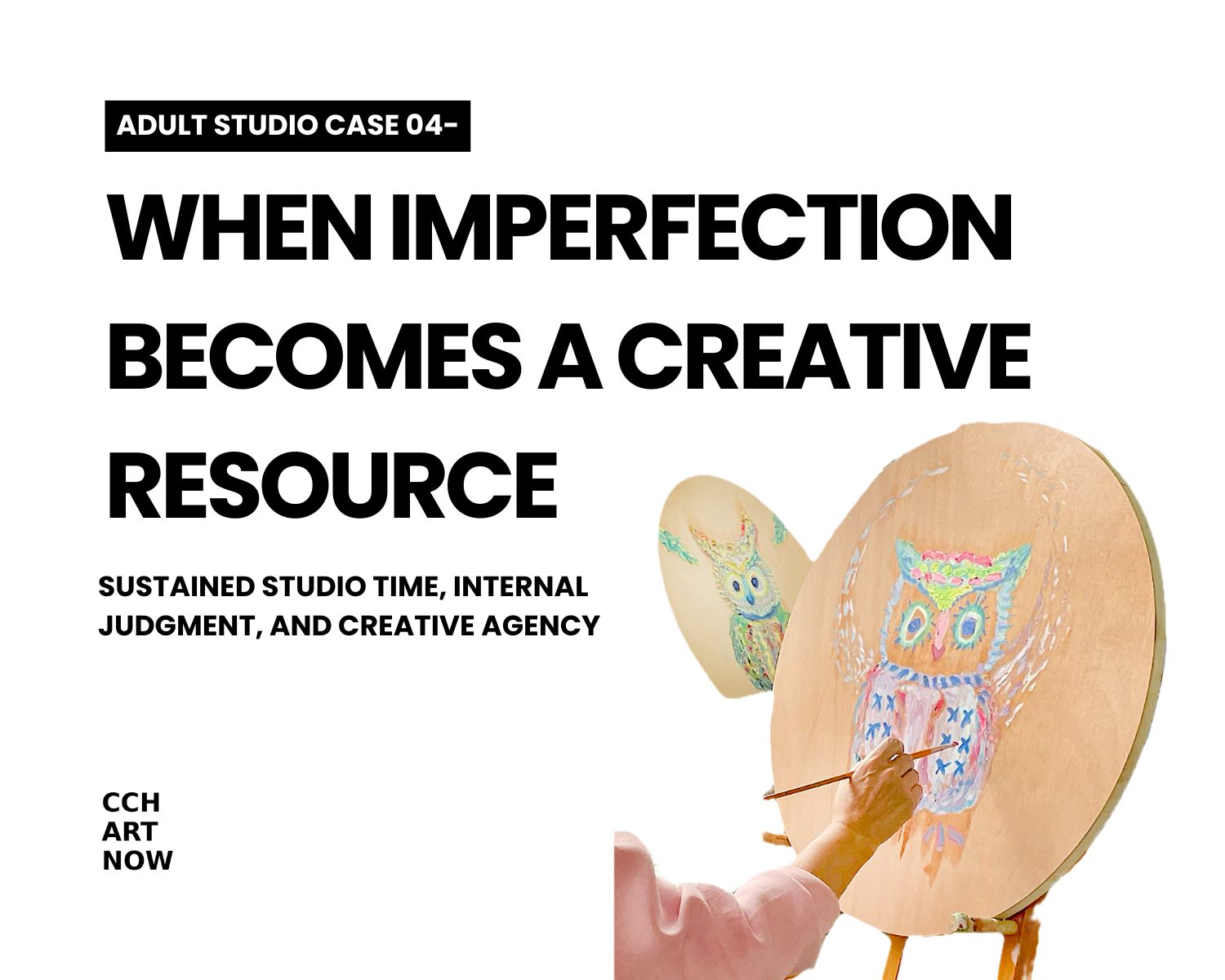
Across these cases, adults often entered the studio carrying strong habits of evaluation, productivity, control, and outcome anticipation. Sustained material practice created opportunities to slow perception, tolerate uncertainty, revise decisions, and rebuild trust in internally developed creative direction.
These patterns are interpreted across repeated studio encounters rather than from any single artwork or session.
These cases document educational and studio-based observations. They do not constitute clinical treatment, psychological diagnosis,