
Mid-Program Parent Observation

CASE EVIDENCE|X + Y

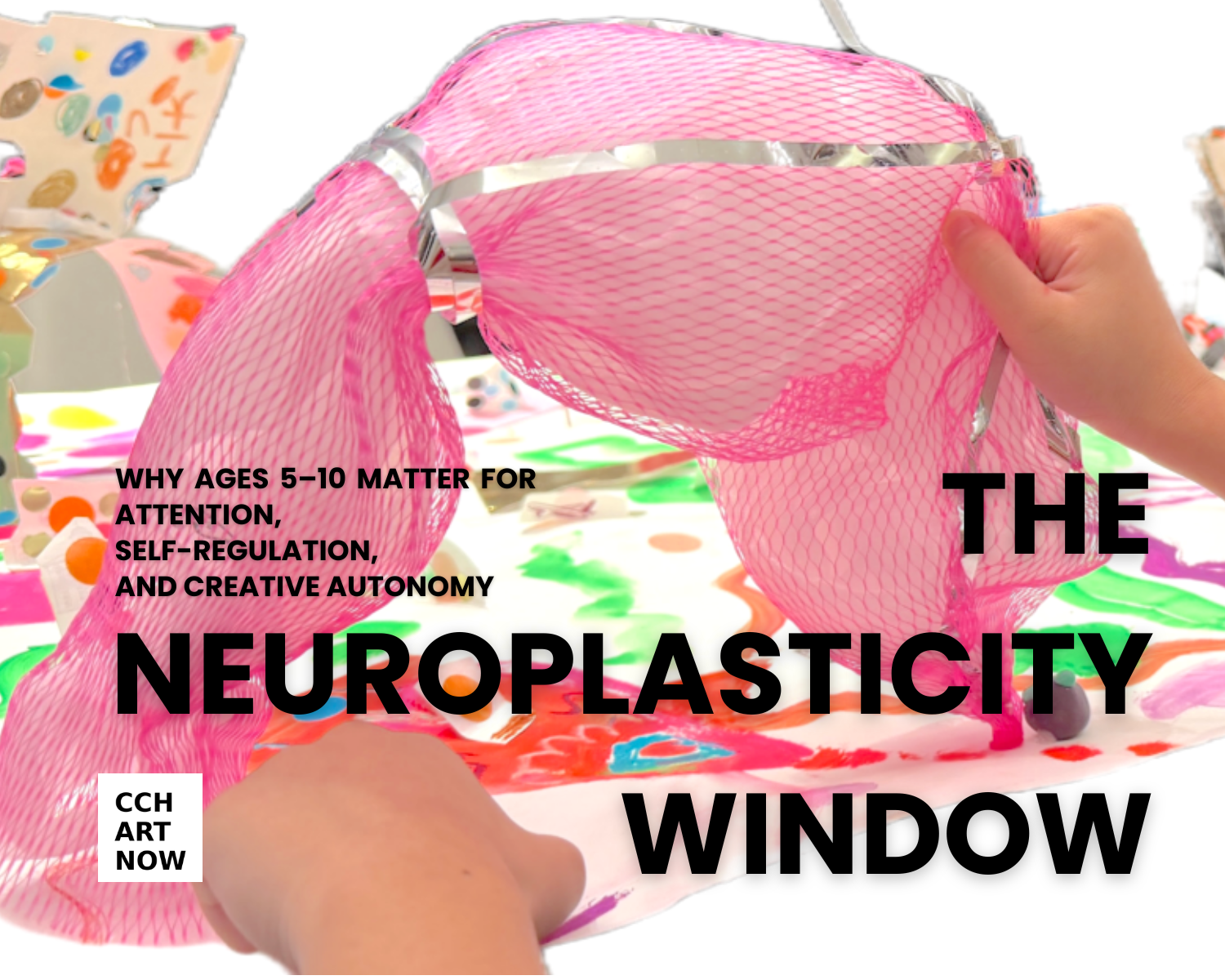
Developmental Context — Neuroplasticity Window

Ages 5–10 represent a period of heightened neuroplasticity, during which executive function, attention regulation, and independent decision-making are actively consolidating.

When learning environments are designed to support sustained concentration and material-based problem-solving, these capacities are more likely to stabilize into durable cognitive patterns rather than remain situational skills.

At this stage, children typically demonstrate reduced dependence on external evaluation, creating optimal conditions for autonomous exploration and flexible identity formation.

Intervention later in development remains possible, but generally requires increased structural support and environmental recalibration.

These observations inform the spatial and pedagogical design of CCH studios; they are not presented as universal developmental prescriptions.

A young girl with dark hair and bangs, wearing a navy blue jacket with pink polka dots, is looking inside a cardboard box.

Our View on Output & Thinking

Why Works Can Reflect Deeper Learning

A young girl with dark brown hair in pigtails, wearing a hair clip with charms, a navy blue quilted jacket, and a dress with small red polka dots, is holding and looking at a large, curved piece of cardboard.

In our practice, we do not evaluate children by how many works they complete. Some children explore through quantity. Others explore through structure, testing, and sustained thinking. Both are valid learning paths. What we observe instead includes:

  • Whether thinking is active during making

  • Whether hands remain engaged in exploration

  • Whether adjustments and persistence are present

  • Whether understanding is being built rather than rushed

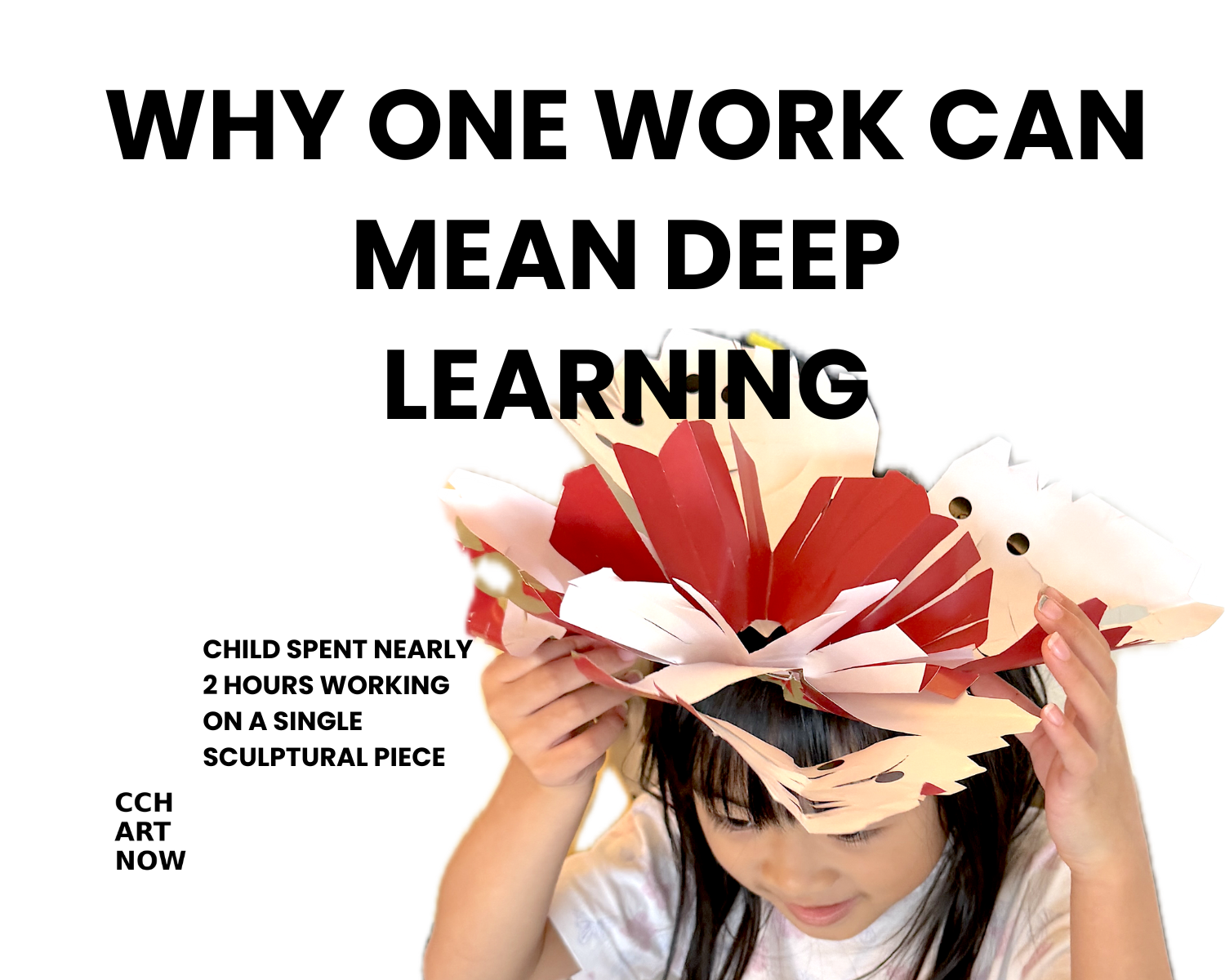
Completing one piece over two hours can indicate focused attention and cognitive processing— not slow learning, but deep learning in progress. Creative work naturally varies in pace. Sometimes it unfolds quickly; other times it requires pauses, testing, and reflection.

Our core principle remains: Creation is not defined by how much is produced, but by how deeply it is understood.

A person with long dark hair wearing a navy blue quilted jacket is holding a cardboard box with a handle, possibly a gift or takeout container, with the hand of another person visible.

Structural Exploration Moment

Deep Structural Exploration

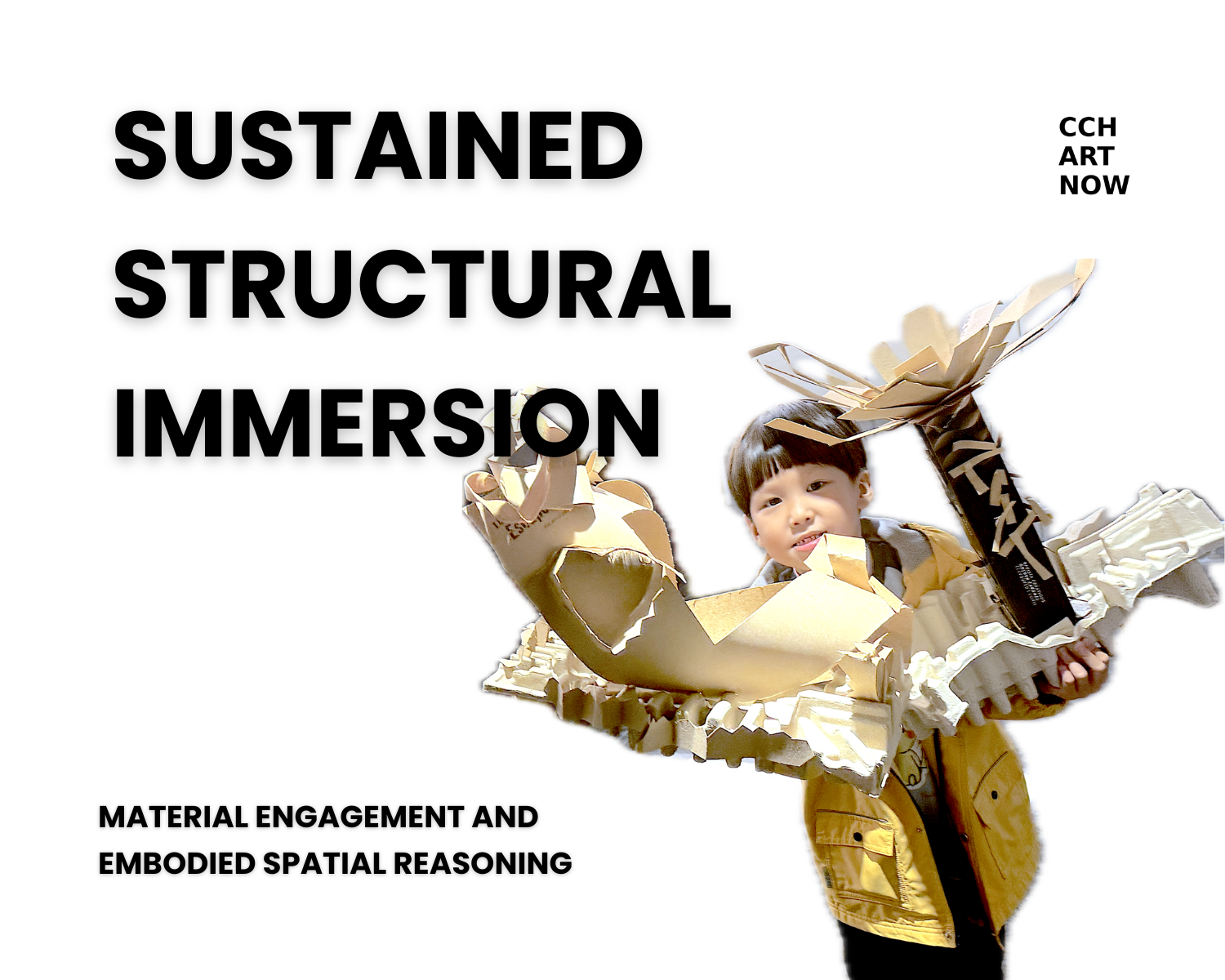
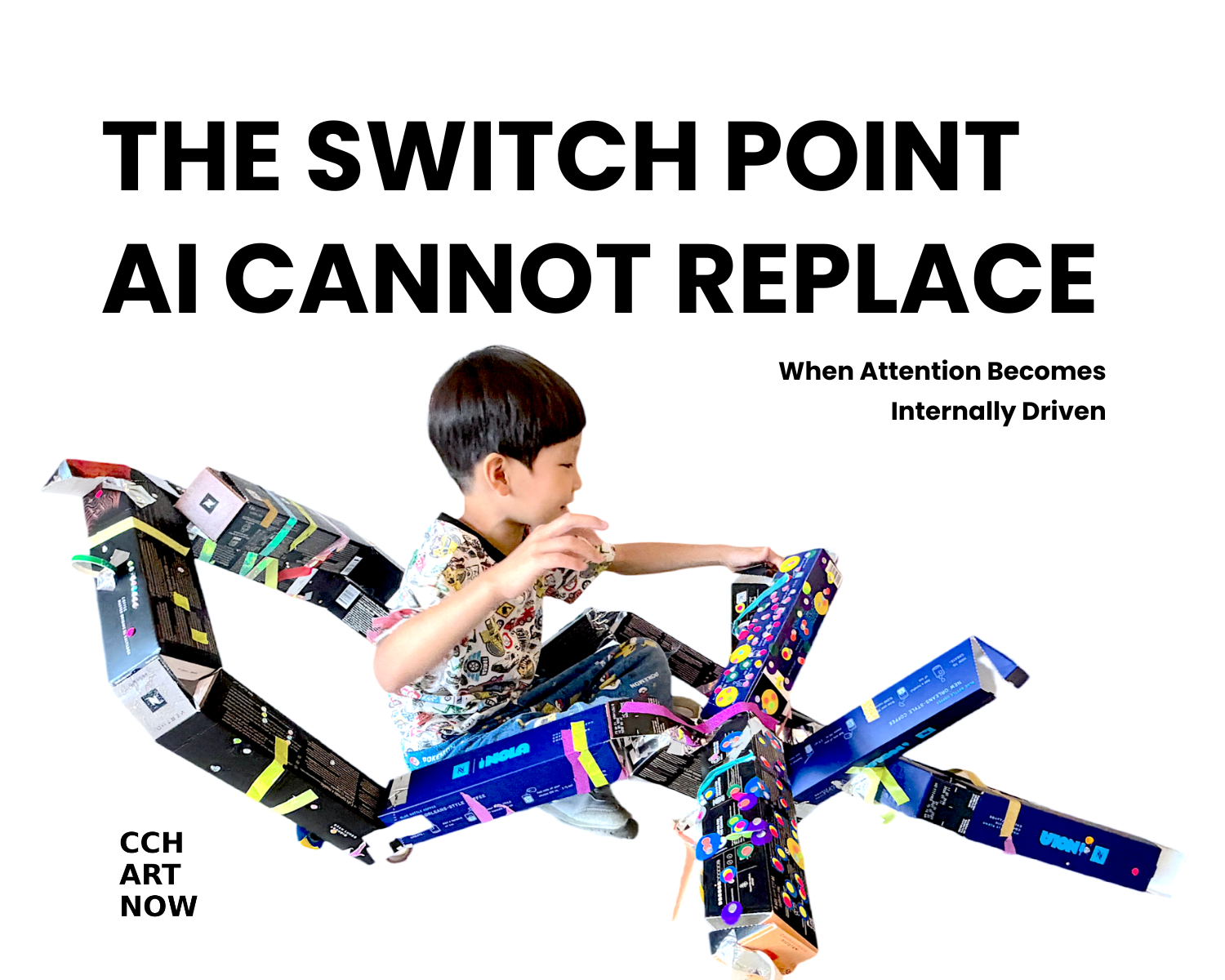
During a session, one child spent nearly two hours working on a single sculptural piece.

Much of the time was devoted to testing materials, stabilizing structure, and thinking through how elements could hold together.

From the outside, the output appeared minimal. Internally, however, the child remained continuously engaged—hands active, attention sustained, decisions ongoing.

A homemade unicorn craft made from white marshmallows, colorful foam paper, and ribbons, assembled to resemble a unicorn with a mane, horn, and legs.
A toy horse made of white material decorated with colorful paper cutouts, ribbons, and fabric accessories, with a red cardboard-like structure attached to its back.

CCH Observed Cases

Selected observations illustrating how learning is recognized within the CCH framework.
Young girl in pink jacket creating art with colorful markers and paints on paper, focusing on a paper craft tube wrapped in blue and yellow tape with a face, on a table filled with drawing and painting.

① Case Focus

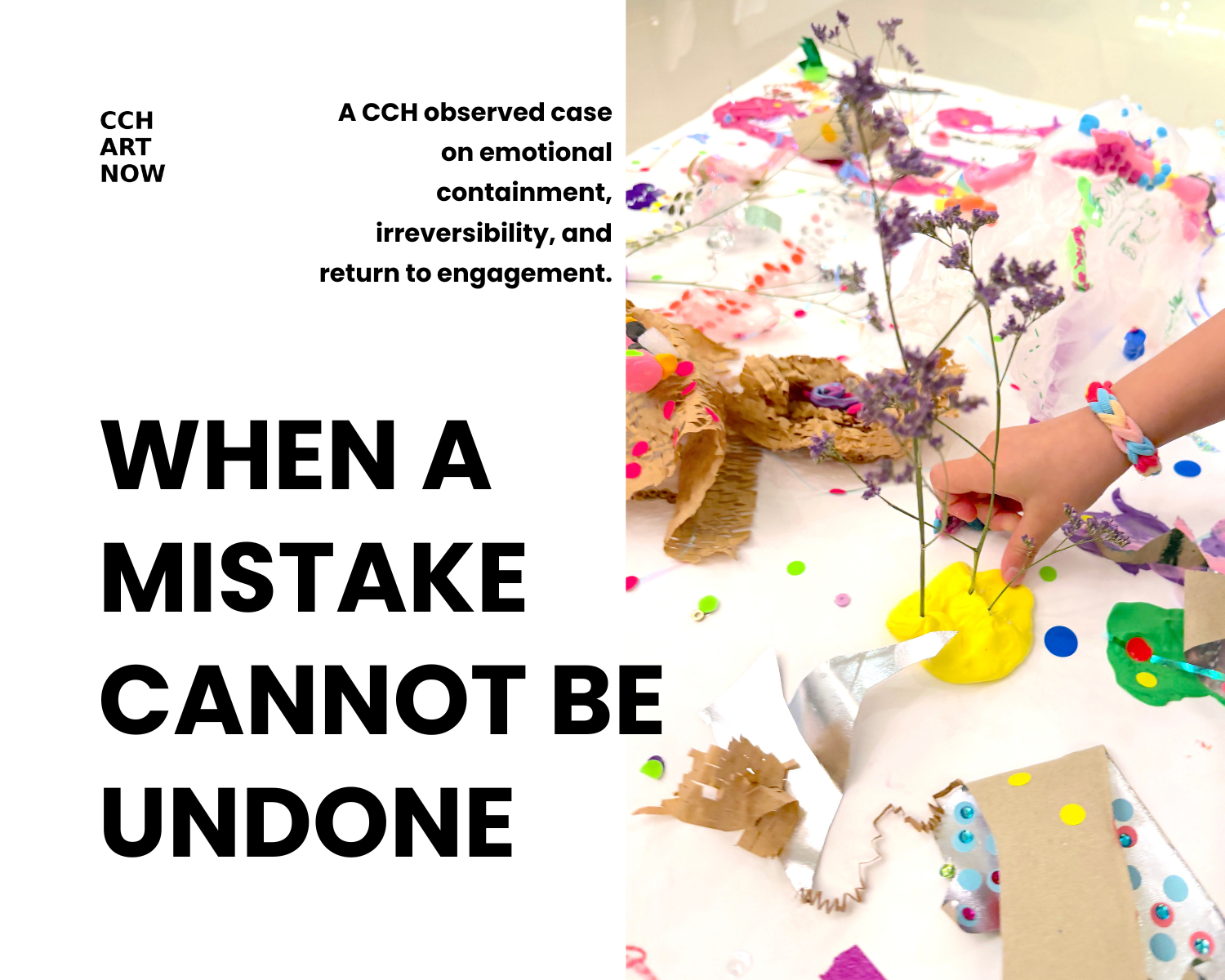
Observed Case: Emotional Regulation Under Structural Limits

② Situation

During a session, a participant experienced a strong emotional response. when an object was altered in a way that conflicted with their expectation.

③ Response Structure

Emotional expression was acknowledged without interruption. No external intervention was introduced. The physical outcome was irreversible.

Colorful abstract art creation with torn paper, paint, and crayon strokes, featuring bright colors including red, blue, yellow, green, pink, and purple.

④ Observed Shift

(Developmentally calibrated: ages 5–6)

After emotional intensity decreased, the participant demonstrated:

  • recognition of irreversibility

  • emerging ownership of action–outcome relationship

  • self-initiated return to task engagement

⑤ Learning Recognition

The learning observed was not emotional suppression. It was the development of emotional containment alongside reality-based thinking.

The working environment remained stable. This type of learning cannot be measured by speed or output quantity.

Children's hands tearing colorful paper with polka dots on a vibrant, abstract painted background.