

Sustained Structural Immersion

Long-Duration Attention and Spatial Reasoning in an Open-Ended Material System
Studio Observations|Children
CCH ART NOW™
Learner age range: 5–6
Format: 4+ hour continuous studio session
Material system: Open-ended cardboard, recycled structural components, and modular assembly
Evidence type: Studio observation
Overview
This article documents a four-hour continuous studio session conducted during the Lunar New Year period within an open-ended material environment. The session did not introduce templates, visual models, or predetermined outcomes. Instead, the learning environment was structured around large-scale cardboard, recycled components, spatial autonomy, and sustained material interaction.
The resulting work emerged through extended engagement rather than decorative intent. Across the session, learners interacted with balance, attachment, load distribution, vertical expansion, and wearable adaptation. The project expanded from a single constructed form into a layered spatial system incorporating narrative extensions, structural modification, and embodied evaluation.
Within the CCH ART NOW™ framework, this case is interpreted as an example of Sustained Creative Immersion: a studio-based condition in which long-duration attention and decision-making are cultivated through material interaction rather than external instruction.
Project Context
The session unfolded in a studio environment designed to support autonomy, uninterrupted concentration, and material feedback. The Lunar New Year period provided a culturally familiar temporal context, but the task itself was not organized around a fixed seasonal craft outcome.
No template was introduced.
No finished image was shown.
No correct visual result was suggested.
Instead, learners were placed inside a material field where structure had to be discovered through action. Cardboard, recycled bases, modular elements, and open spatial arrangements became the primary conditions for learning.
This distinction matters. In a conventional product-oriented task, the child is often asked to complete an expected image. In this case, the child had to generate structure through perception, testing, revision, and embodied judgment.

Studio Design
The studio system included:
large-format cardboard and recycled structural components
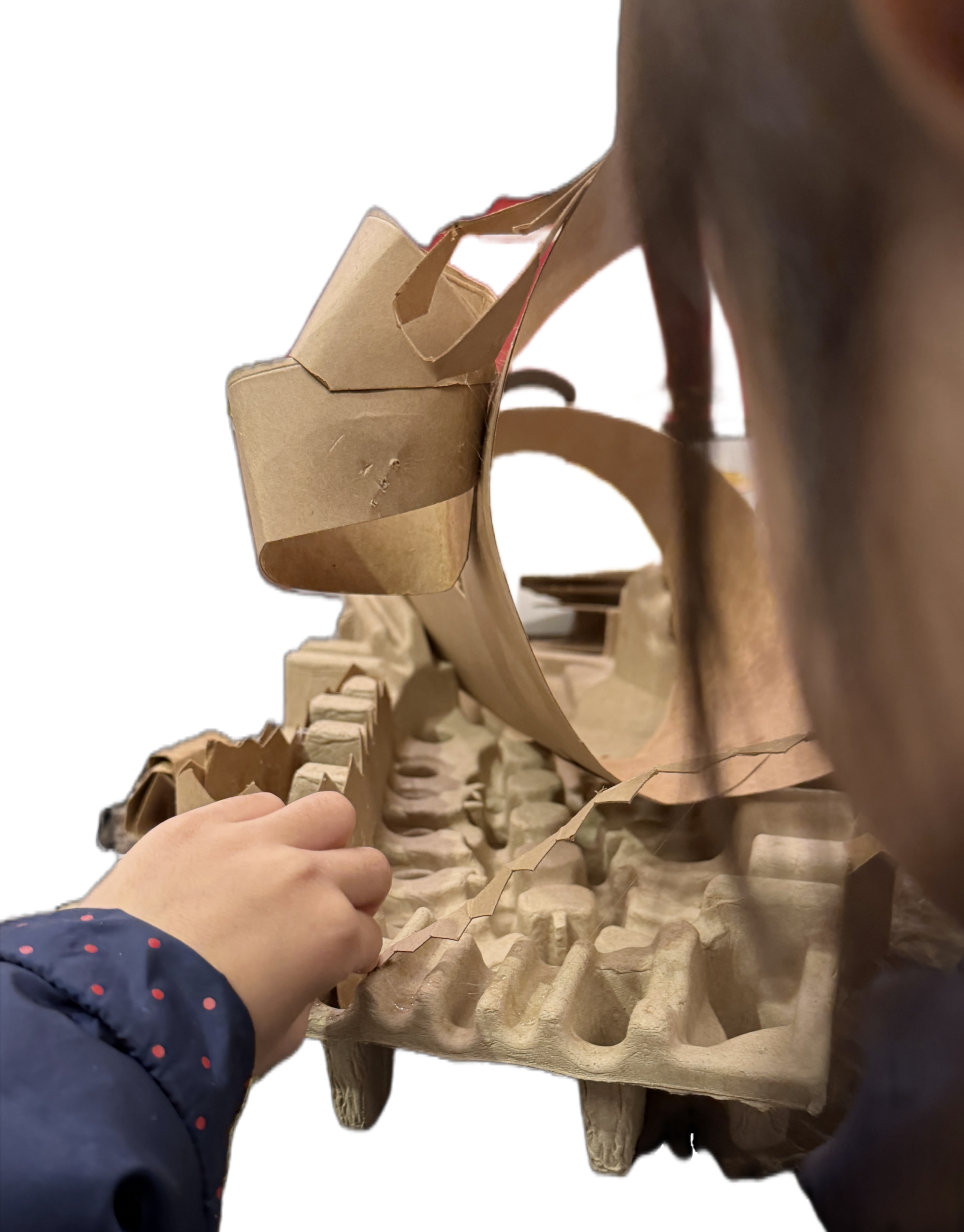
an open base system using an egg-tray foundation
progressive layering of modular elements
absence of performance prompts
absence of time pressure
freedom to lift, wear, test, and reorganize the structure
The environment was designed to support uninterrupted concentration and spatial autonomy. Rather than directing the child toward a fixed outcome, the facilitator protected the conditions under which the child could remain in sustained relation with the developing work.
This distinction is central to CCH. The educator does not simply provide materials. The educator designs a cognitive ecology in which material resistance, time, bodily movement, and decision consequence become part of the learning process.
Cognitive Indicators Observed
Several learning signals became visible across the four-hour duration:
sustained attention across extended duration
independent structural problem-solving
persistence following instability
spatial reasoning in three dimensions
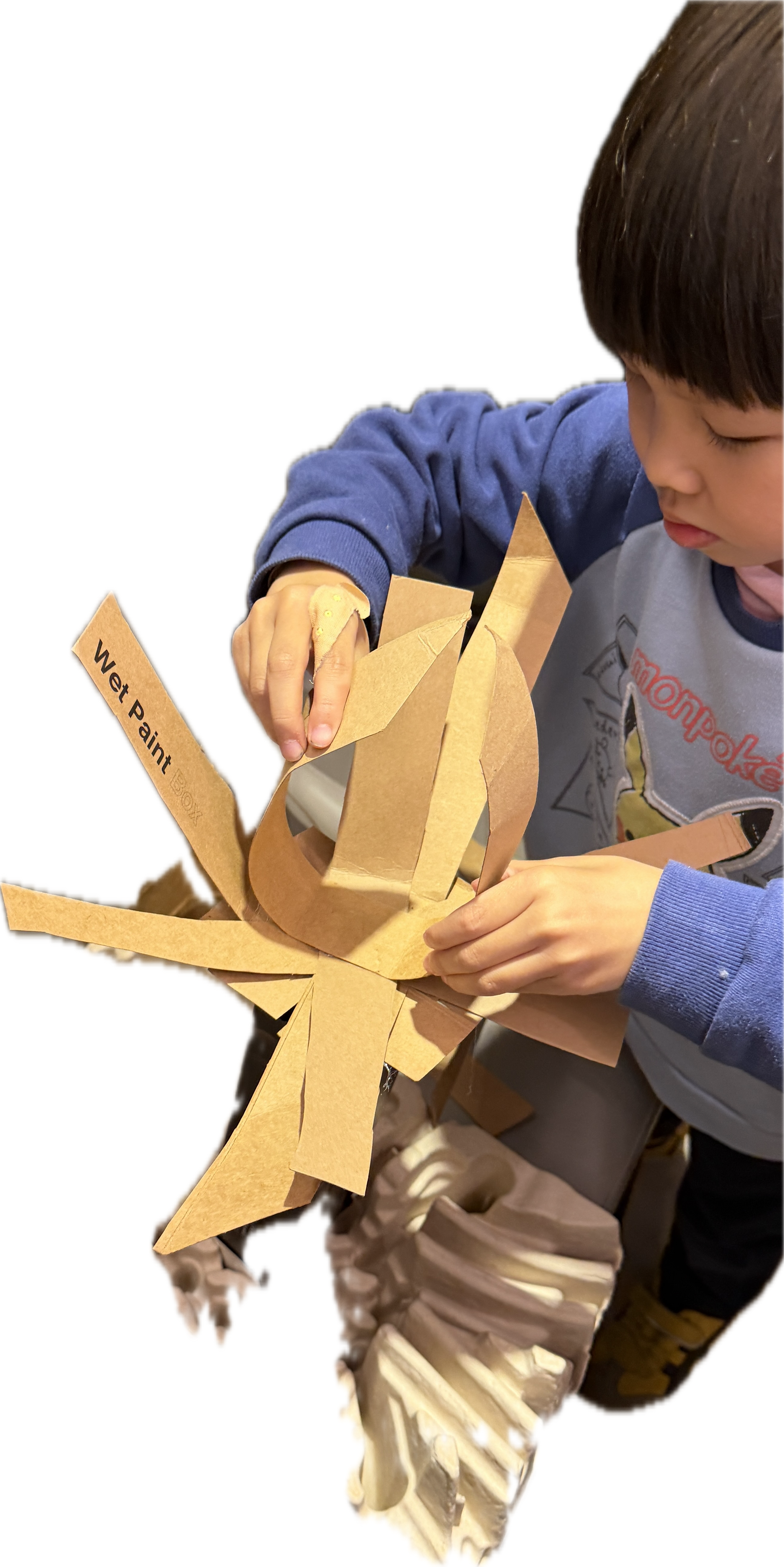
embodied evaluation through lifting, wearing, and repositioning
continuous testing of balance, attachment, and load distribution
gradual expansion from isolated object-making into a layered spatial system
These indicators are not presented as clinical measurements. They are qualitative studio observations of behavior, process, and material engagement.
The significance of the session lies in the relationship between time and structure. The learner did not merely remain present for four hours. The learner continued to return to the work, respond to its instability, and make decisions based on the evolving material state.
Structural Development
The work evolved through continuous testing of:

balance
attachment
load distribution
vertical expansion
surface relationship
wearable adaptation
narrative extension
Elements were modified repeatedly until structural stability was achieved. Instability did not end the process. Instead, instability became information. The child observed, adjusted, and continued.
This is one reason the case is educationally significant. Structural failure was not treated as a mistake to be corrected by the adult. It functioned as a material signal that invited revision.
In this sense, the work became a visible record of thinking. Each attachment, adjustment, and repositioning preserved traces of decision-making over time.
Long-Duration Attention as Studio-Based Capacity
In CCH documentation, long-duration attention is not defined as stillness. It is not the absence of movement, speech, or fluctuation. Rather, it is defined as the learner’s sustained relationship to the work across phases of concentration, movement, disruption, fatigue, and return.
This case is important because engagement remained steady throughout a four-hour continuous session without external prompting. The learner’s attention was not maintained by reward, competition, screen-based stimulation, or adult performance pressure. It was maintained through an active relationship with the material system.
Executive function research identifies capacities such as staying focused, thinking before acting, meeting novel challenges, and managing goal-directed behavior as central to learning and development. Diamond’s review of executive functions emphasizes that these skills support focused attention, flexible thinking, and purposeful action. The Center on the Developing Child at Harvard University similarly describes executive function and self-regulation as skills that help children manage information, make decisions, and plan ahead. (PubMed)
From this perspective, the four-hour studio session did not simply demonstrate endurance. It made executive-function-related behavior visible through material activity: planning, adjusting, persisting, and re-entering the work after instability.
Material Engagement and Embodied Spatial Reasoning
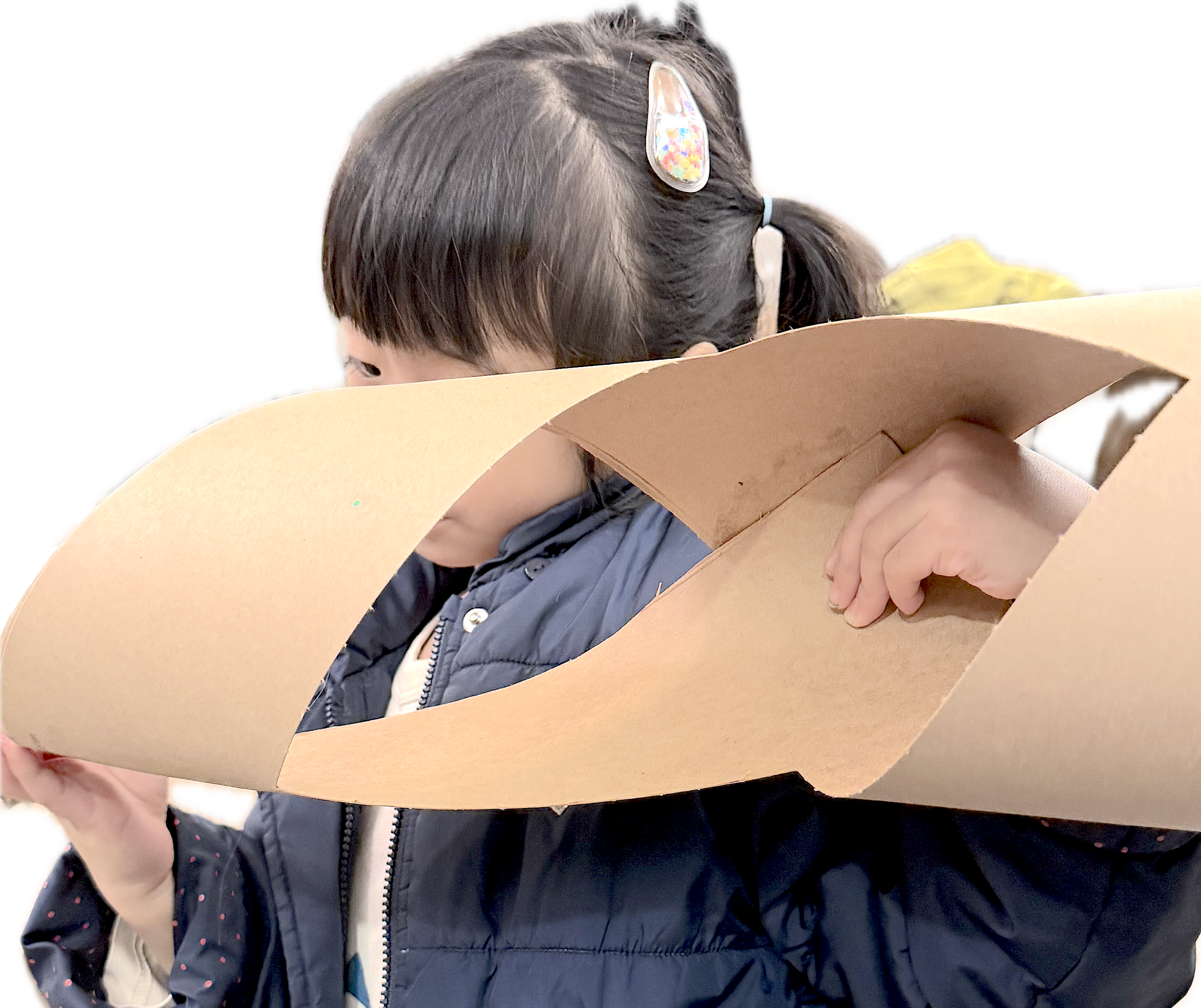
The project also demonstrates why material engagement matters. Cardboard was not a neutral craft material. Its scale, stiffness, instability, and weight shaped the learner’s decisions. The egg-tray foundation created constraints around balance and attachment. The possibility of lifting or wearing the structure introduced a bodily dimension to evaluation.
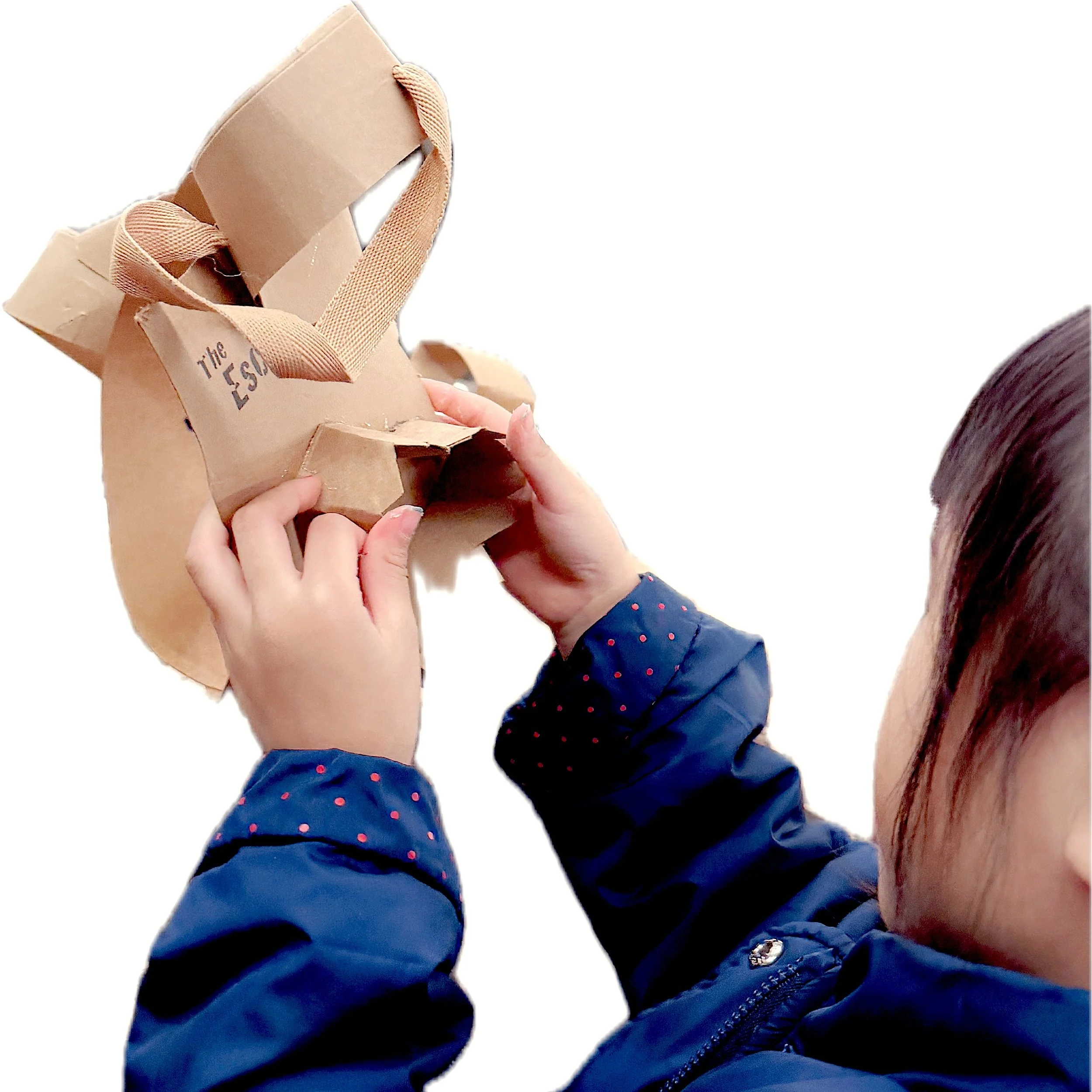
The learner did not only look at the work. The learner tested it through the body.
This kind of embodied evaluation is significant because spatial reasoning emerged through handling, repositioning, balancing, and adapting the object. The child’s thinking was distributed across eye, hand, weight, structure, and movement.
Lambros Malafouris’s Material Engagement Theory is useful here because it places materiality within the cognitive process rather than treating objects as passive outputs of thought. MIT Press summarizes Malafouris’s framework as one that adds “the world of things, artifacts, and material signs” into the cognitive equation. (MIT Direct)
Within the CCH framework, this supports the interpretation that cognition becomes visible through material action. The learner’s structural reasoning was not separate from the cardboard system; it emerged through repeated engagement with its physical constraints.
Autonomy Without Abandonment
The session also illustrates a key CCH distinction: autonomy does not mean leaving the child alone. Autonomy is created through a carefully designed environment in which the child can make meaningful decisions without being over-directed.
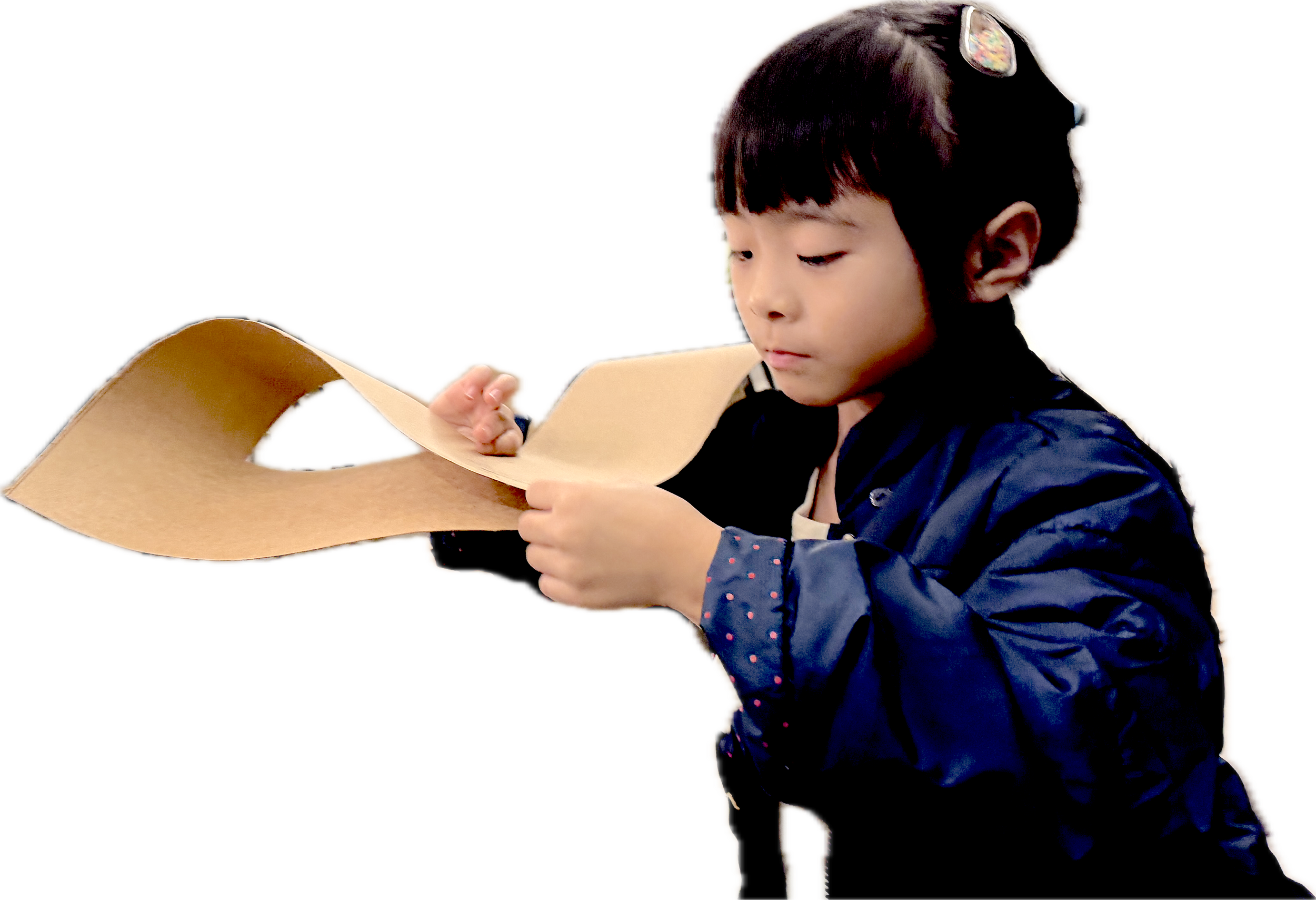
The absence of templates did not mean the absence of structure. The structure was embedded in:
material constraints
spatial scale
time continuity
the physical demands of balance and attachment
facilitator restraint
the learner’s responsibility to continue testing and revising
This is different from free play without pedagogical intention. It is also different from adult-directed instruction. The studio environment provided enough structure for cognitive challenge, while preserving enough openness for self-authored decision-making.
The OECD Learning Compass places student agency at the center of future education, describing learners as active participants who can shape their learning rather than simply receive instruction. (OECD) This case aligns with that principle: the child was not executing an assigned model, but actively shaping the direction, function, and structural identity of the work.
Educational Implication
Under appropriately designed spatial conditions, children aged 5–6 may demonstrate a greater capacity for prolonged concentration and structural reasoning than conventional short-format activities often assume.

This does not mean that every child should be expected to work continuously for four hours, nor that long duration alone produces deeper learning. Duration is meaningful only when the environment supports autonomy, material feedback, emotional safety, and developmental pacing.
The educational implication is more precise:
When children are placed within an open-ended material system that preserves continuity, reduces performance pressure, and allows decisions to accumulate over time, long-duration attention can become observable. Structural reasoning can also become visible through repeated testing of balance, attachment, and spatial consequence.
This case therefore supports the CCH claim that attention is not merely a personal trait. It is also an environmental outcome. Attention can be protected, shaped, and extended through the conditions of the studio.
CCH Interpretation
This case exemplifies Sustained Creative Immersion within the CCH framework.
The four-hour session showed that a young learner could remain engaged with a complex material system across time, instability, and transformation. The work expanded beyond decorative production into a layered structure involving spatial reasoning, narrative extension, modular assembly, and embodied testing.
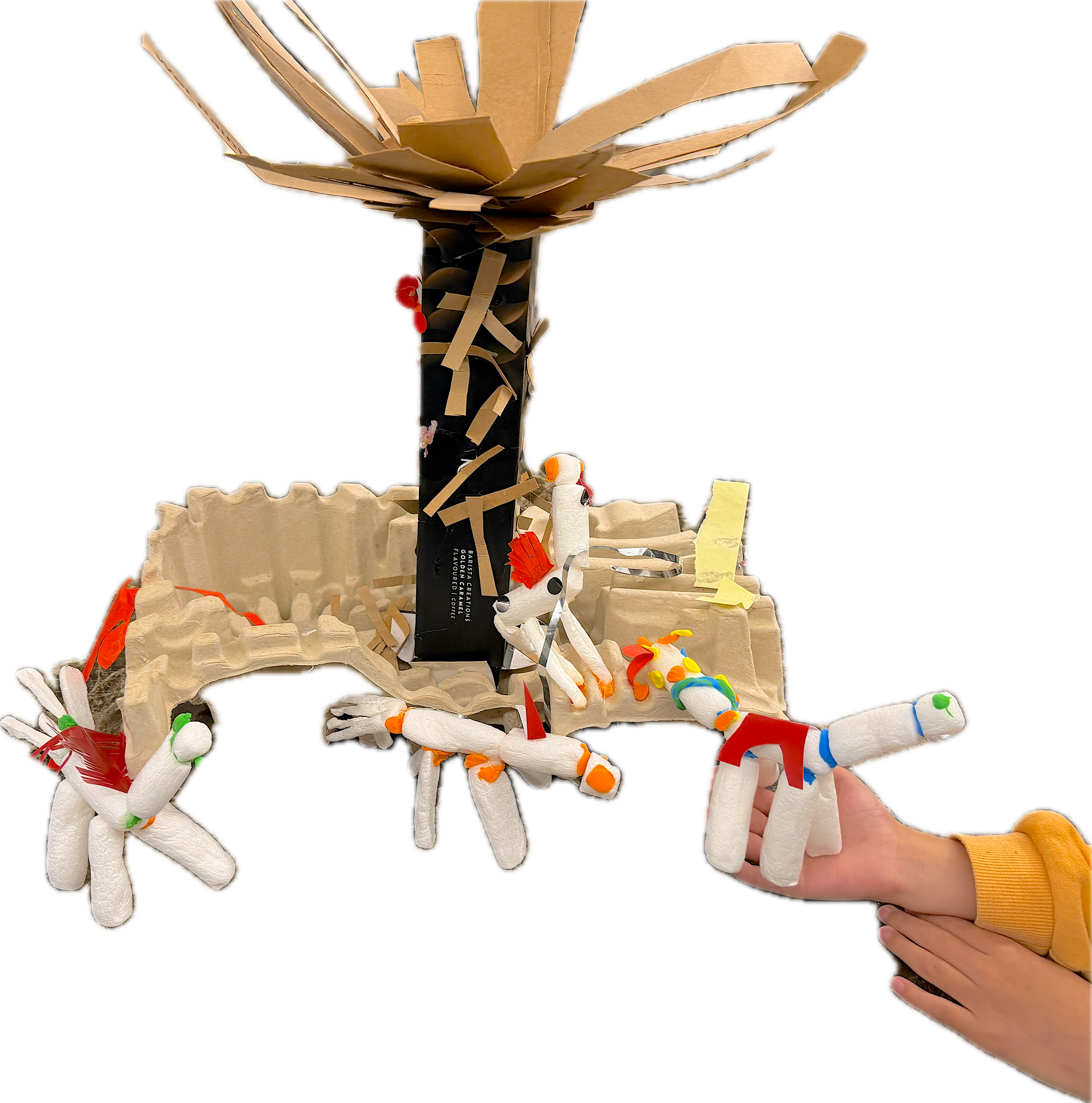
The key learning signal was not the final object alone. The key signal was the learner’s sustained relationship to the evolving structure.
CCH interprets this case through five linked processes:
Attention continuity
The learner remained connected to the work across an extended session.Material reasoning
Decisions were made in response to cardboard resistance, attachment, balance, and load.Spatial autonomy
The learner controlled the orientation, use, and development of the structure.Persistence after instability
Structural difficulty invited revision rather than withdrawal.Embodied evaluation
Lifting, wearing, and repositioning became forms of thinking.
Together, these processes suggest that the studio environment can function as a developmental infrastructure for long-duration attention and decision-making.
Evidence Boundary
This article presents qualitative studio observation. It is not a clinical assessment, psychological diagnosis, therapeutic claim, or completed third-party impact evaluation.
The case should be read as early process-based evidence within the CCH ART NOW™ documentation framework. Further structured observation, repeated case documentation, parent feedback, and external review would strengthen the evidence base over time.
References
Center on the Developing Child at Harvard University. (n.d.). A Guide to Executive Function.
Diamond, A. (2013). Executive functions. Annual Review of Psychology, 64, 135–168.
Malafouris, L. (2013). How Things Shape the Mind: A Theory of Material Engagement. MIT Press.
OECD. (n.d.). Student Agency for 2030.
OECD. (n.d.). Future of Education and Skills 2030/2040.