

THE SWITCH POINT AI CANNOT REPLACE
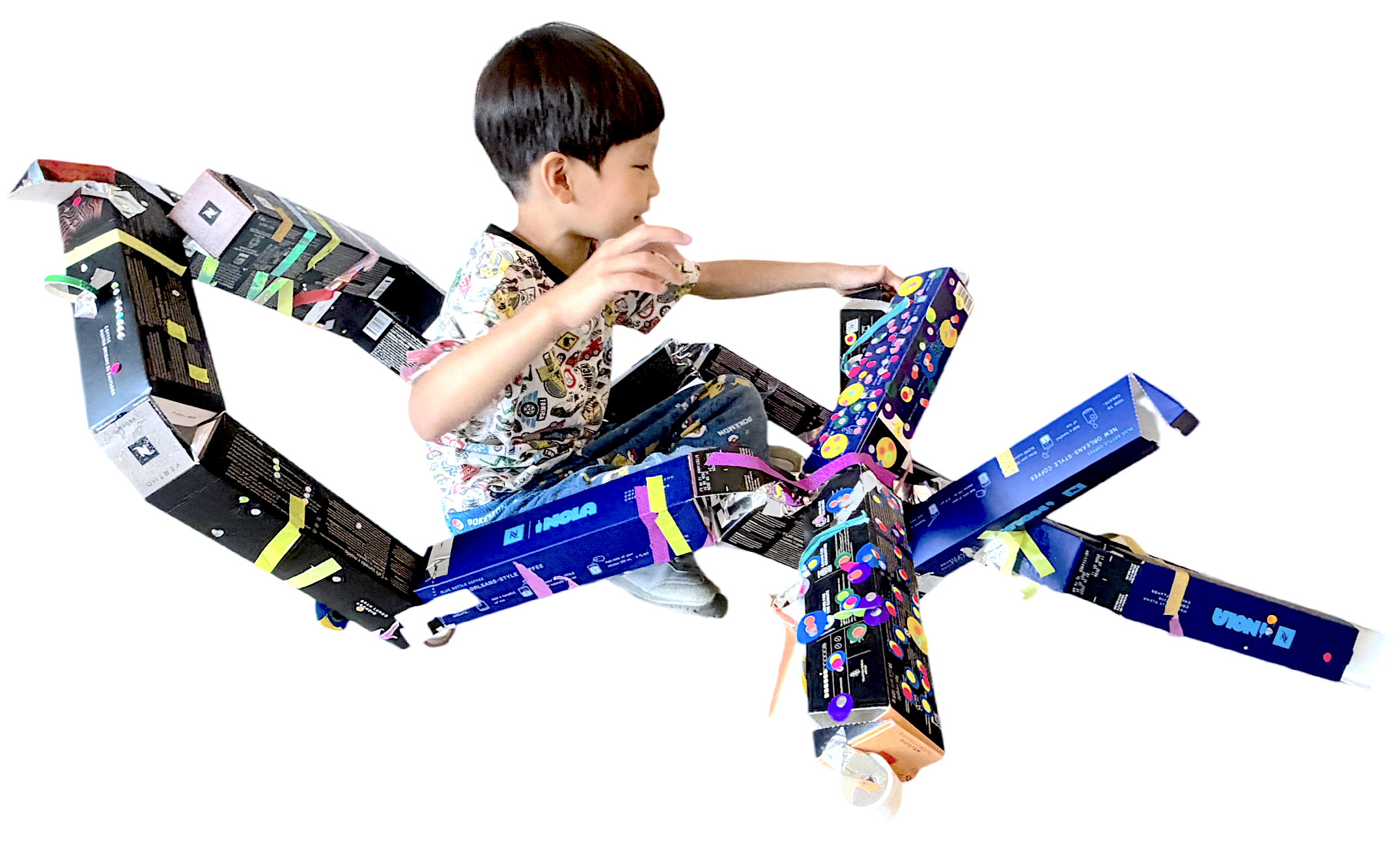
When Attention Becomes Internally Driven
CCH Field Observation · Children · September 2026

For the first part of this session, very little appeared to be moving forward. The learner repeatedly said that his legs were tired, rested his body against the furniture, and showed limited interest in following my instructions. We had reached the stage of a multi-session project in which materials explored and recombined during the previous sessions now needed to be physically connected. I told him that we would begin accelerating the construction process: he could attach the parts he understood independently and ask for assistance when he encountered something he did not know how to solve. Yet despite having materials, direction, and support available, he did not immediately enter the work.
Approximately twenty minutes later, the same learner was behaving very differently. He was listening closely, coordinating his hands with mine, understanding structural explanations, holding components while connections were made, anticipating what needed support, and remaining absorbed in the emerging construction. The major structure that had progressed slowly earlier came together rapidly. What interested me was not simply that the learner had eventually “focused.” The more consequential observation was the transition itself: what happened between resistance and sustained engagement?
I refer to this transition, provisionally, as the Switch Point.
THE PROBLEM WAS NOT SIMPLY ATTENTION
It would have been easy to interpret the first part of the session as a problem of attention, motivation, or compliance. The learner appeared tired and repeatedly returned to the way he wanted to manipulate the materials rather than listening to my explanation. When he said his legs hurt, I asked him to sit down and rest. There was little value in repeatedly demanding that he “focus” when he had not yet entered the problem cognitively.
The working conditions subsequently changed. His parent temporarily left the immediate workspace, reducing the social complexity around the activity, and I began working with the learner directly on the first structural connection. Importantly, I cannot conclude from one session that parental presence caused the earlier disengagement. Fatigue, familiarity, task difficulty, social dynamics, the timing of instructional intervention, and the first experience of structural success may all have contributed. What can be documented is that after these conditions changed, the learner’s behavior changed substantially as well.
This distinction matters because attention is often discussed as though it were a relatively fixed resource located inside the child: a learner either “can focus” or “cannot focus.” Learning science presents a more complex picture in which engagement, motivation, cognition, social interaction, and environmental conditions continuously interact. How People Learn II, for example, emphasizes that learning takes place through interactions among individual, social, cultural, emotional, and environmental factors rather than through cognition isolated from context.¹ The observation in this session therefore suggests a more productive question for CCH: rather than asking only whether a learner can focus, what conditions allow that learner to enter sustained attention?
THE SWITCH OCCURRED WHEN THE PROBLEM BECAME REAL

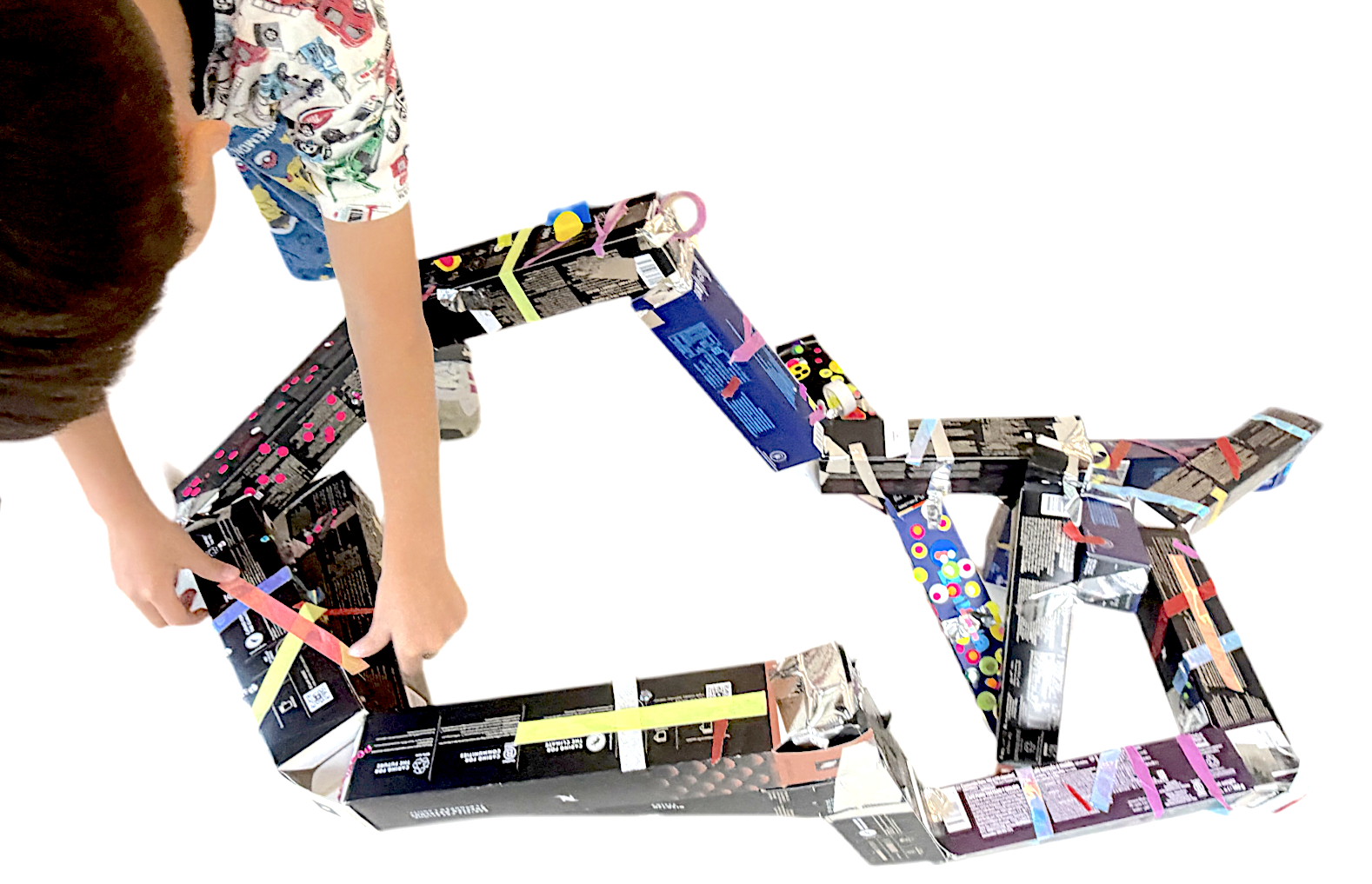
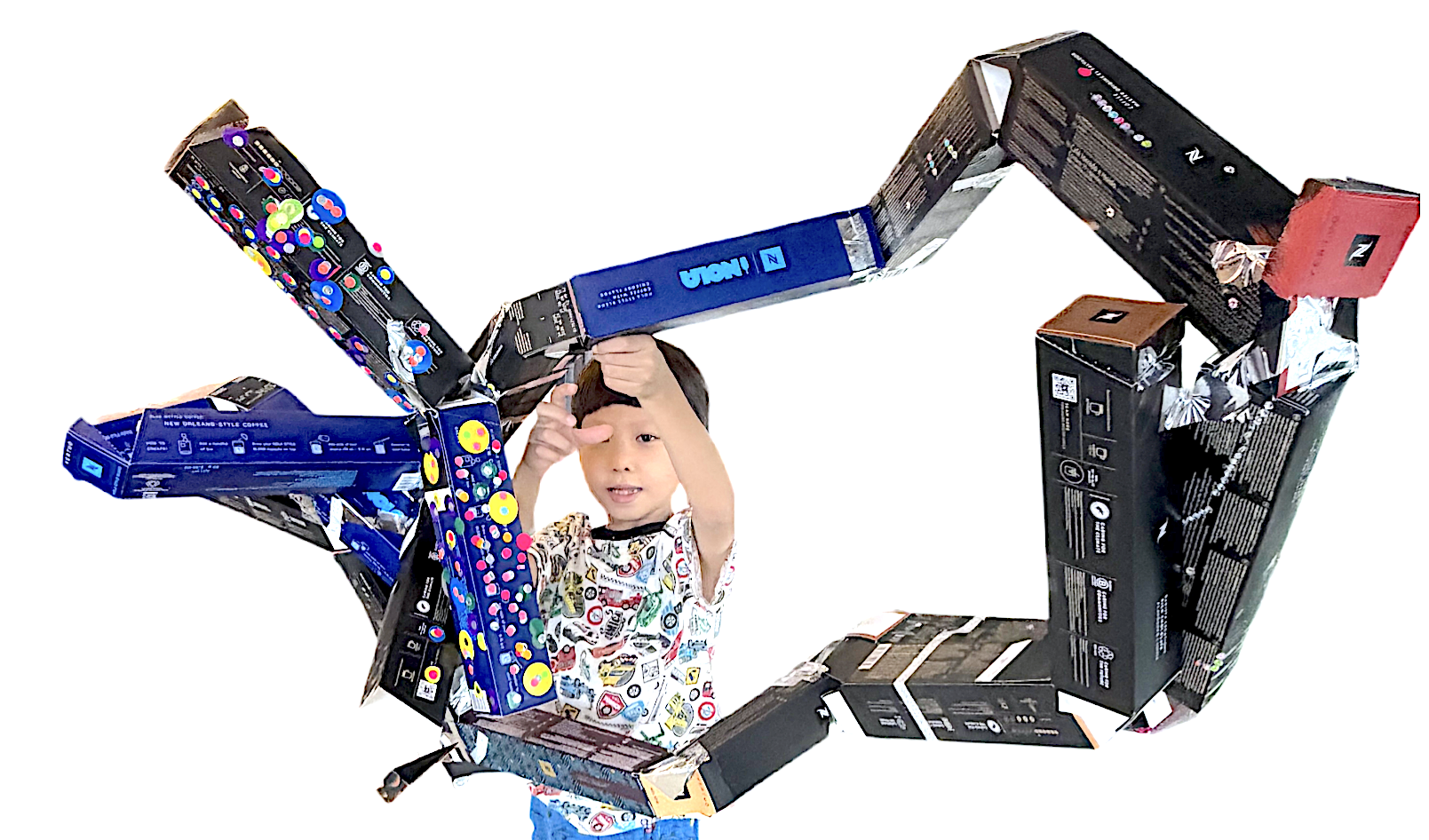
The task itself also changed during this period. At first, the learner arranged the long cardboard components on the table in the configuration he wanted. This worked while the objects remained supported by a horizontal surface, but once we attempted to connect them, the structure repeatedly shifted or collapsed. The obvious response would have been to teach him immediately how to stabilize it. Instead, I asked him to temporarily stop worrying about whether the structure could stand and first decide how he actually wanted the pieces to relate to one another in three-dimensional space.

This changed the cognitive problem. On a table, the surface has already made several decisions: there is a bottom, a horizontal orientation, and a stable plane supporting the materials. Once the components were lifted into space, those assumptions disappeared. The learner had to consider rotation, direction, angle, distance, weight, and the relationship among multiple parts. Initially he did not appear to fully understand why I was asking him to work differently. After the first and second connections were made, however, his interest increased noticeably. The structure began to become something he had never seen before, and the problem was no longer an abstract instruction from an adult. It had become his problem.
This may be one of the most important features of the Switch Point observed in this session. The learner did not simply become more obedient. He began to understand enough of the problem to become invested in what happened next. Once the structure started responding to his decisions, attention no longer needed to be maintained entirely through external prompting. The emerging object itself began generating reasons to continue.
FROM EXPLORATION TO CONSEQUENCE
The use of tape introduced another important change. During previous sessions, most decisions had remained reversible. Components could be placed somewhere, moved again, separated, recombined, or abandoned with little consequence. Attaching the materials changed that relationship. Once two pieces were connected, one decision began altering the conditions for the next. An angle created weight; weight produced instability; instability required support; and one structural commitment affected where another component could go.
The learner was therefore moving from open-ended possibility toward decision with consequence. This does not mean that decisions became permanent—tape can be removed and structures can be rebuilt—but revision now required additional action. The material retained traces of what had happened before. The project had begun to accumulate a physical history.
This is particularly relevant to CCH because material resistance prevents intention from remaining purely conceptual. The learner can want a component to extend in a particular direction, but cardboard, tape, weight, and gravity may refuse that intention. Malafouris’ Material Engagement Theory provides a useful framework for understanding this relationship, arguing against a model in which cognition is completed internally and materials merely execute an already-formed idea. Instead, thinking develops through ongoing interaction among brain, body, action, and material things.² In this session, the learner’s idea was not simply transferred into cardboard; the idea continued developing because the cardboard resisted him.
AUTONOMY DID NOT MEAN LEAVING HIM ALONE
This part of the session also clarified an important distinction in the CCH teaching approach. When the structure repeatedly failed, I could have solved it for the learner, or I could have interpreted “child-led” learning as a reason to withdraw and require him to discover every technical solution independently. Neither approach was appropriate to the learning objective.
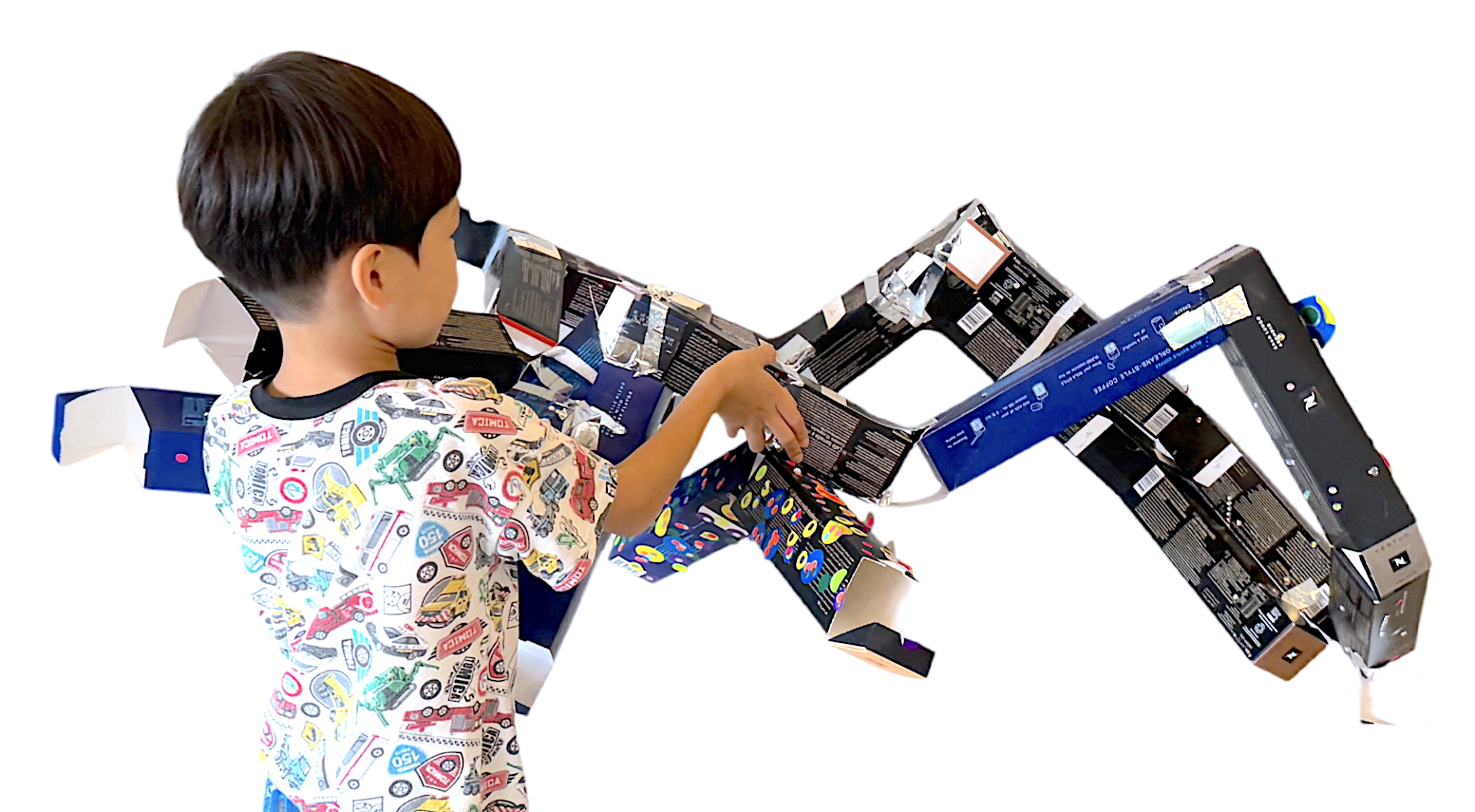
Instead, I separated decision authority from technical assistance. The learner first decided how he wanted the components to relate spatially. Only afterward did we examine what was required to make that intention physically possible. I showed him where a connection needed support, how tape could bridge surfaces, how we could coordinate our hands, and why particular structures were unstable. Sometimes he held the object while I assisted with a technical problem; sometimes I held it while he completed the connection. What remained important was that technical knowledge expanded his ability to act without replacing his authority over the direction of the work.
This produces a pedagogical relationship that is neither fully teacher-directed nor simply hands-off. The learner owns the decision; the educator provides enough knowledge, structure, and assistance for the learner to carry that decision further than current ability would otherwise allow. In CCH, autonomy therefore does not mean doing everything alone. It means learning to distinguish between receiving expertise and surrendering ownership.
THE SWITCH POINT BECAME VISIBLE
Once this relationship between intention, material resistance, and technical possibility became clear, the learner’s working state changed rapidly. He began listening because the information now had an immediate function. When I explained where to hold a component, he could see why it mattered. When a connection failed, the failure was no longer simply an interruption; it became information required to continue something he wanted to complete. Our interaction shifted from repeatedly asking him to participate toward jointly solving a problem whose direction he had begun to own.
Within approximately twenty minutes of this concentrated period, the main structure was assembled. The contrast with the earlier part of the session was substantial enough to document, but the speed of completion is not the primary outcome. More important was the change in the source of engagement. Earlier, adults were attempting to move the learner toward the task. Later, the developing problem itself appeared to sustain his participation.
When his parent subsequently returned, his working behavior shifted again. I asked whether he would prefer his parent to wait outside while we continued, and he said yes. I would not interpret this single decision as evidence of mature metacognition, but it is worth following longitudinally because the learner was beginning to participate in selecting the conditions under which he wanted to work. The first environmental adjustment had been made by adults; the second included a choice from the learner himself.
WHEN THE WORK BECAME LARGER THAN THE CHILD
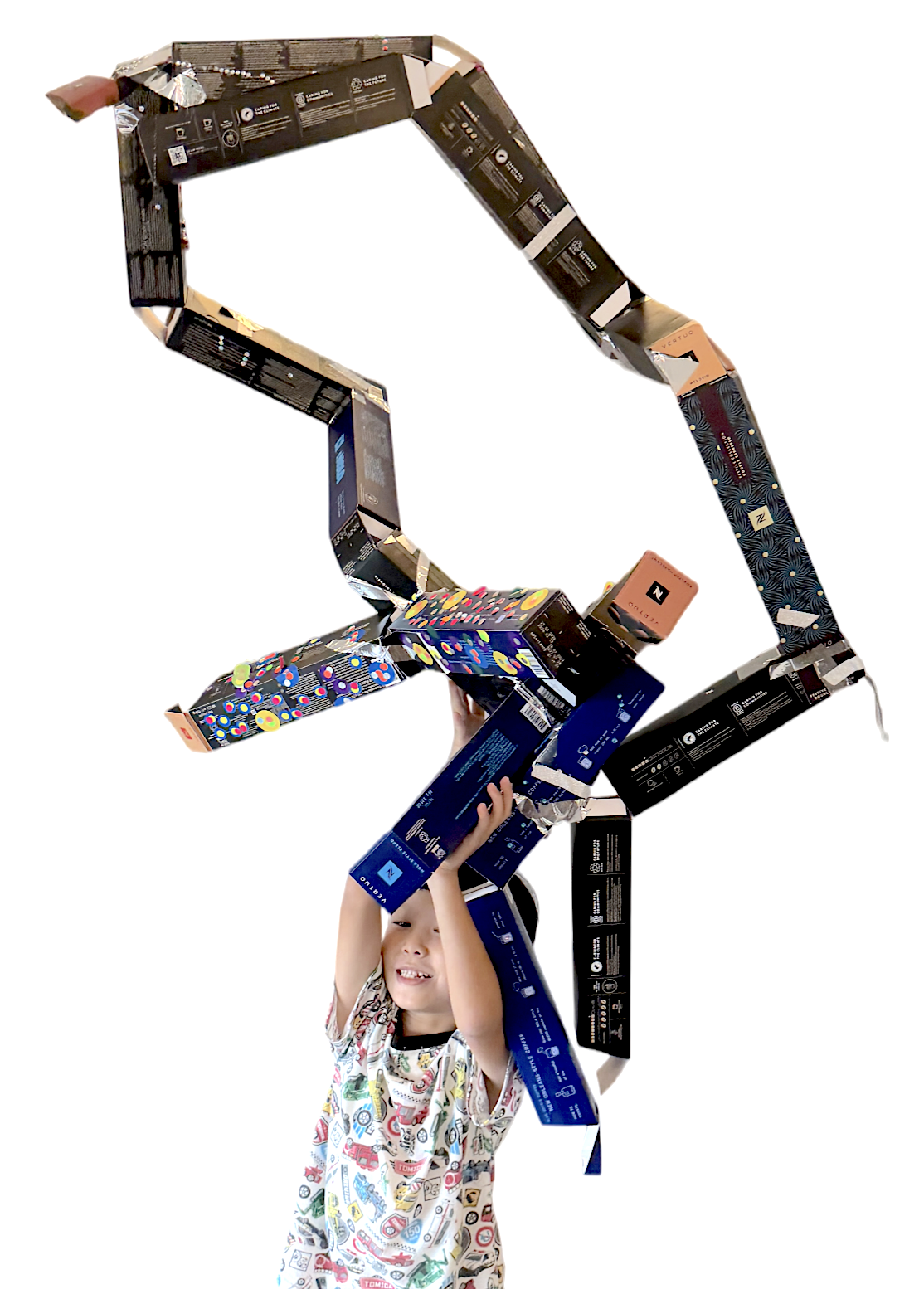
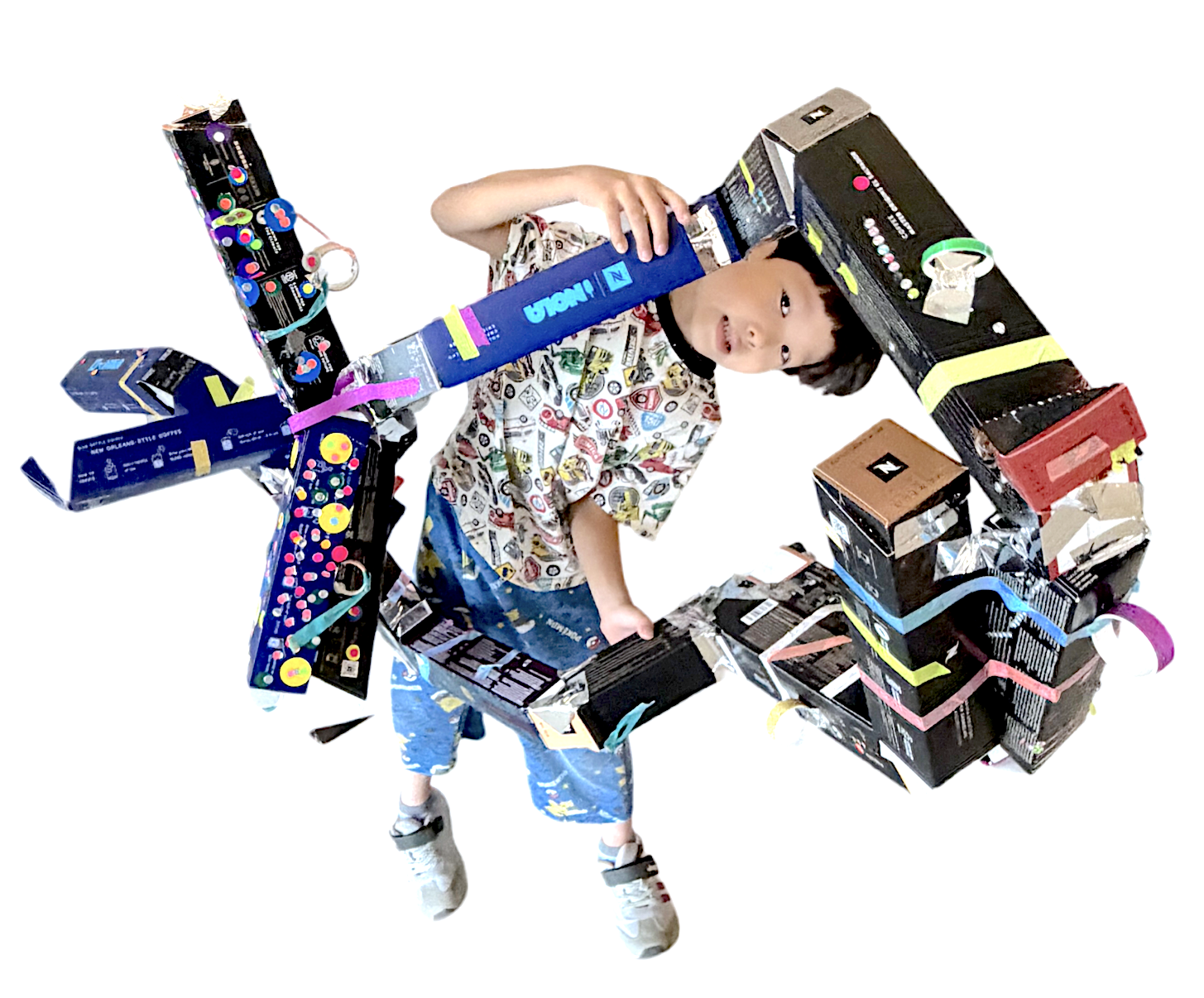
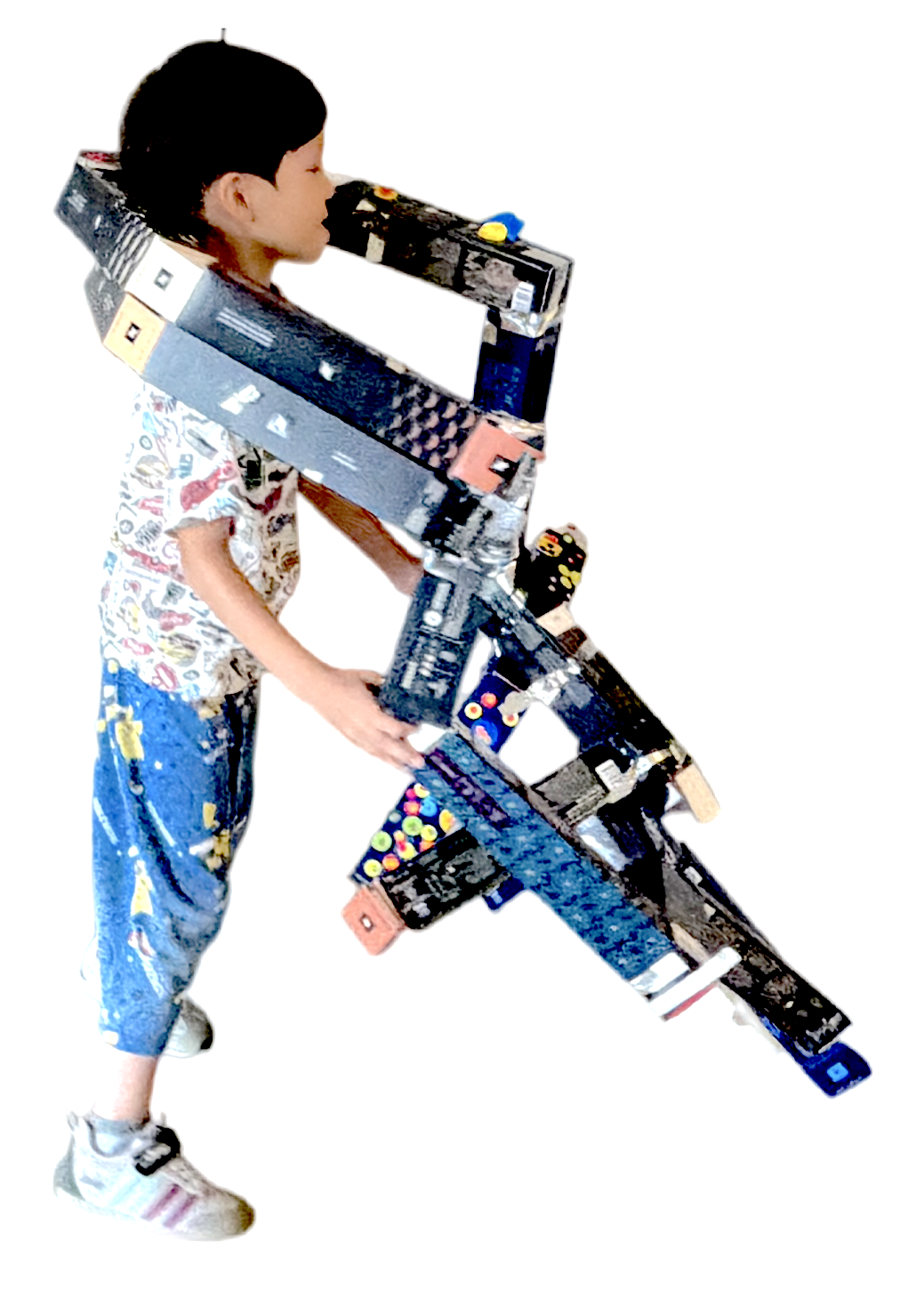
By the end of the session, the connected structure had become comparable to, and in some dimensions larger than, the learner’s own body. He began interacting with it as something resembling a spacecraft, but the representational identity of the object was less significant than the cognitive change produced by its scale. He could no longer understand the construction from a single seated position. He had to stand, lift it, walk around it, look underneath it, reach across it, feel its weight, and reposition himself in relation to the whole.
The body had become part of the problem-solving system. Changing the scale of the work therefore did more than produce a visually impressive artifact; it changed what the learner had to cognitively and physically coordinate. Research on embodied cognition similarly challenges a strict separation between thinking and bodily action, emphasizing that cognition is shaped through interaction with the physical environment.¹ ² Here, spatial understanding was not simply something the learner contemplated. He had to move through the consequences of his own construction.
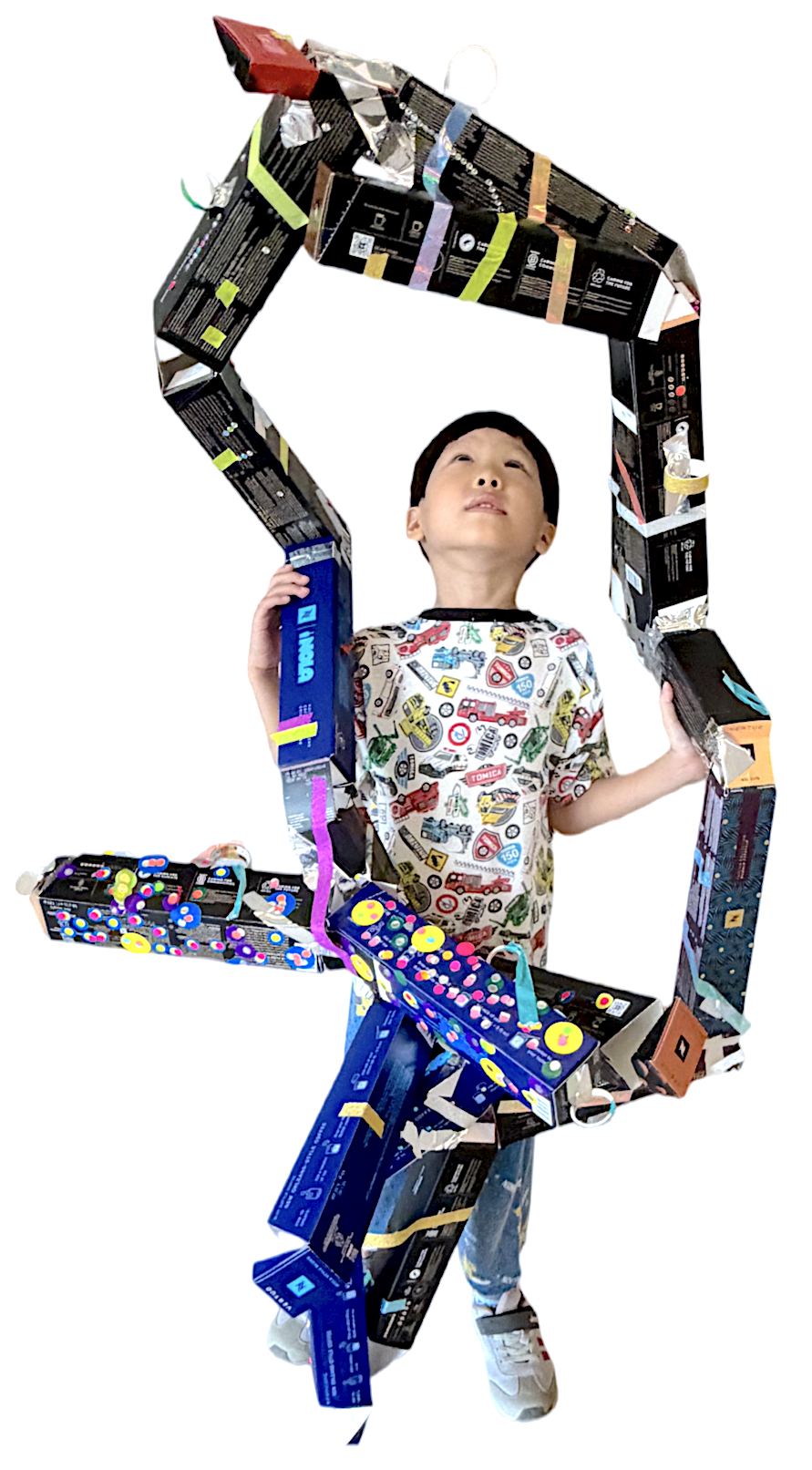
When the primary structure finally held together, his emotional relationship with it also changed. He became visibly excited, moved it around, examined it from multiple positions, played with it, and wanted his parent to see what had emerged. The accomplishment was not simply that he had produced a large sculpture. Something that had existed as a loose collection of possibilities had become an object with enough physical coherence to surprise its own maker.
THE SWITCH POINT AI CANNOT REPLACE
This observation becomes particularly relevant as generative AI makes the production of possibilities increasingly inexpensive. AI can generate an image, propose alternatives, explain a structural principle, suggest the next step, or help an educator design a learning environment. It may eventually become very effective at recognizing behavioral patterns associated with engagement. For that reason, the claim here should not be that AI cannot detect, influence, or support a Switch Point.
The distinction is more fundamental: AI cannot undergo the learner’s transition on the learner’s behalf.
No generated answer can substitute for the moment in which the learner moves from avoiding a problem to owning it. AI can tell a child how to stabilize cardboard, but receiving the solution is not equivalent to experiencing an intention fail, deciding that the intention still matters, seeking the knowledge required to continue, and remaining engaged long enough to transform that decision into a physical consequence.
This is the human territory that interests me.
The Switch Point is therefore not simply “the moment a child starts paying attention.” I currently use the term to describe an observable transition from externally sustained participation toward increasingly self-sustained engagement with a problem. It remains a working construct rather than a validated psychological measure, and determining what produces such transitions will require observations across learners, contexts, and time.
But this session provides a useful case. The learner did not need more possibilities. He already had them. He needed to cross from possibility into participation, from participation into decision, and from decision into consequence. Once that occurred, attention was no longer merely something adults were asking him to provide. He had entered the problem. And that is the Switch Point that no technology can experience for him.
CCH Protocol™ — Working Observation
External Participation → Meaningful Problem → Switch Point → Self-Sustained Engagement → Decision → Material Resistance → Revision → Consequence
CCH Protocol™ does not attempt to eliminate resistance from learning. It investigates how material, spatial, social, and instructional conditions can be structured so that learners have opportunities to move through resistance and assume increasing ownership of what happens next.
The artifact is evidence of that process.
The deeper outcome is not the cardboard structure.
It is the learner who decided to continue.
References
1. National Academies of Sciences, Engineering, and Medicine. (2018).How People Learn II: Learners, Contexts, and Cultures. National Academies Press.
How People Learn II — National Academies Press
2. Malafouris, L. (2013).How Things Shape the Mind: A Theory of Material Engagement. MIT Press.
How Things Shape the Mind — MIT Press DOI
Research Note. This article documents a single session within an ongoing longitudinal educational practice. The observed behavioral transition does not establish causation, and “Switch Point” is used here as a developing CCH conceptual construct rather than a validated psychological or educational measure.