

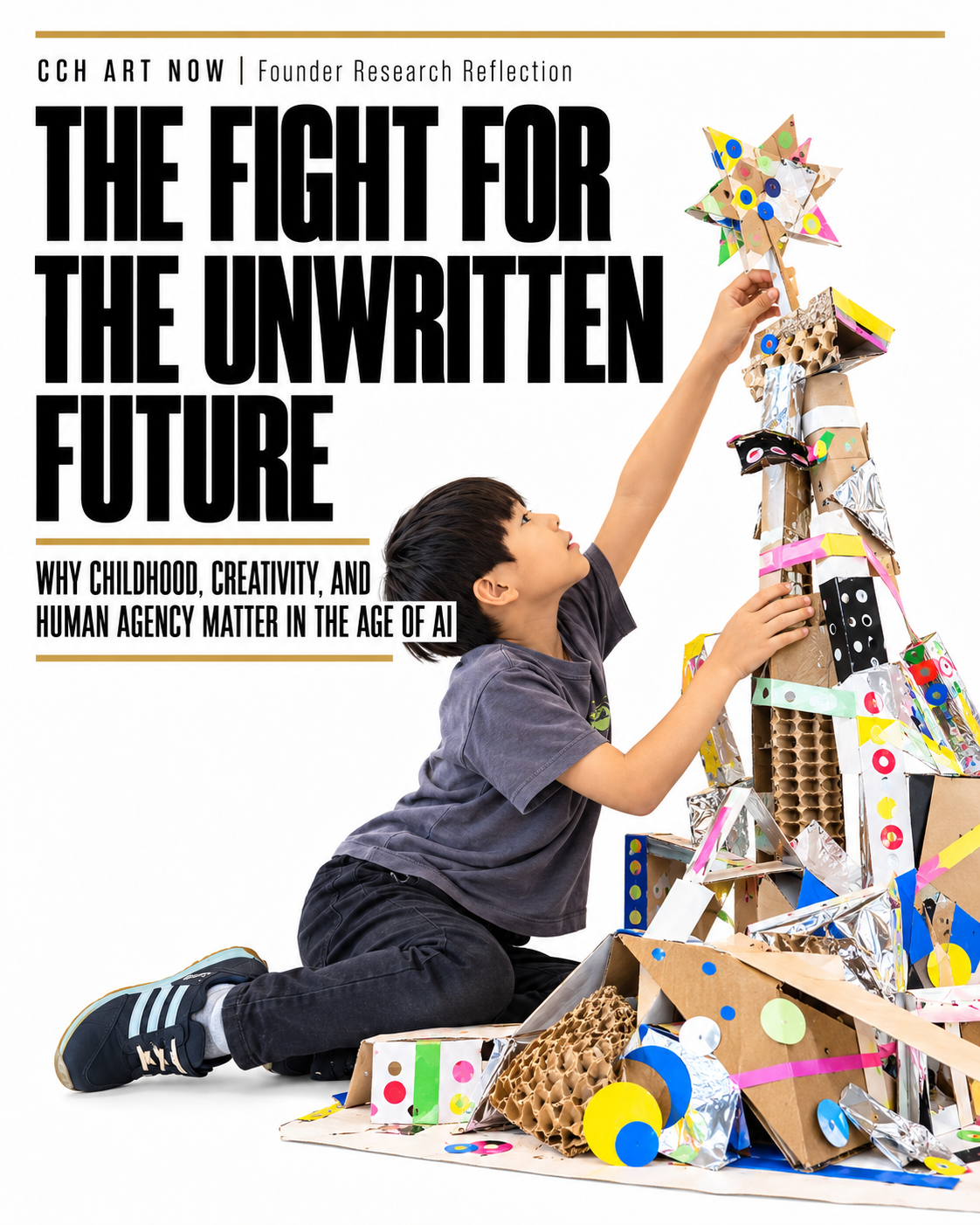
The Fight for the Unwritten Future
Why Childhood, Creativity, and Human Agency Matter in the Age of AI
CCH ART NOW | Founder Research Reflection
Introduction: Who Has the Power to Shape the Human Future?
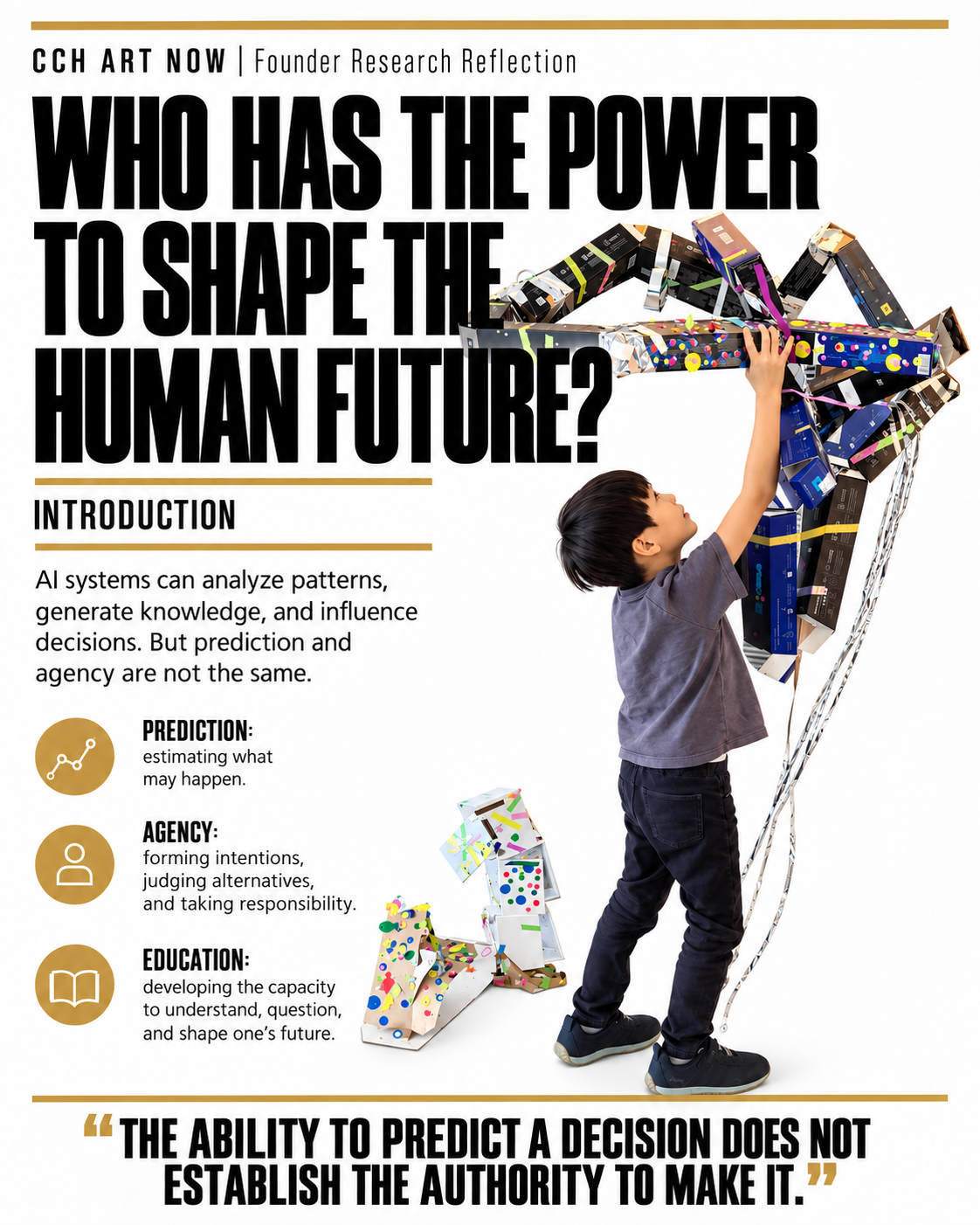
As artificial intelligence becomes increasingly embedded in everyday life, the question of technological progress is inseparable from questions of human autonomy, institutional power, and the future of education. AI systems are becoming more capable of analyzing patterns, predicting behavior, generating knowledge, and influencing decisions. These developments have intensified public concerns about privacy, ethical responsibility, and the extent to which individuals can meaningfully control their digital environments.
A recent conversation with a young woman whose educational experiences span Hong Kong and Canada brought these concerns into sharper focus. Our discussion began with her unease about artificial intelligence and the growing difficulty of protecting personal information. It soon expanded into questions about cultural expectations, childhood development, and the relationship between education and individual freedom.
One disagreement was especially revealing. She suggested that even the seemingly unlimited possibilities of childhood might eventually become predictable through advanced technological systems. I considered a different question: even if a system could anticipate a person's behavior, would that prediction determine the meaning, authority, or consequences of the person's decisions?
The distinction matters because technological prediction and human agency operate at different conceptual levels. Prediction concerns the probability of an outcome. Human agency concerns the capacity to form intentions, evaluate alternatives, exercise judgment, and participate in shaping one's circumstances. These capacities are influenced by social structures and technological environments, yet they remain essential to any meaningful account of human development.
The ability to predict a decision does not establish the authority to make it.
This distinction provides a starting point for reconsidering education in the age of artificial intelligence. As societies invest enormous resources in developing systems capable of anticipating human behavior, an equally important question emerges: how are we investing in the development of human beings who can understand, question, and shape their own futures?
1. Surveillance Capitalism and the Structural Limits of Individual Control
In The Age of Surveillance Capitalism: The Fight for a Human Future at the New Frontier of Power (2019), Shoshana Zuboff examines the transformation of human experience into behavioral data and the economic systems built around its extraction, analysis, and prediction. Her critique extends beyond conventional concerns about personal information. It addresses the accumulation of power through the capacity to observe, anticipate, and potentially influence human behavior at scale.
In contemporary digital environments, everyday activities can generate information about movement, purchasing habits, social relationships, personal preferences, and behavioral routines. These data may be collected through interconnected commercial platforms, devices, and institutional systems. For children, participation in such environments can begin before they possess the knowledge or practical ability to understand how information about them is recorded, processed, or used.
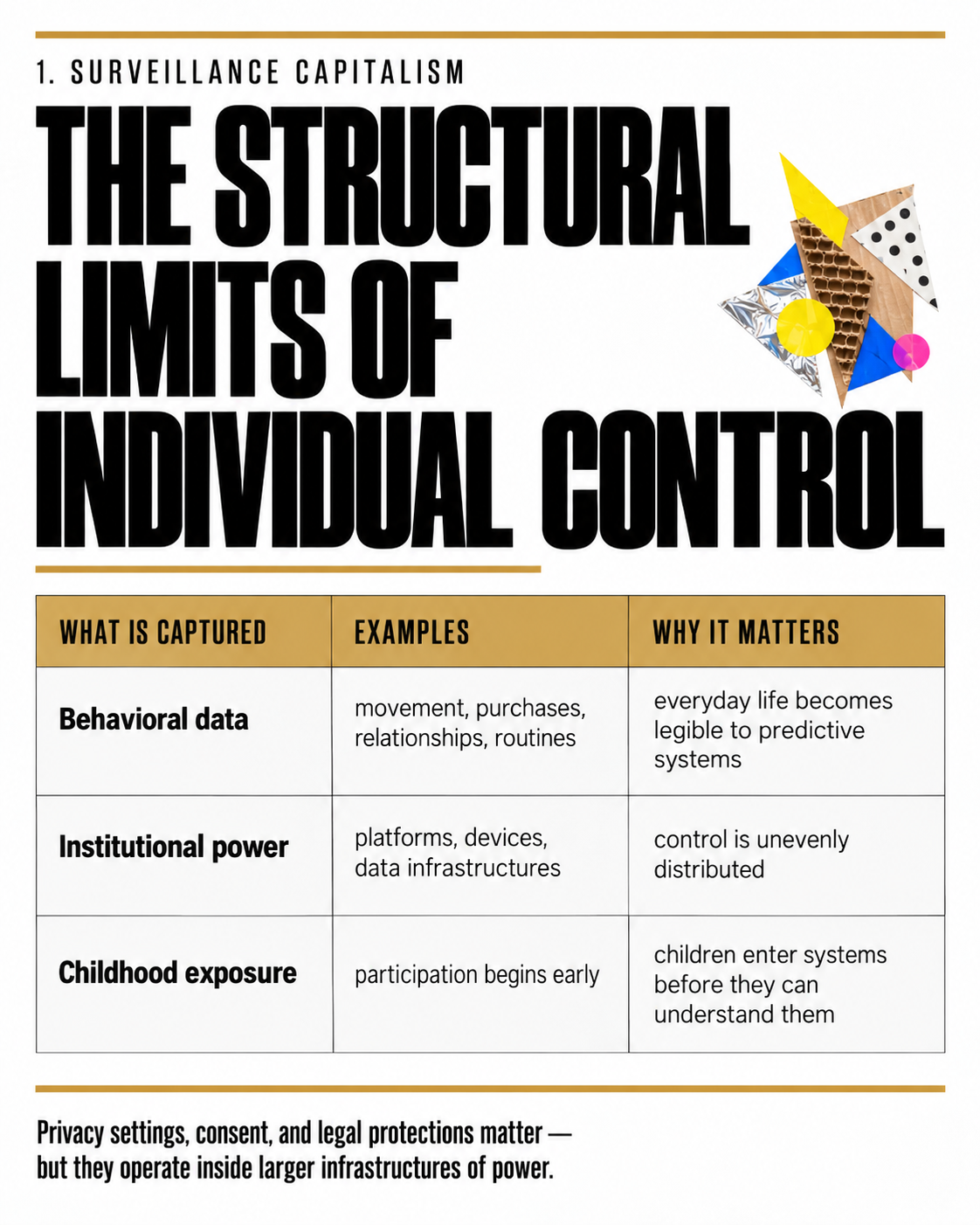
The resulting ethical challenge cannot be adequately addressed through individual responsibility alone. Privacy settings, informed consent, encryption, and legal protections remain important, but individuals make these choices within infrastructures whose operating principles, commercial incentives, and institutional relationships are often difficult to examine. The asymmetry between those who generate behavioral data and those who control its processing raises questions about accountability, power, and democratic oversight.
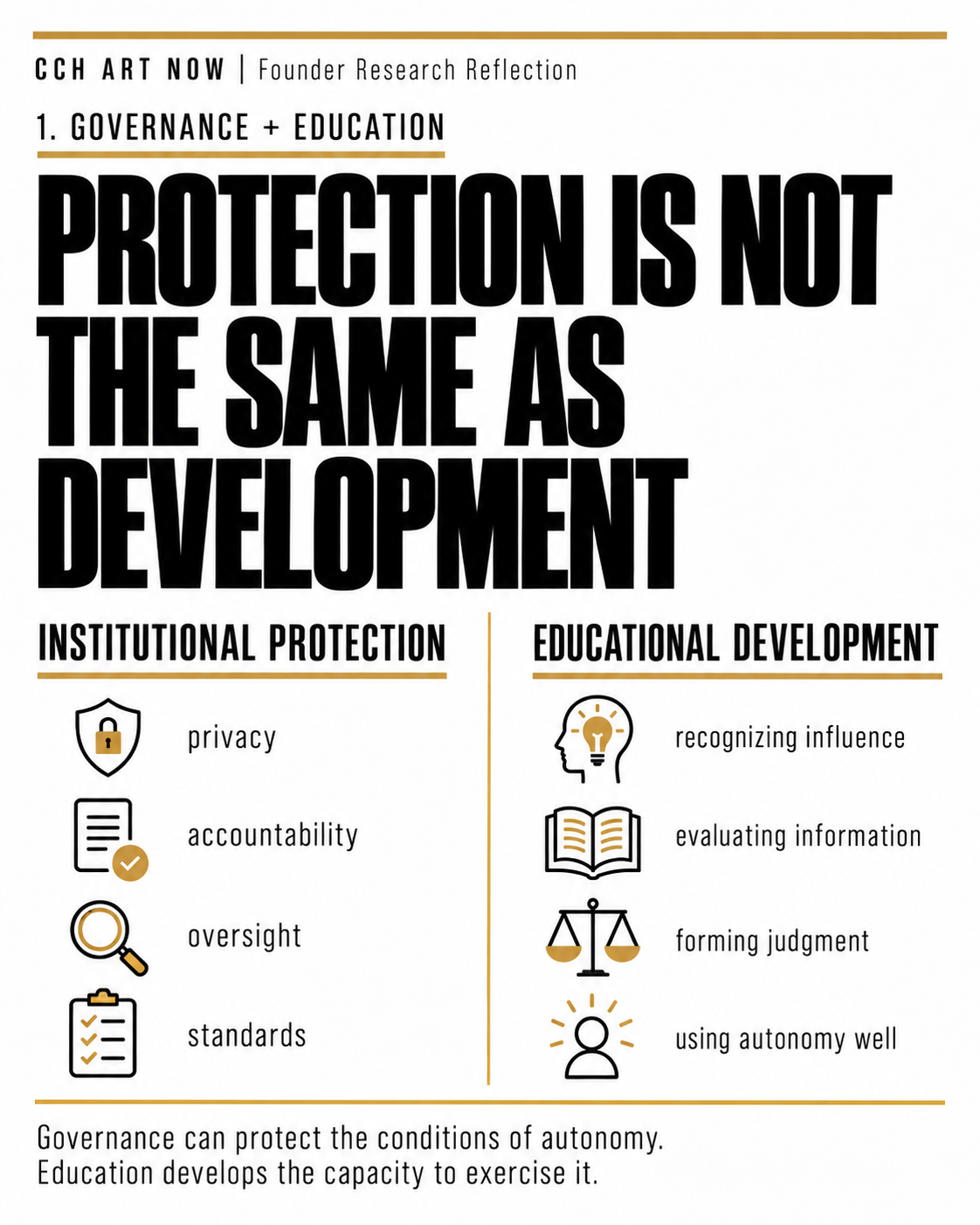
UNESCO's Recommendation on the Ethics of Artificial Intelligence (2021) provides an international framework addressing human rights, dignity, privacy, transparency, accountability, and human oversight. Such frameworks recognize that technological development requires governance beyond voluntary individual participation. Meaningful protection depends on institutions capable of establishing responsibilities, enforcing standards, and responding to social consequences.
Yet governance presents only one dimension of the human challenge. Regulations may restrict certain practices, and technical safeguards may reduce exposure to harm, but neither automatically develops an individual's ability to recognize influence, evaluate competing information, or formulate independent judgments.
This creates a critical relationship between technological governance and educational development. Institutional protections establish conditions under which autonomy can be exercised, while education can help cultivate the capacities through which individuals understand and use that autonomy.
The question therefore extends beyond how personal information should be protected. It also concerns how societies can preserve opportunities for human judgment within environments increasingly structured by behavioral prediction.
2. Prediction, Cultural Expectations, and the Education of Human Agency
The capacity to predict behavior has become increasingly sophisticated, but prediction should be distinguished from determinism. Human decisions emerge through interactions among biological development, personal experience, cultural expectations, social relationships, and changing environments. Statistical systems may identify regularities within these interactions, but their predictive accuracy depends on available information, modeling assumptions, and the conditions under which predictions are applied.
A prediction can influence how an institution responds to a person. Educational assessments, recommendation systems, and automated classifications may affect which opportunities individuals encounter. When predictions become embedded in decision-making systems, they can potentially reinforce existing expectations and constrain available choices. The concern is therefore not simply whether behavior can be predicted, but how predictive classifications are used and who possesses the authority to act upon them.
Education has always participated in shaping expectations about human potential. Families and institutions communicate ideas about intelligence, achievement, responsibility, success, and acceptable futures. These expectations are influenced by historical, economic, and cultural circumstances.
During our conversation, we reflected on differences encountered across Asian and Canadian educational environments. Certain family experiences emphasized academic performance, professional stability, and established career pathways, while others placed greater emphasis on personal exploration and individual preference. Such observations offer useful starting points for comparative inquiry, although educational values vary significantly within each society and cannot be reduced to a simple cultural opposition.
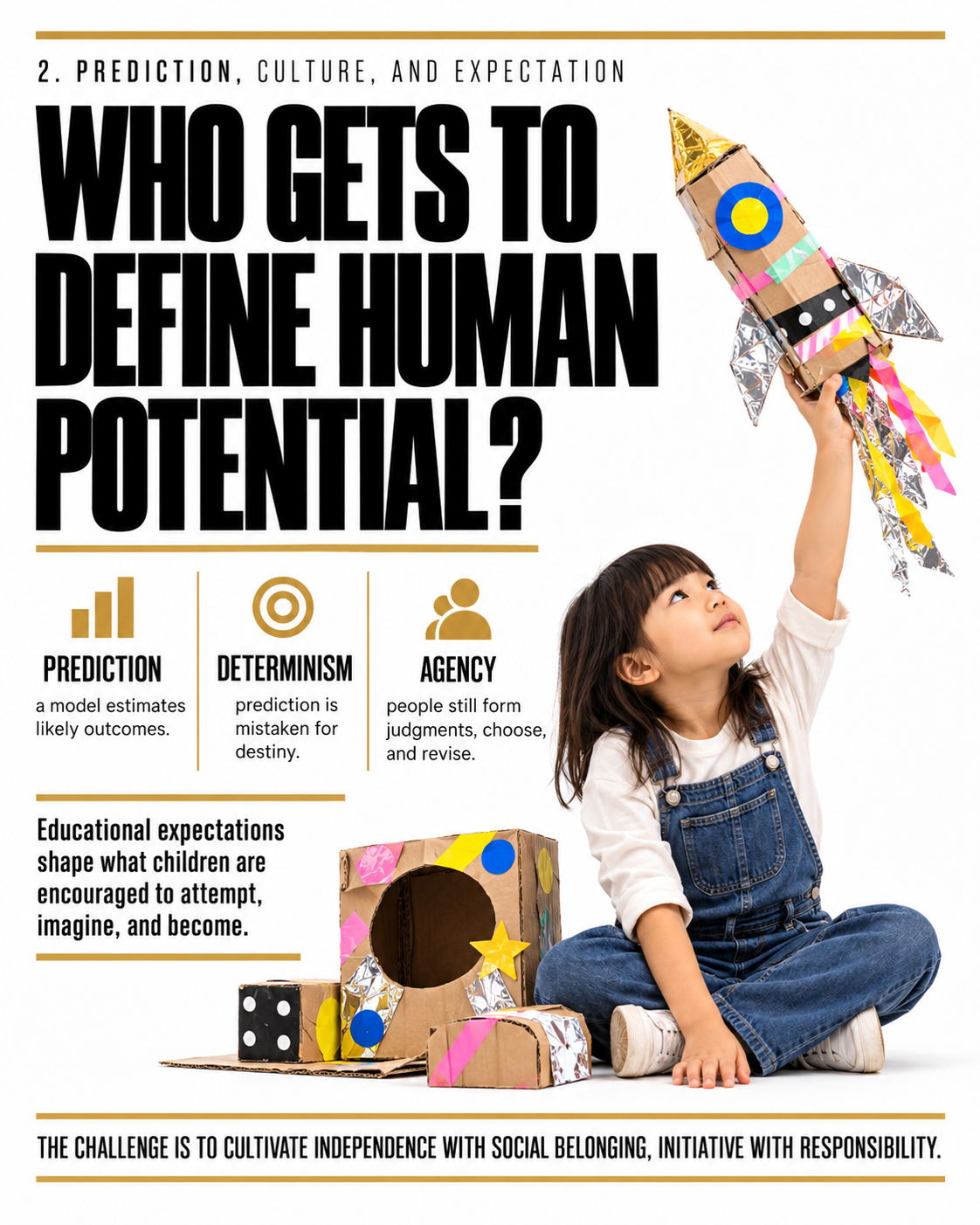
Both structured achievement and personal freedom can contribute to development. Difficulties arise when educational expectations become so narrow that children have limited opportunities to discover interests, abilities, or forms of achievement outside predetermined categories.
An education system centered primarily on measurable performance may also overlook forms of learning that unfold through experimentation, uncertainty, and extended engagement. Standardized outcomes provide useful information, but they cannot exhaust the complexity of human development.
This becomes especially significant when considering children whose capabilities exceed, differ from, or develop outside the expectations of their immediate environments. Advanced autonomy, unusual interests, or unconventional approaches to problem-solving may require educational flexibility and social support. Without appropriate conditions, differences in learning and development can create friction between individual capacities and institutional expectations.
The relevant educational challenge is to cultivate independence alongside social belonging, intellectual development alongside emotional understanding, and personal initiative alongside responsible participation in communities.
Human agency develops within relationships and institutions. It requires opportunities to make decisions, encounter consequences, revise assumptions, and gradually understand the relationship between one's actions and the surrounding world.
If education is concerned with preparing individuals for an uncertain future, it must examine how learners develop the capacity to navigate possibilities beyond those already anticipated for them.
3. Childhood, Material Resistance, and the Unwritten Possibilities of Development
One of the recurring observations in my educational practice is that young children's capabilities may become more visible when the scale, duration, and structure of learning experiences are reconsidered.
At CCH ART NOW, material-based creative practice provides an environment in which children encounter physical materials, open-ended problems, and opportunities for sustained engagement. Rather than relying exclusively on predetermined models or short activities, selected projects involve large-scale construction, extended experimentation, and creative processes that evolve across multiple sessions.
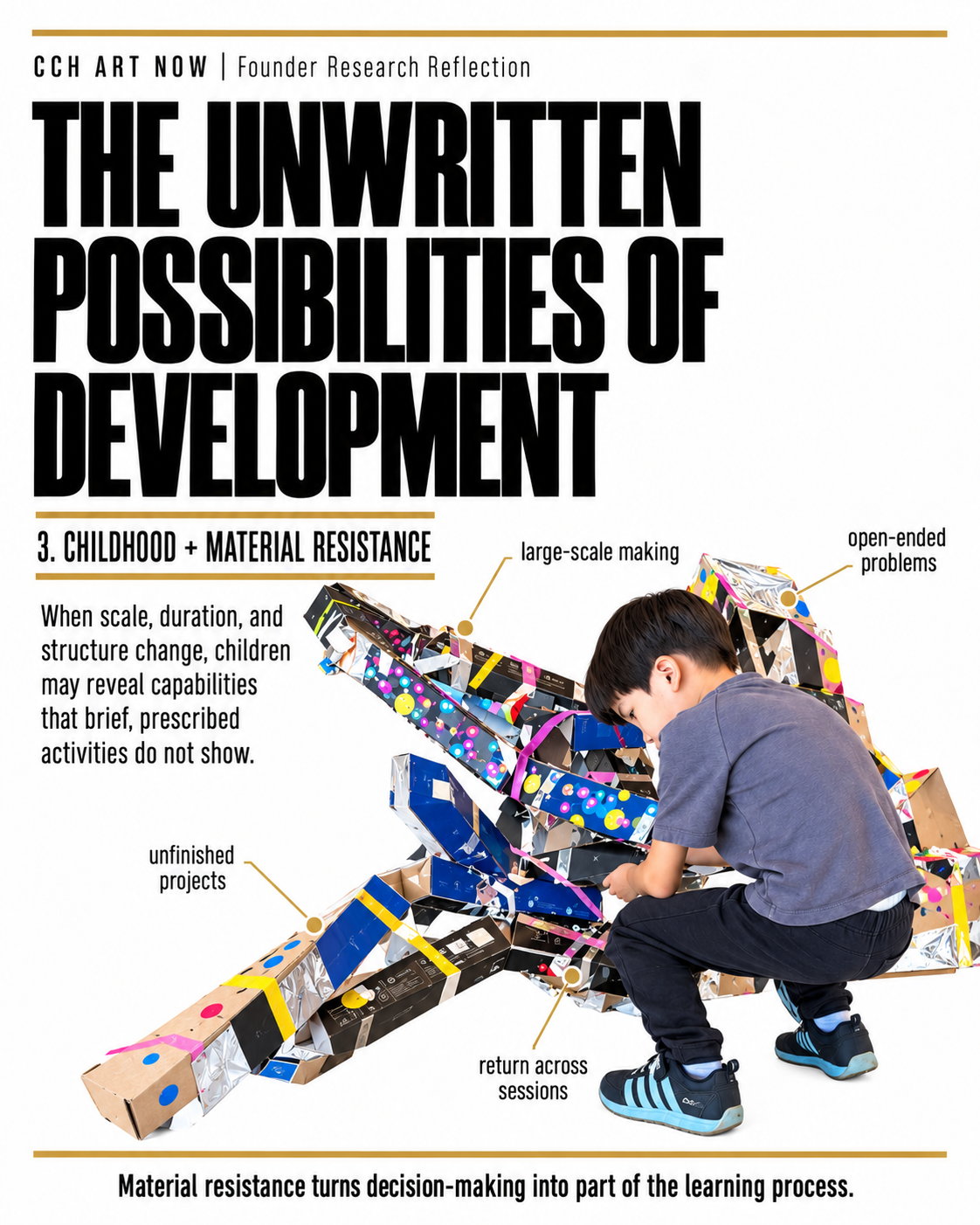
Some projects have continued over two or three months, involving children as young as five years old. Their development requires more than the physical production of an artwork. Children may revisit earlier decisions, investigate structural limitations, reorganize materials, and continue working with ideas that remain unfinished between sessions.
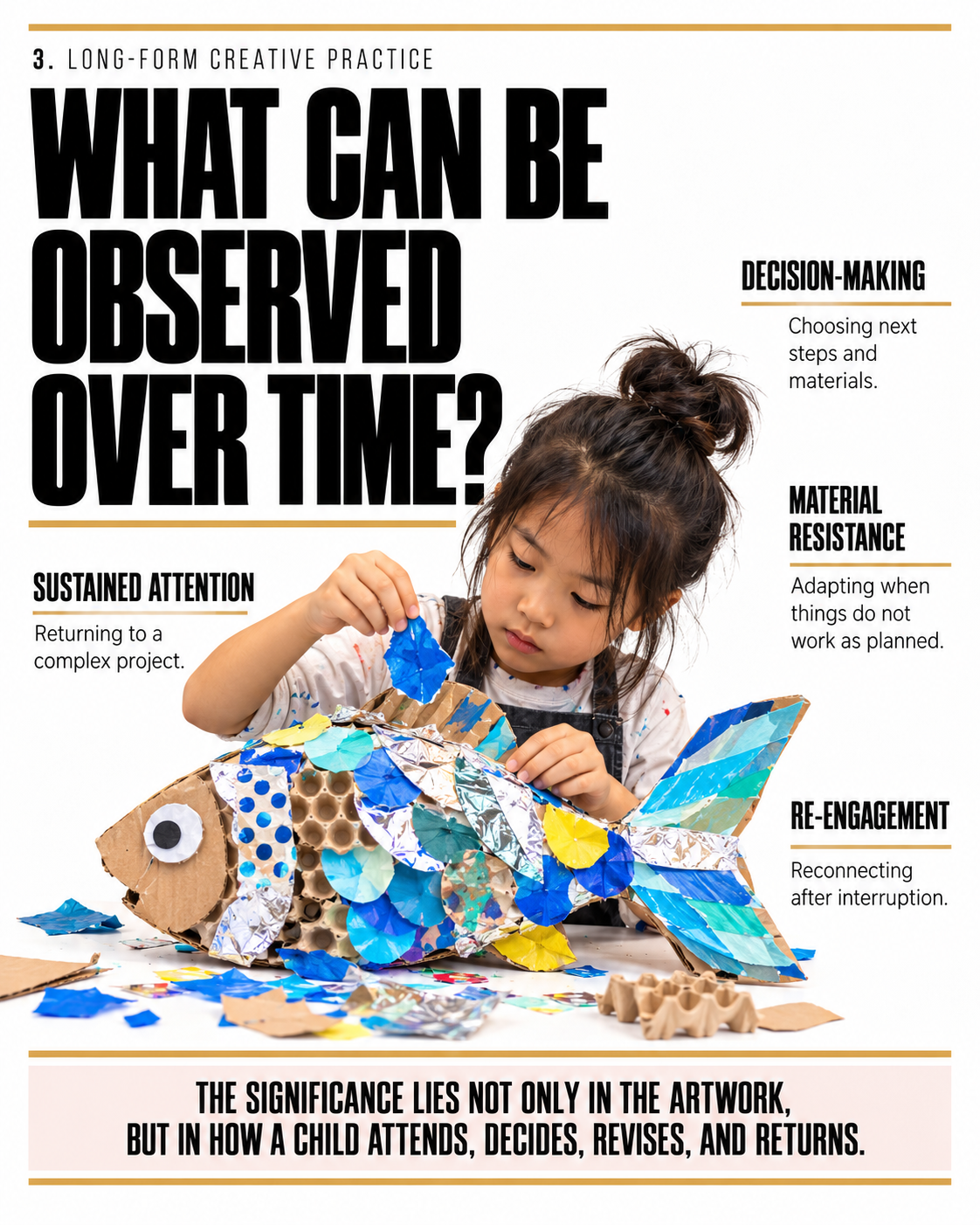
Physical materials introduce forms of resistance that cannot always be resolved through immediate instruction. A structure may become unstable, a connection may fail, or an unexpected property of a material may require the child to reconsider an original plan. In these situations, decision-making becomes embedded in the creative process. The child encounters a problem, interprets the available possibilities, tests a response, and observes the consequences.
Equally important is the experience of returning to an unfinished project. A child who reconnects with an earlier intention after several days must engage with continuity across time. The creative process may involve remembering previous decisions, recognizing unresolved problems, and determining whether the original direction remains meaningful.
These observations provide the basis for examining several interconnected dimensions of learning:
Sustained Attention and Temporal Continuity: How children maintain or reconstruct engagement with a project across multiple sessions.
Decision-Making and Creative Autonomy: How children initiate choices, evaluate alternatives, and assume increasing responsibility for their work.
Material Resistance and Cognitive Flexibility: How unexpected outcomes influence experimentation, revision, and adaptation.
Self-Efficacy and Re-engagement: How experiences of difficulty, persistence, and accomplishment relate to children's perceptions of their own capabilities.
Within the developing CCH Protocol, these dimensions are treated as areas for systematic observation and investigation. Long-term creative engagement may provide meaningful opportunities to examine attention, judgment, and autonomy, although the existence of an extended project does not independently demonstrate improvement in these capacities.
The educational significance lies in the processes through which children interact with uncertainty and gradually assume responsibility for their decisions. Questions about the transfer of these experiences into academic learning, everyday problem-solving, or later developmental outcomes require longitudinal evidence and appropriate comparative research.
Nevertheless, these observations challenge assumptions about what young children should be offered and what educators should expect to observe. When children encounter sufficiently flexible environments, substantial materials, and extended periods of engagement, forms of initiative and complexity may emerge that brief, highly prescribed activities would be less likely to reveal.
The future of a child's creative process cannot always be fully specified at its beginning. What initially appears as an incomplete structure may develop through new material discoveries, changing interests, and decisions that arise from the experience itself.
This openness is central to the educational meaning of an unwritten future.
4. Beyond AI Literacy: Reconsidering the Purpose of Education
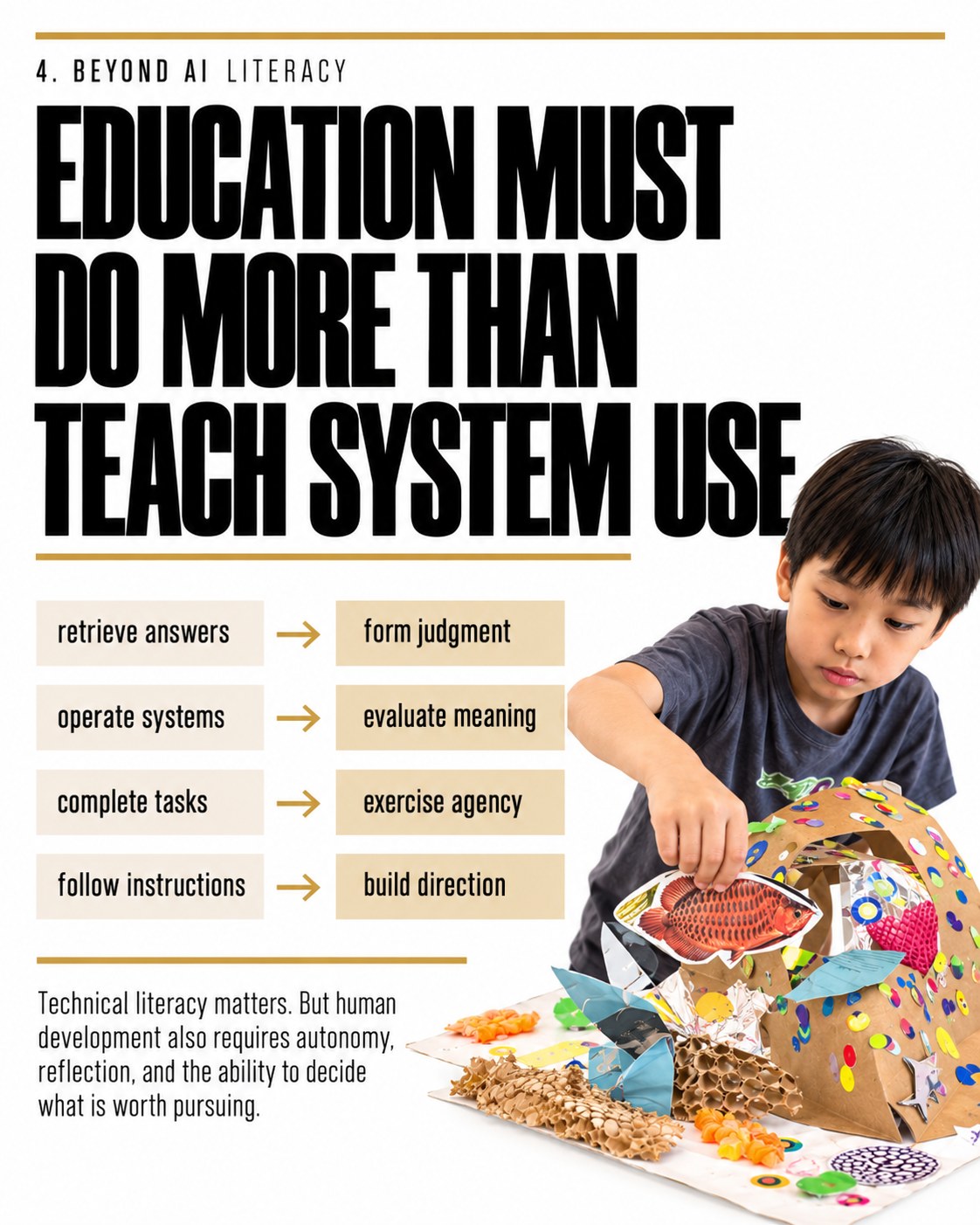
The acceleration of artificial intelligence has intensified an existing debate about the purposes of education. When increasingly capable technological systems can generate text, images, explanations, and solutions, educational value can no longer be discussed solely through the efficiency of information production.
Knowledge and disciplinary expertise remain indispensable. Students must understand how technologies function, recognize their limitations, assess the reliability of information, and develop appropriate technical and ethical literacy. These capacities are increasingly important in societies where automated systems influence communication, employment, public institutions, and everyday decisions.
However, technical proficiency alone does not fully address questions of human development. A person may understand how to operate a system while remaining uncertain about which goals deserve pursuit, what values should guide decisions, or how to respond when established pathways no longer provide meaningful direction.
This is where education must expand its attention to the development of judgment, autonomy, creative exploration, and reflective self-understanding.
The relevance of these capacities extends beyond childhood. Adults also encounter periods in which professional expectations, established identities, or familiar problem-solving strategies become insufficient. The ability to reconsider assumptions, explore unfamiliar possibilities, and reconstruct one's understanding of a situation remains important throughout life.
Material-based creative practice offers one possible environment for investigating these processes. Physical materials produce immediate consequences, require responses to changing conditions, and can support forms of engagement that unfold through action and reflection. Within a sustained project, a learner may experience uncertainty while retaining meaningful opportunities to intervene, modify, or redirect the outcome.
The educational proposition underlying CCH ART NOW is that such experiences may contribute to the development of capacities relevant to human agency. This remains a proposition to be examined through systematic observation, clearly defined measures, and further research.
The broader philosophical concern is that education should provide individuals with opportunities to discover what they value and how they wish to participate in the world.
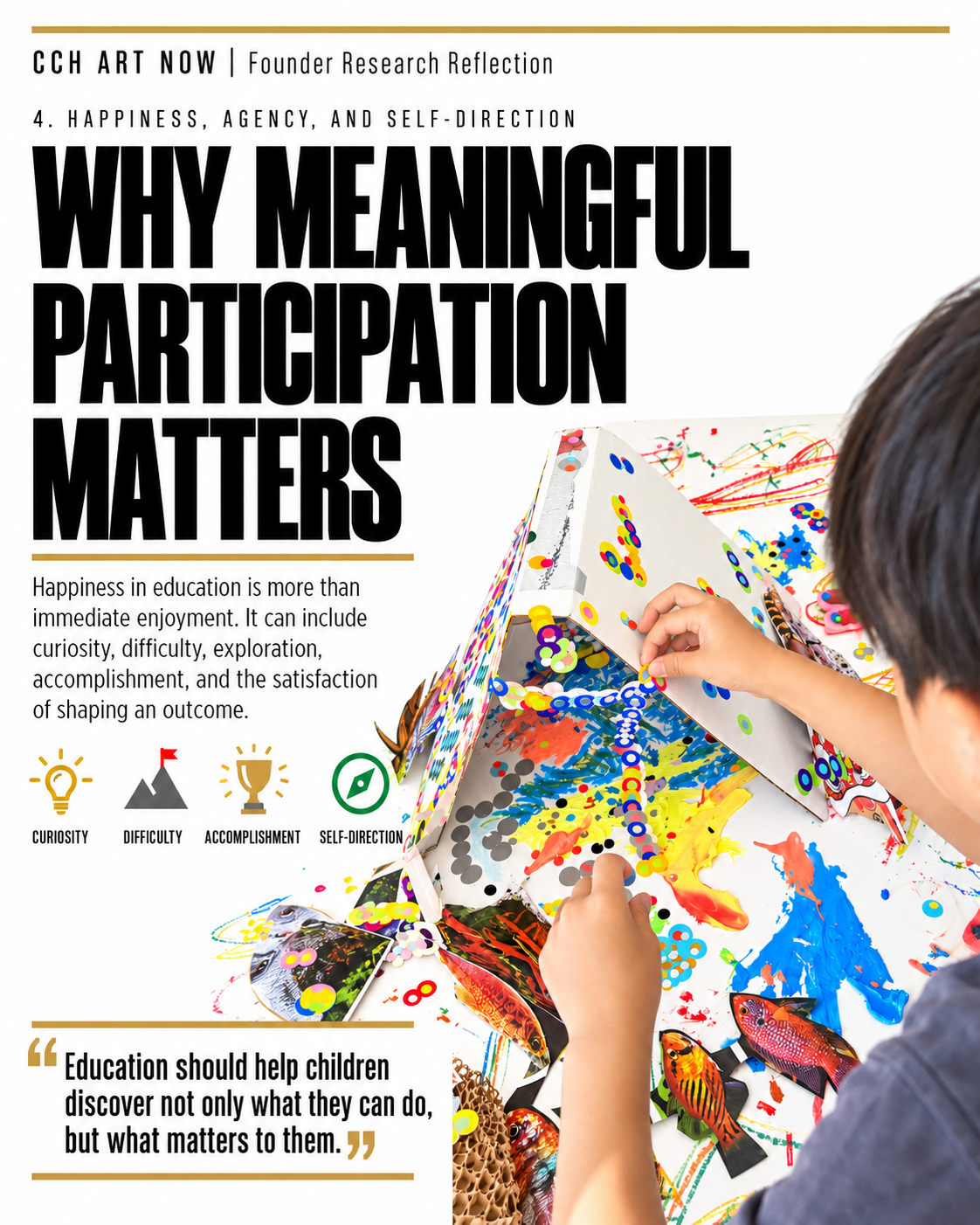
Children should have opportunities to experience curiosity, difficulty, exploration, accomplishment, and the satisfaction of creating something through their own decisions. These experiences may contribute to a developing sense of competence and self-direction, while also introducing the understanding that meaningful achievements can require time, revision, and uncertainty.
Happiness in education therefore deserves consideration beyond immediate enjoyment. It can involve the deeper satisfaction of meaningful participation, the development of personal interests, and a growing capacity to recognize oneself as capable of influencing an outcome.
Such experiences cannot prescribe a person's future identity, but they can provide opportunities for the individual to participate more actively in its formation.
5. The Fight for the Unwritten Future
The development of artificial intelligence is transforming the conditions under which human decisions are made. Predictive systems can influence the information individuals receive, the opportunities they encounter, and the expectations institutions form about them. These transformations require legal protections, responsible governance, institutional accountability, and sustained public examination of technological power.
They also require renewed attention to education.
The future of human agency depends partly on whether individuals are given meaningful opportunities to develop the capacities necessary to understand, evaluate, and influence their circumstances. These opportunities begin in childhood but remain relevant across the lifespan.
The central concern is not whether human behavior will ever become entirely unpredictable. Complete unpredictability would not, by itself, constitute freedom. Human autonomy involves the meaningful exercise of judgment within conditions that inevitably include social influence, material constraints, and uncertainty.
Likewise, the educational goal cannot be to prepare children for a world without technological prediction. Such systems are likely to remain embedded in contemporary society. The challenge is to ensure that technological capabilities do not become the sole framework through which human potential is interpreted, evaluated, or directed.
A child's future is shaped by circumstances, but it is also influenced by experiences that allow new interests, abilities, and directions to emerge. Education participates in this process through the opportunities it provides, the expectations it communicates, and the decisions it allows learners to make.
For CCH ART NOW, long-term material-based creative practice represents an inquiry into how sustained attention, creative decision-making, and personal agency may develop through direct engagement with the physical world.
The broader ambition is to contribute to an educational framework that recognizes human development as an ongoing process of discovery, interpretation, and choice.
The fight for the unwritten future is therefore a question of responsibility shared across education, technological development, and public institutions. It concerns the conditions under which people can continue developing their own values, exercising informed judgment, and participating in decisions that shape their lives.
The future of education is not only about what humans can know, but how humans learn to decide, create, and remain agents of their own lives in an AI-driven world.
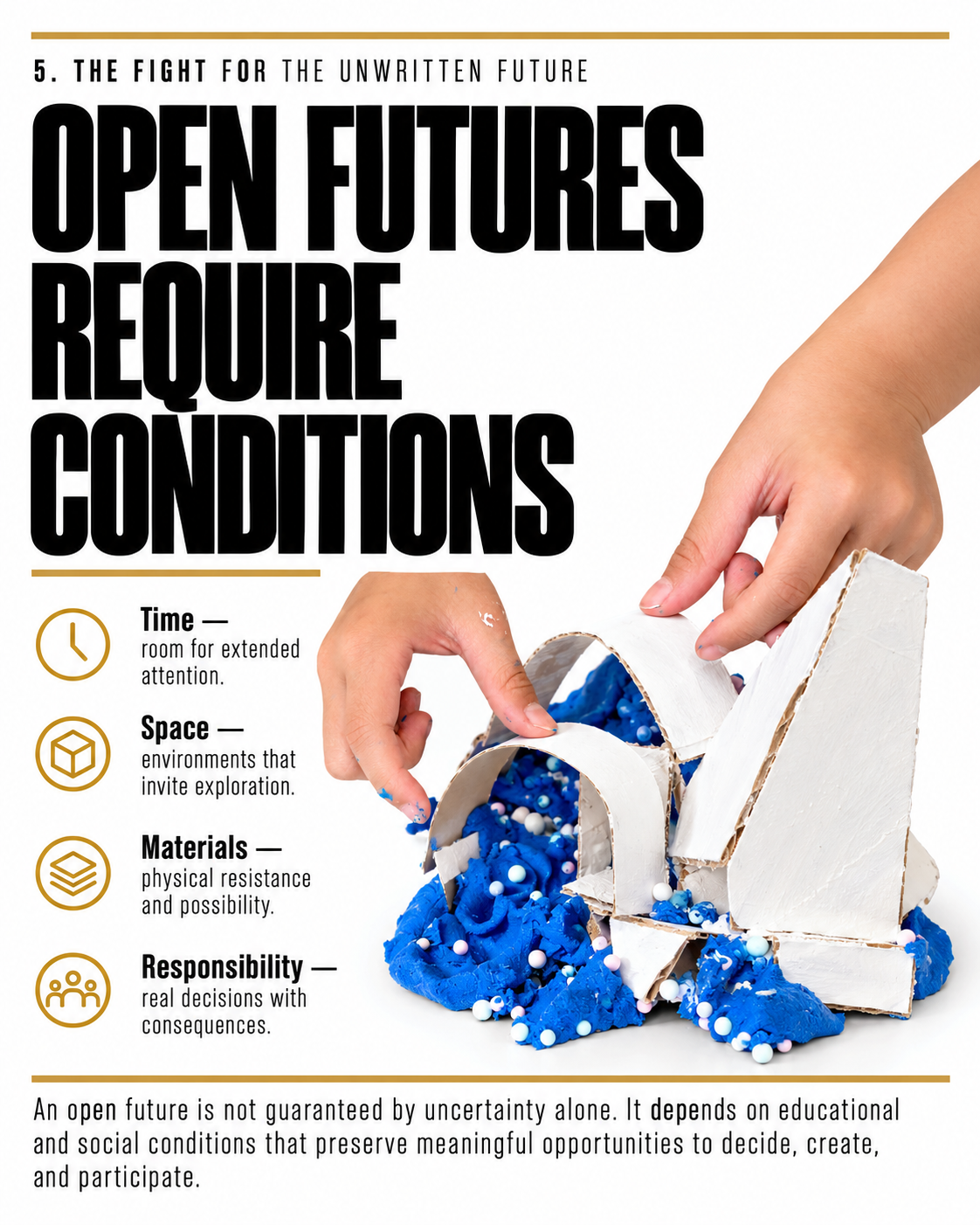
A future cannot remain genuinely open merely because its outcomes are uncertain. It requires social and educational conditions that preserve meaningful opportunities for people to participate in determining what comes next.
And perhaps one of the most important responsibilities of education is to ensure that children have the time, space, and opportunity to discover possibilities that neither adults nor technological systems have already defined for them.
References and Further Reading
Zuboff, S. (2019). The Age of Surveillance Capitalism: The Fight for a Human Future at the New Frontier of Power. PublicAffairs.
UNESCO. (2021). Recommendation on the Ethics of Artificial Intelligence.
CCH ART NOW. Educational Practice and Research Reflections on Sustained Creative Immersion, Material-Based Learning, and Human Agency.
CCH ART NOW | Founder Research Reflection
Exploring attention, decision-making, creative agency, and human development in the age of artificial intelligence.