

8 HOURS OF AGENCY
From “I’m Tired” to “Let Me Show You”:
Re-Entry, Spatial Agency, Child-to-Adult Transfer, and Family Co-Creation
Abstract
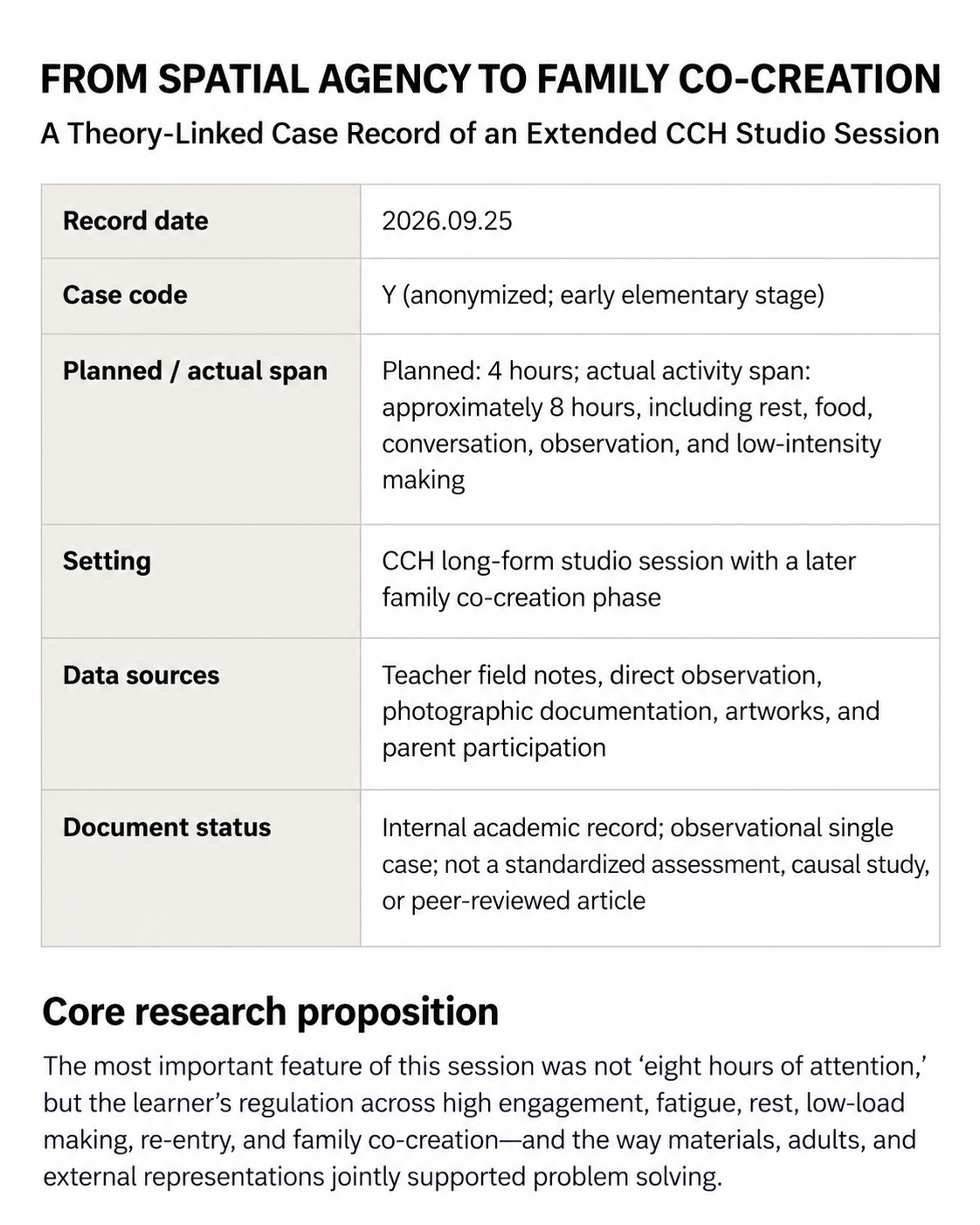
This case record documents a CCH studio session conducted on September 25, 2026. The session was initially planned for four hours but extended to an approximately eight-hour activity span that included rest, eating, conversation, observation, and lower-intensity making. During the first phase, the learner, Y, showed sustained engagement in large-scale work and increasingly multi-view spatial composition. During the middle phase, fatigue, rest, food, and observation became prominent. In the later phase, Y re-entered the work after the mother began arranging stickers, and the session developed into family co-creation. The session also included child-to-adult guidance in three-dimensional connection, repair following material failure, and the use of photographs as external memory during reconstruction. The record uses executive functions, self-regulated learning, self-determination theory, scaffolding, cognitive load theory, constructionism, embodied and embedded cognition, affordances, distributed cognition, and guided participation as interpretive lenses. These frameworks do not establish that CCH caused the observed changes. Rather, they translate field behaviors into concepts that can be tracked, compared, and tested in future research. The most consequential directions emerging from this case are adaptive time as a learning resource, low-load making as a bridge to re-entry, the preservation of agency after material failure, and the shift from adult-to-child instruction toward bidirectional knowledge flow in family co-creation.
Keywords: long-form attention; agency; self-regulated learning; embodied cognition; constructionism; distributed cognition; family co-creation; material failure; scaffolding; spatial thinking.
Evidence Boundary
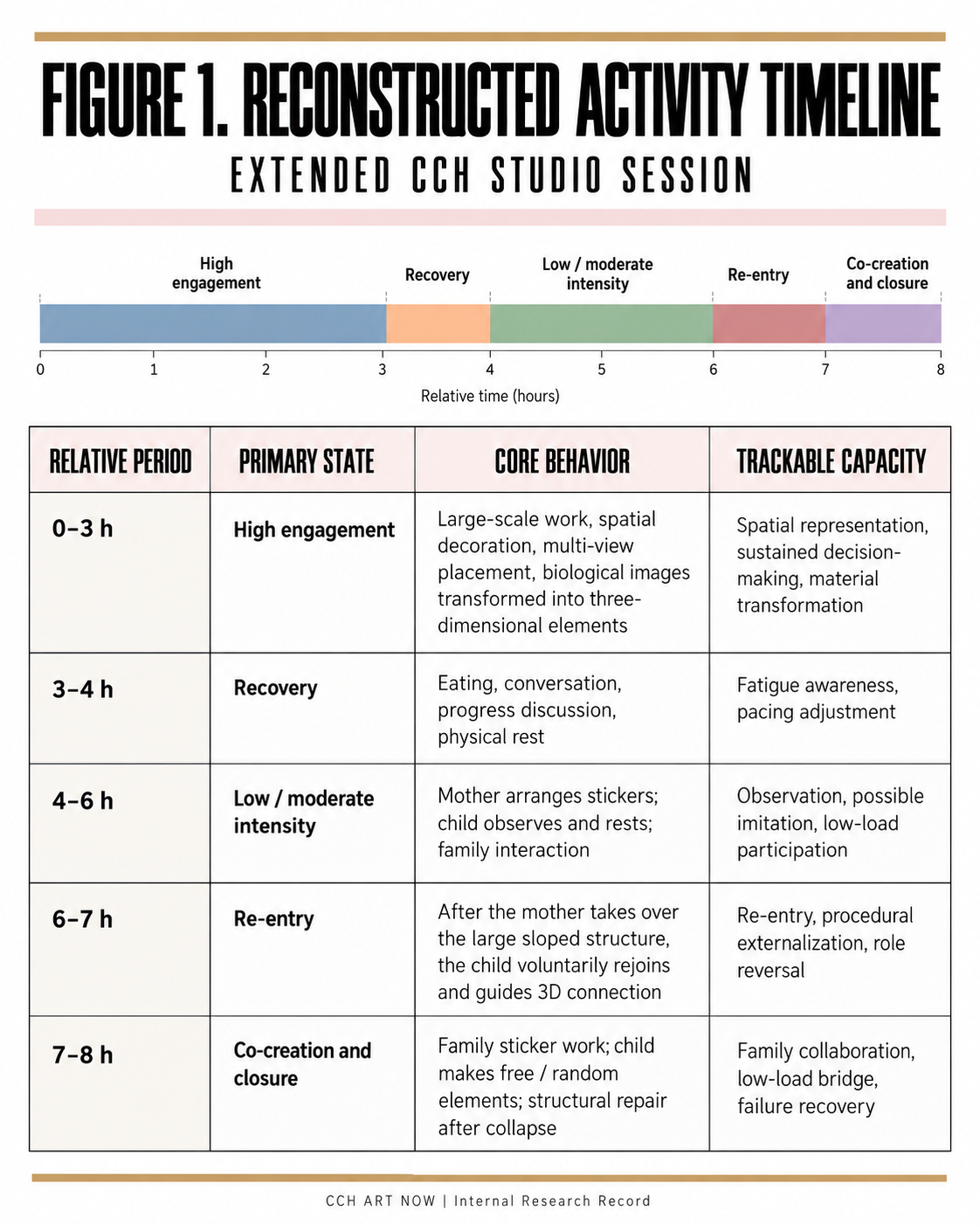
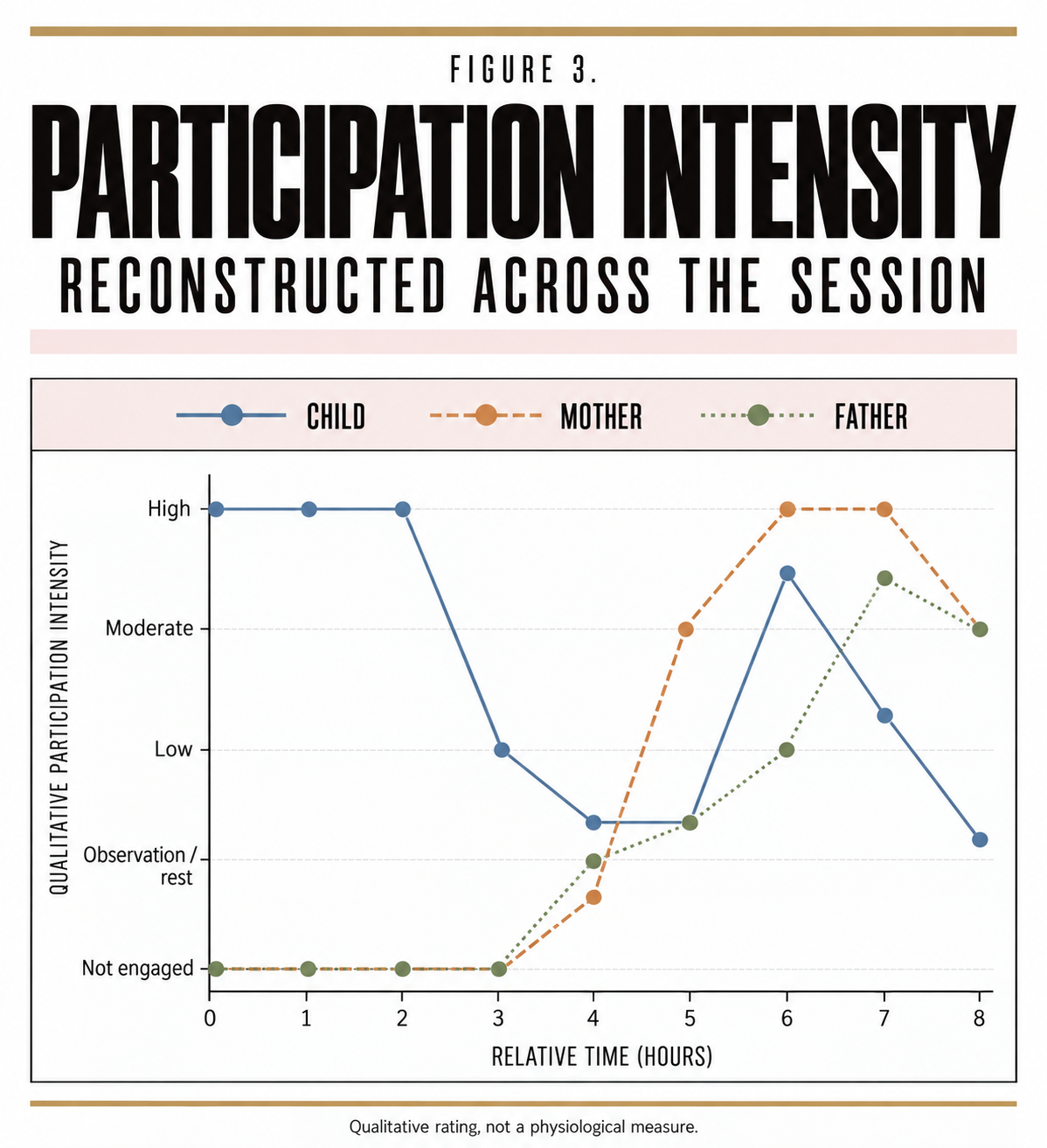
The approximately eight-hour duration refers to the overall activity span and does not mean eight continuous hours of high-intensity concentration. All intensity graphics are qualitative reconstructions based on field descriptions; they are not physiological measures, standardized psychological tests, or statistical behavior coding.
Research Questions

RQ1. How does a child move from planar composition toward multi-view, three-dimensional, and surround-view spatial organization in a large-scale, multi-part artwork?
RQ2. How do fatigue, rest, low-load making, and re-entry form an observable self-regulation sequence during extended studio activity?
RQ3. When parents join the activity, how are expertise and decision-making redistributed among the child, adults, materials, photographs, and teacher?
RQ4. When materials fail, can the child increasingly shift from emotional interruption toward inspection, repair, and continuation?
RQ5. Within the CCH method, should time be treated as a learning resource that can be dynamically allocated according to cognitive, physical, and creative state?
1. Time Structure: Eight Hours Is Not Eight Hours of Uninterrupted Attention
The analytical value of this session lies in the sequence of shifts in intensity, role, and cognitive demand that occurred within one extended period. Describing the event merely as an “eight-hour class” would obscure the regulation process that is most relevant for research. The timeline below is reconstructed from the field narrative and uses relative time rather than exact clock time.
2. Core Observation: From Planar Viewing to 360° Spatial Organization
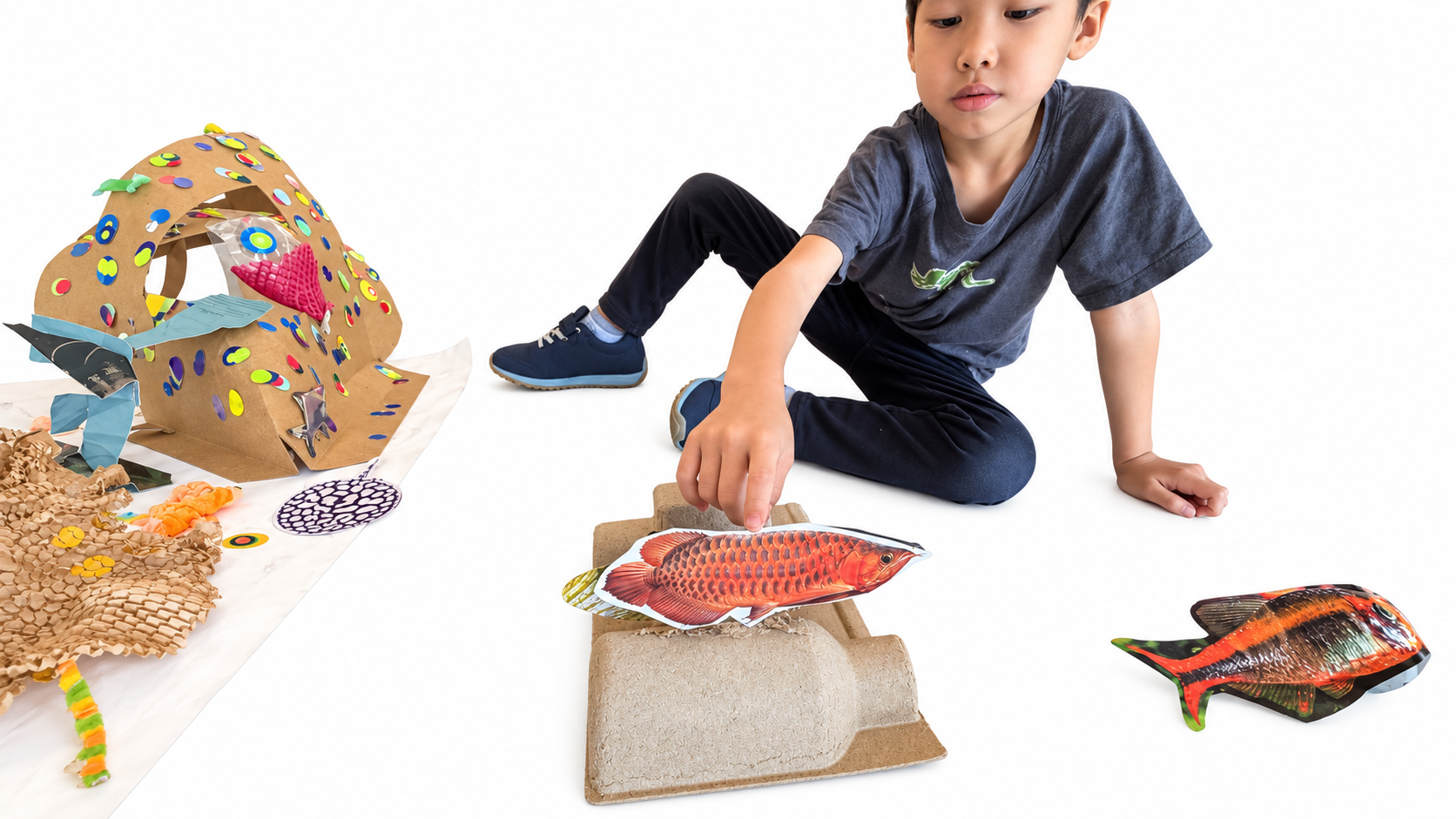
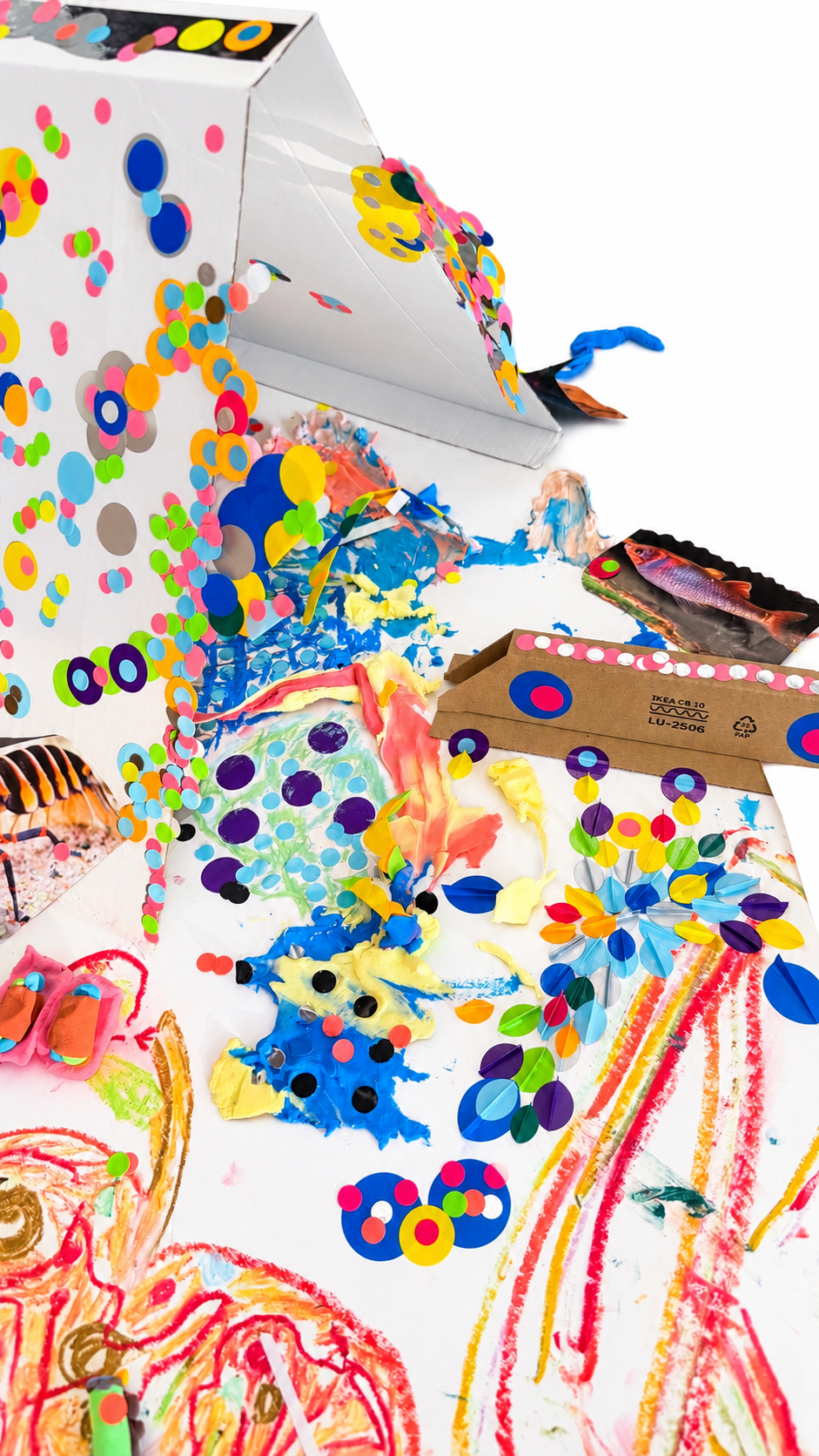
During the first approximately three hours, Y actively worked on unfinished large-scale pieces. The most visible change was that a sheet of paper was no longer treated only as a front-facing surface for composition. Y increasingly considered above, below, left, right, front, and back, as well as possibilities for the work to be viewed from multiple sides, moved around, passed through, or interacted with. Flat elements—including fish, shrimp, and crab images taken from a calendar—were also converted into components of three-dimensional decoration.
Analytic Interpretation
The most defensible description is multi-view spatial representation and the rediscovery of material affordances. The case does not by itself demonstrate a general increase in spatial intelligence. Cross-context transfer tasks or standardized spatial measures would be required for such a claim.
Theoretical Link A: Executive Functions
Diamond (2013) describes working memory, inhibitory control, and cognitive flexibility as core components of executive function. In a multi-part, large-scale artwork, Y had to temporarily retain structural relationships, shift viewpoints, and update decisions. These task demands are compatible with executive-function processes. However, no executive-function test was administered, so the appropriate conclusion is that the observed task involved EF-related demands, not that EF was demonstrated to have improved.
Theoretical Link B: Affordances and Embodied / Embedded Cognition

Gibson’s concept of affordances emphasizes that environments and materials are not passive backgrounds; they offer possibilities for action that can be discovered by an actor. Pouw, van Gog, and Paas (2014) further discuss how perception, manipulation, and external representation can support cognition. In this session, stickers, cardboard, and printed images gained analytic relevance because Y repeatedly redefined what they could do: a flat image could be raised, folded, bridged, wrapped, or attached across space rather than merely placed on a surface.
Theoretical Link C: Constructionism
Constructionism emphasizes the production of visible, modifiable, and shareable artifacts as a context for knowledge construction (Harel & Papert, 1991; Papert & Harel, 1991). Here, learning was not organized primarily around verbal explanation. The physical work accumulated traces of prior decisions and became simultaneously an outcome, a thinking interface, and the source of the next problem.
3. Selective Scaffolding: Adult Cutting Does Not Mean Adult Decision-Making
When Y found fish, shrimp, and crab images that matched a strong personal interest, the teacher assisted with some of the cutting. This preserved the learner’s limited physical energy and attention for the more important creative judgments: what to choose, where to place it, how to transform it into a three-dimensional element, and how it should relate to the larger structure. This provides a clear example of selective scaffolding.
Scaffolding
Wood, Bruner, and Ross (1976) describe tutoring and scaffolding as temporary support that allows a learner to engage with a problem that would otherwise exceed current capacity. In this case, assistance was directed toward relatively mechanical work while higher-level choice and design ownership remained with the learner.
Cognitive Load Theory
Sweller (1988) argues that limited cognitive resources constrain complex problem solving. If the learning goal of this session is multi-view placement and structural integration, extensive repetitive cutting may represent lower-value load. Delegating part of that work to an adult may preserve cognitive resources for higher-order decisions. This remains a conceptual interpretation because subjective cognitive load and working memory were not measured.
Operational CCH principle: adult support may increase, but decision ownership should remain explicit. Future records should track who decides materials, position, structure, repair strategy, and stopping point—not merely how much help an adult provides.

4. Fatigue Is Not Failure: Self-Regulation and Re-Entry in Long-Form Participation
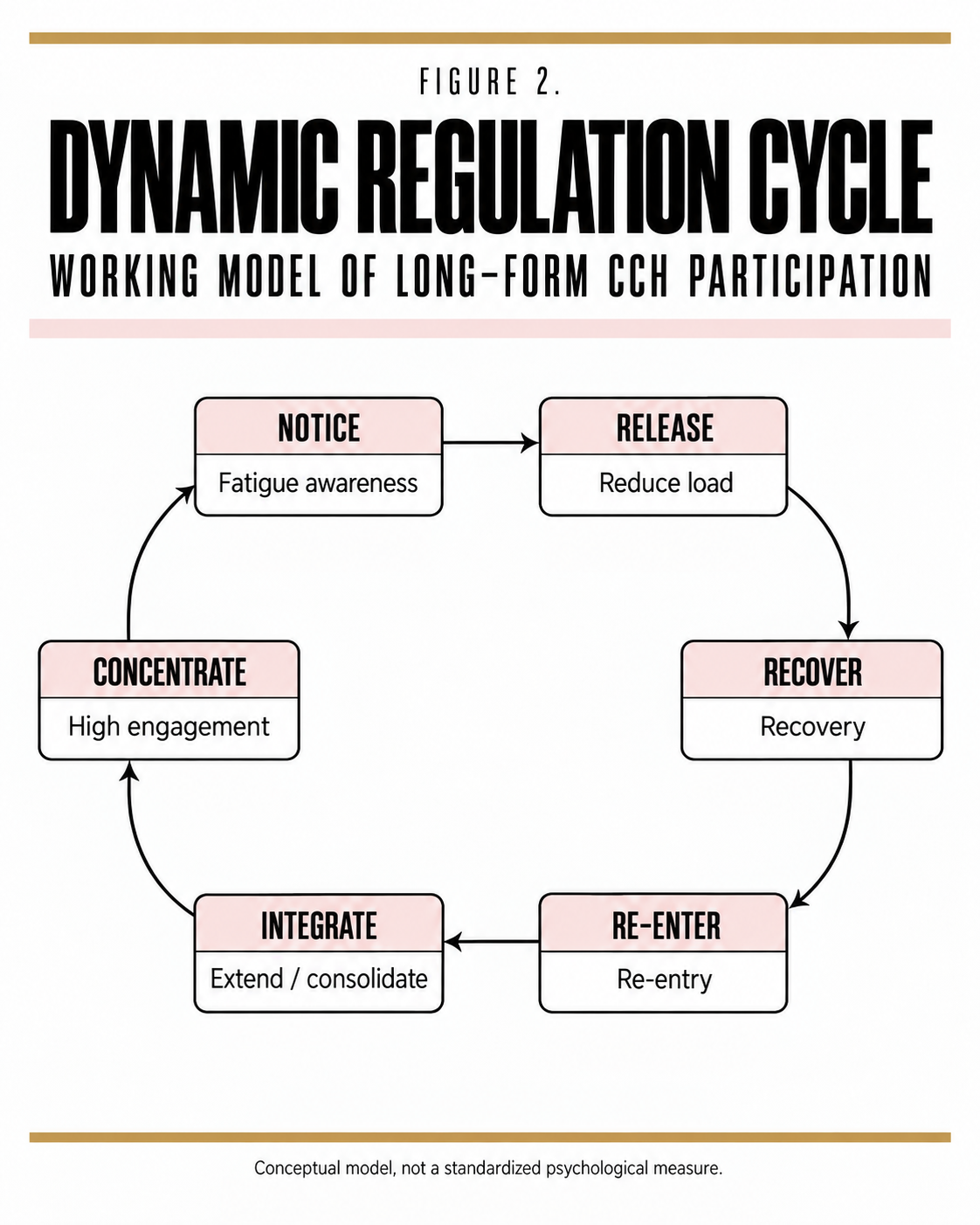
Around midday, Y showed clear physical fatigue. He drank water, ate, lay down, and temporarily withdrew from high-intensity making; later he explicitly said he wanted to go home. Importantly, withdrawal from high-intensity work was not treated as failure. When the mother began taking over part of the artwork, new social and material stimulation drew Y back into the activity.
The working model below is abstracted from this session and previous CCH long-form observations. It is a research hypothesis, not a standardized psychological model.
Self-Regulated Learning
Zimmerman (2002) characterizes self-regulated learning as a cyclical process in which learners actively plan, monitor, and reflect on their learning. Y’s awareness of bodily energy, reduction in task intensity, rest, and later re-entry are compatible with self-monitoring and self-control processes. However, the case did not systematically document goal setting or self-evaluation; the evidence therefore supports only partial behavioral indicators of SRL.
Self-Determination Theory
Ryan and Deci (2000) emphasize autonomy, competence, and relatedness as basic psychological needs. During this session, Y could decide when to pause, choose materials, and propose structural solutions. Repair and parent-guidance episodes may have supported feelings of competence, while family co-creation created a strong relational context. These conditions are compatible with autonomy support, but no measure of motivational quality was used, so increased intrinsic motivation cannot be inferred.
5. Family Co-Creation: From Adults Teaching the Child to the Child Teaching Adults

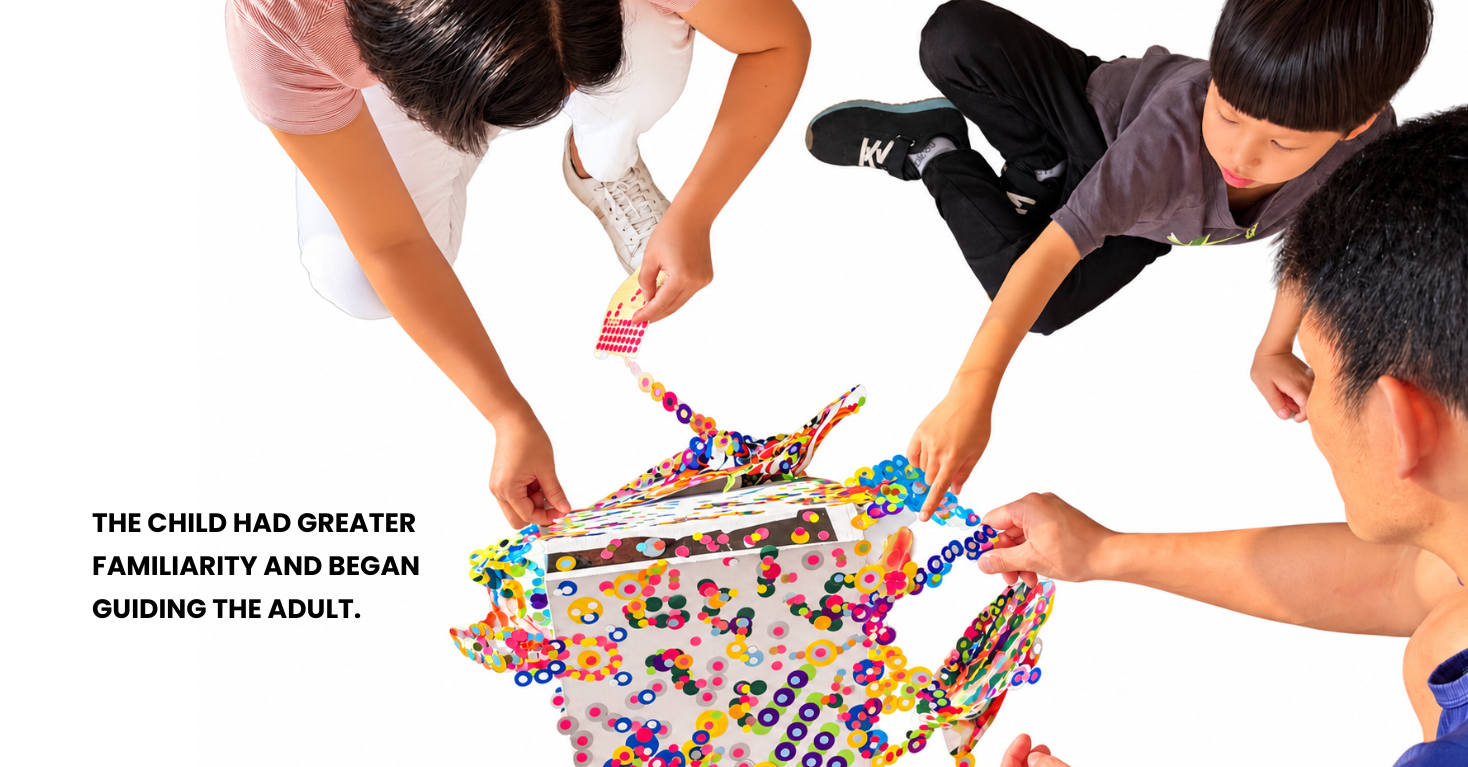
The most research-relevant shift in the afternoon occurred when the mother first entered the sticker-arrangement process. Y was already tired and wanted to leave, but when the mother began applying stickers to the large sloped structure, he rejoined and started explaining how to move from flat placement into three-dimensional construction, how to connect elements, and how to make the structure more interesting. The father later joined, introducing a more structure-oriented style focused on support, order, and material handling.
Guided Participation
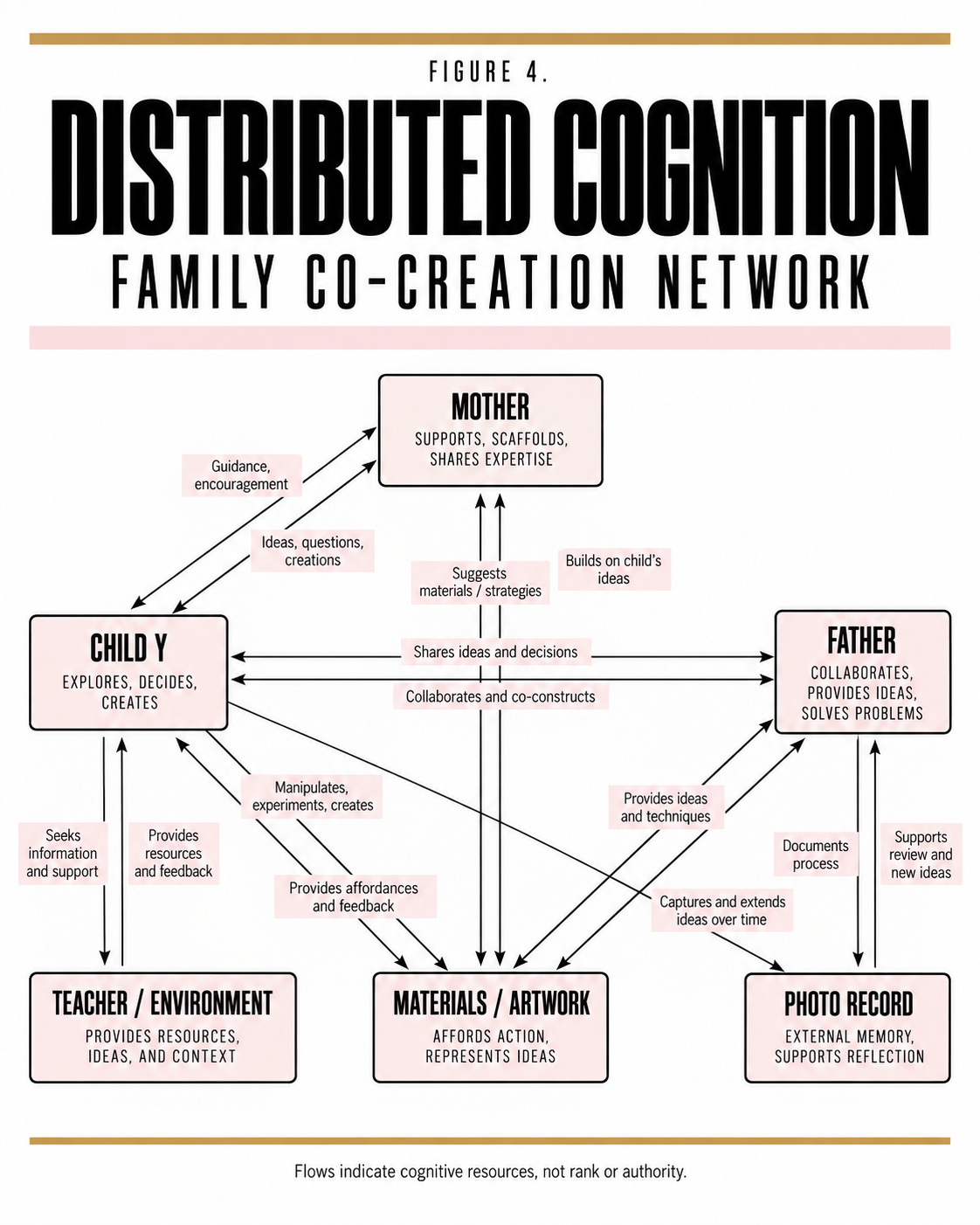
Rogoff, Mistry, Göncü, and Mosier (1993) describe learning as participation in shared cultural activity in which responsibility and understanding can be redistributed. The distinctive feature here is a reversal in the direction of guidance: the adult is not always the knowledge source. In some material procedures, the child had greater familiarity and began guiding the adult.
Distributed Cognition
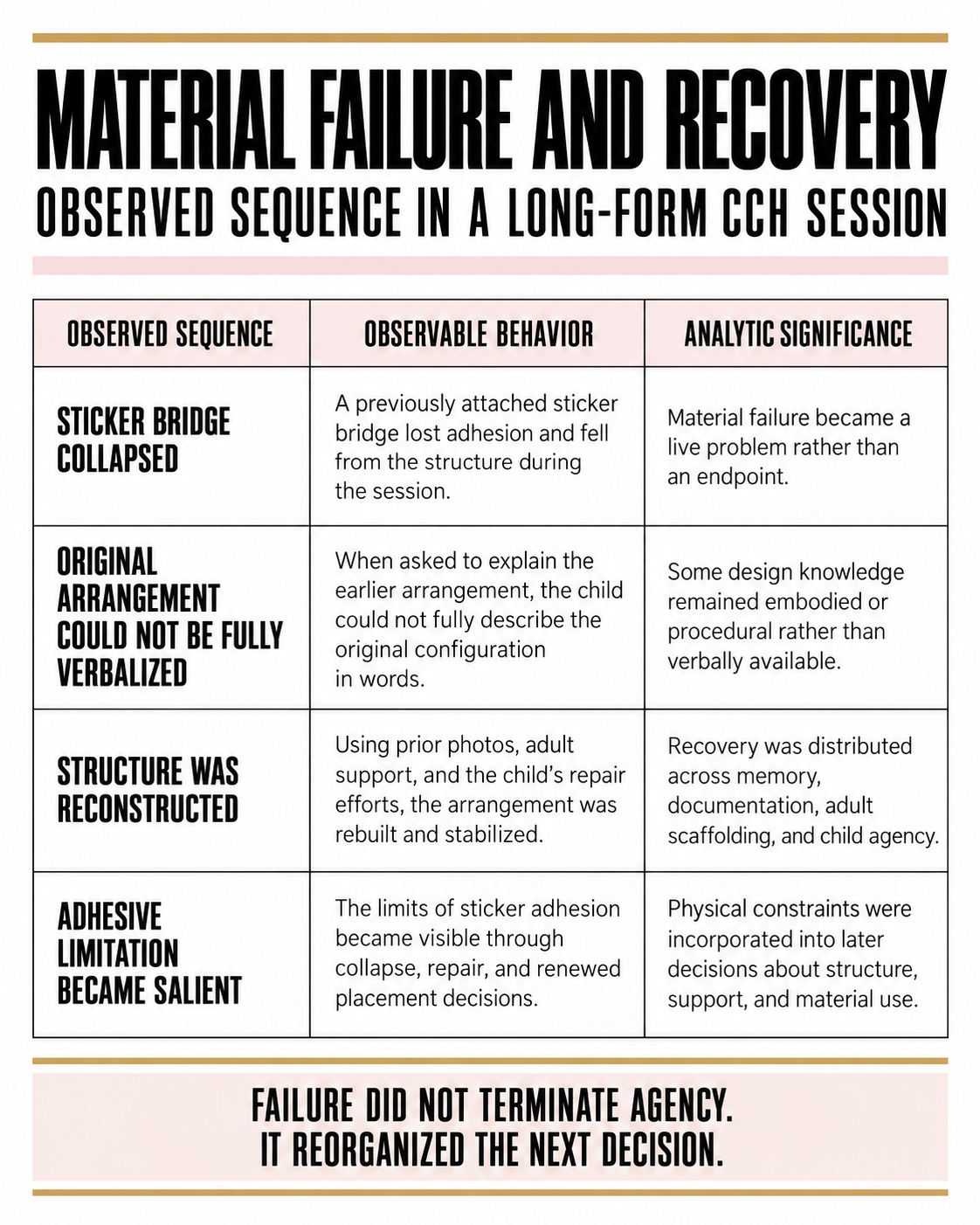
Hutchins (1995) argues that cognition can be distributed across people, tools, representations, and social organization. This became visible when a sticker bridge collapsed. Y remembered the general structure but could not fully reconstruct it verbally; the father asked about the prior arrangement; and a photograph functioned as external memory that enabled the family to restore the configuration. Problem solving was therefore not located solely inside one person’s head but distributed across a person–material–image system.
New CCH Research Indicator: Child-to-Adult Transfer
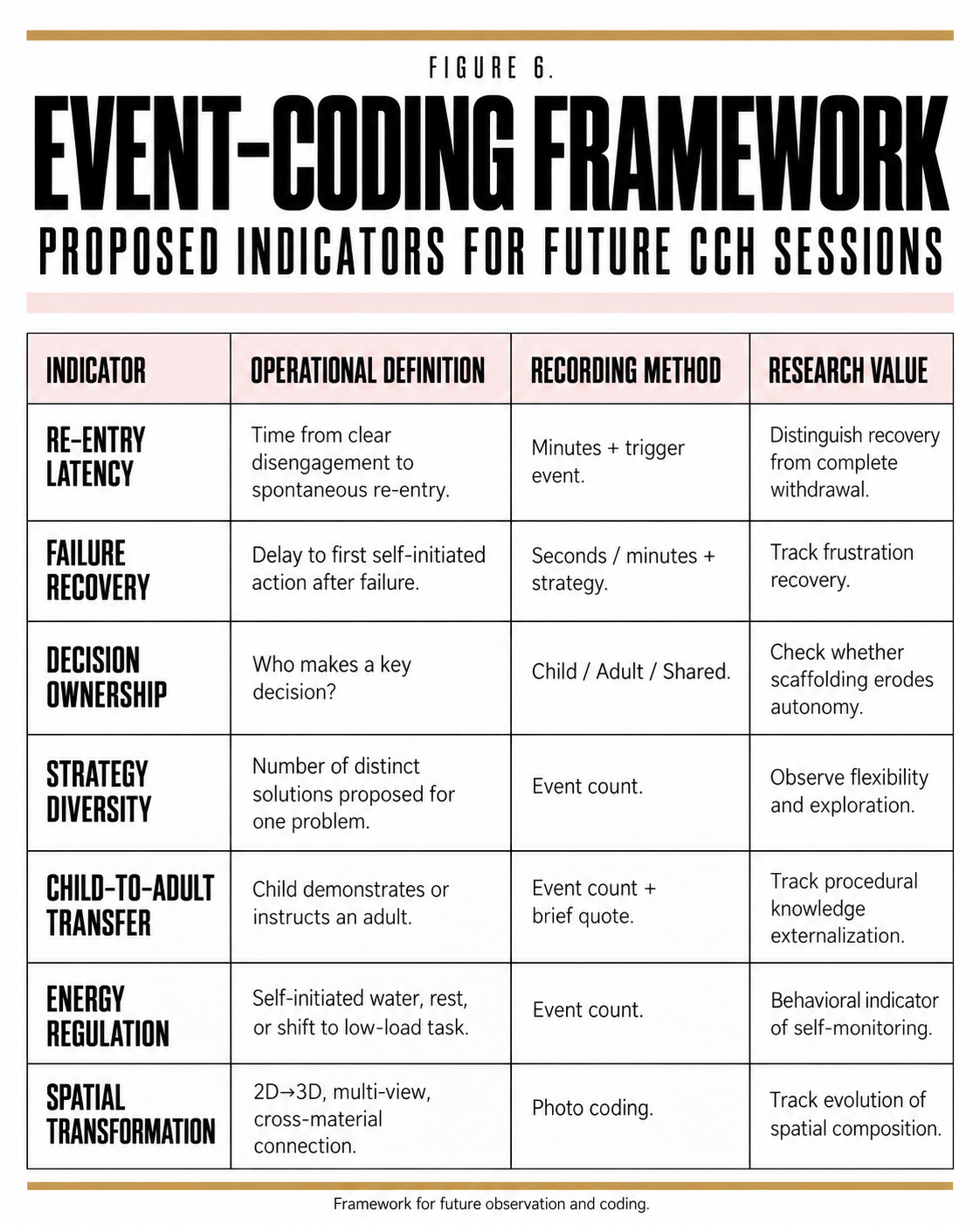
Future coding can track whether a child spontaneously demonstrates a procedure, verbally explains it, corrects an adult’s action, proposes an alternative, or sees an adult adopt the child’s strategy. If these behaviors recur across multiple sessions, they may serve as indicators of procedural knowledge externalization and role transition.
6. Preserving Agency After Material Failure: From Breakdown to Repair
Late in the session, a T-shaped sticker bridge detached because of inadequate adhesion. Y was already familiar with the material’s limitations and moved directly into repair. This contrasts with earlier records in which unexpected material behavior sometimes produced crying or breakdown. The longitudinal difference is important enough to track, while age-related maturation, family experience, school experience, and other factors remain plausible alternative explanations.
At this stage, terms such as frustration recovery, cognitive flexibility, and strategy persistence are more appropriate behavioral descriptions than broad personality labels. The most useful research variables are latency to re-action after failure, whether the child seeks adult substitution, whether alternative strategies are proposed, and whether the original goal is retained or redefined.
Recommended event-coding fields: Failure Event → pause duration / intensity of emotional response / first self-initiated repair attempt / help-seeking mode / number of strategies / whether re-entry is completed.
7. Observation–Theory Matrix
The purpose of the following matrix is to translate field observations into variables that can be discussed theoretically. It does not use theory to validate the case; rather, it clarifies what future research would need to measure and what evidence is still missing.
8. Working Hypotheses Generated by This Case

H1. Adaptive Time Hypothesis
For open-ended making, the educational value of time may lie less in fixed duration than in the ability to adjust intensity according to cognitive, bodily, and emotional state, thereby preserving recovery and re-entry after high engagement.
H2. Low-Load Bridge Hypothesis
Free placement, repetitive arrangement, and low-demand collage may maintain a minimal connection to the work during fatigue and reduce the gap between complete withdrawal and later re-initiation.
H3. Role-Reversal Indicator
When a child begins teaching an adult a material procedure, correcting an adult’s action, or proposing a strategy that the adult adopts, some procedural knowledge may have become externalizable and transferable.
H4. Material Failure as Information
If repeated material experience leads the learner to interpret collapse, breakage, or weak adhesion as information about material conditions rather than as personal failure, the speed of re-action after failure may increase.
H5. Family Co-Creation as Distributed Agency
In open-ended making without a single correct answer, family members’ strengths may become complementary: structure, color, improvisation, and material sensitivity can enter the same artifact while authority shifts from one-way instruction toward collaboration.
Research priority: the next step is not to judge whether the artwork is “good,” but to measure re-entry latency, delay to repair after failure, proportion of child-owned decisions, frequency of child-to-adult transfer, and switching patterns across activity intensities.
9. Next Stage: Turning Strong Impressions into Accumulating Data
If CCH cases are to progress toward a conference paper, pilot study, or institutional evaluation, future sessions should add lightweight but consistent event coding. This can preserve the naturalistic quality of the studio while making observations comparable over time.
Methodological Limitations
• This is a single case without a control group; causal inference is not possible.
• The instructor also served as the primary observer, creating risks of expectancy effects and selective recording.
• Participation intensity is currently a narrative judgment; there was no blinded coding, second coder, or inter-rater reliability estimate.
• Family participation may itself alter the child’s behavior, so later-session performance cannot be treated as a pure measure of individual capacity.
• Age-related maturation, school experience, family interaction, and other environmental factors may influence longitudinal change.
• Theoretical mapping provides conceptual structure; it does not constitute psychological diagnosis, cognitive testing, or proof of learning effects.
10. Conclusion: The Central Variable Worth Preserving Is Regulation

The value of the September 25, 2026 session does not lie in presenting eight hours as an attention record. Its academic value lies in the repeated modulation of participation intensity while the learner remained connected to the work: Y re-entered after fatigue, repaired after material failure, shifted roles when adults joined, and began teaching familiar material procedures to adults.
From a psychological perspective, these observations can be decomposed into self-monitoring, cognitive flexibility, frustration recovery, strategy persistence, and autonomy support. From a learning-sciences perspective, they can be discussed through constructionism, scaffolding, embodied and embedded cognition, and cognitive-load allocation. From a sociocultural perspective, they can be understood through guided participation, distributed cognition, and dynamic reorganization of family roles.
The most precise research statement is that this session generated a rich set of hypothesis-forming observations. Long-form open-ended making may provide a context in which researchers can observe how learners regulate time, body, materials, failure, and social interaction. The next scientific step is to record these phenomena consistently, repeatedly, and comparably.
This record can serve as one time point in a future longitudinal case series. If the same fields are used for 6–12 months, comparisons can be made across stages for the same child, across family contexts, across artwork scale, and across adult-present versus adult-absent conditions. Triangulation with school learning, self-report, or standardized tasks would substantially strengthen the evidence base.
Selected References
Diamond, A. (2013). Executive functions. Annual Review of Psychology, 64, 135–168. https://doi.org/10.1146/annurev-psych-113011-143750
Gibson, J. J. (1979). The ecological approach to visual perception. Houghton Mifflin.
Harel, I., & Papert, S. (Eds.). (1991). Constructionism: Research reports and essays, 1985–1990. Ablex.
Hutchins, E. (1995). Cognition in the wild. MIT Press. https://doi.org/10.7551/mitpress/1881.001.0001
Papert, S., & Harel, I. (1991). Situating constructionism. In I. Harel & S. Papert (Eds.), Constructionism. Ablex.
Pouw, W. T. J. L., van Gog, T., & Paas, F. (2014). An embedded and embodied cognition review of instructional manipulatives. Educational Psychology Review, 26, 51–72. https://doi.org/10.1007/s10648-014-9255-5
Rogoff, B., Mistry, J., Göncü, A., & Mosier, C. (1993). Guided participation in cultural activity by toddlers and caregivers. Monographs of the Society for Research in Child Development, 58(8), 1–174. https://doi.org/10.2307/1166109
Ryan, R. M., & Deci, E. L. (2000). Self-determination theory and the facilitation of intrinsic motivation, social development, and well-being. American Psychologist, 55(1), 68–78. https://doi.org/10.1037/0003-066X.55.1.68
Sweller, J. (1988). Cognitive load during problem solving: Effects on learning. Cognitive Science, 12(2), 257–285. https://doi.org/10.1016/0364-0213(88)90023-7
Wood, D., Bruner, J. S., & Ross, G. (1976). The role of tutoring in problem solving. Journal of Child Psychology and Psychiatry, 17(2), 89–100. https://doi.org/10.1111/j.1469-7610.1976.tb00381.x
Zimmerman, B. J. (2002). Becoming a self-regulated learner: An overview. Theory Into Practice, 41(2), 64–70. https://doi.org/10.1207/s15430421tip4102_2
Literature mapping is used as an interpretive framework. The cited theories do not constitute causal evidence for the case observations.