
Before the Filter: Rebuilding Inner Order Through Studio Practice
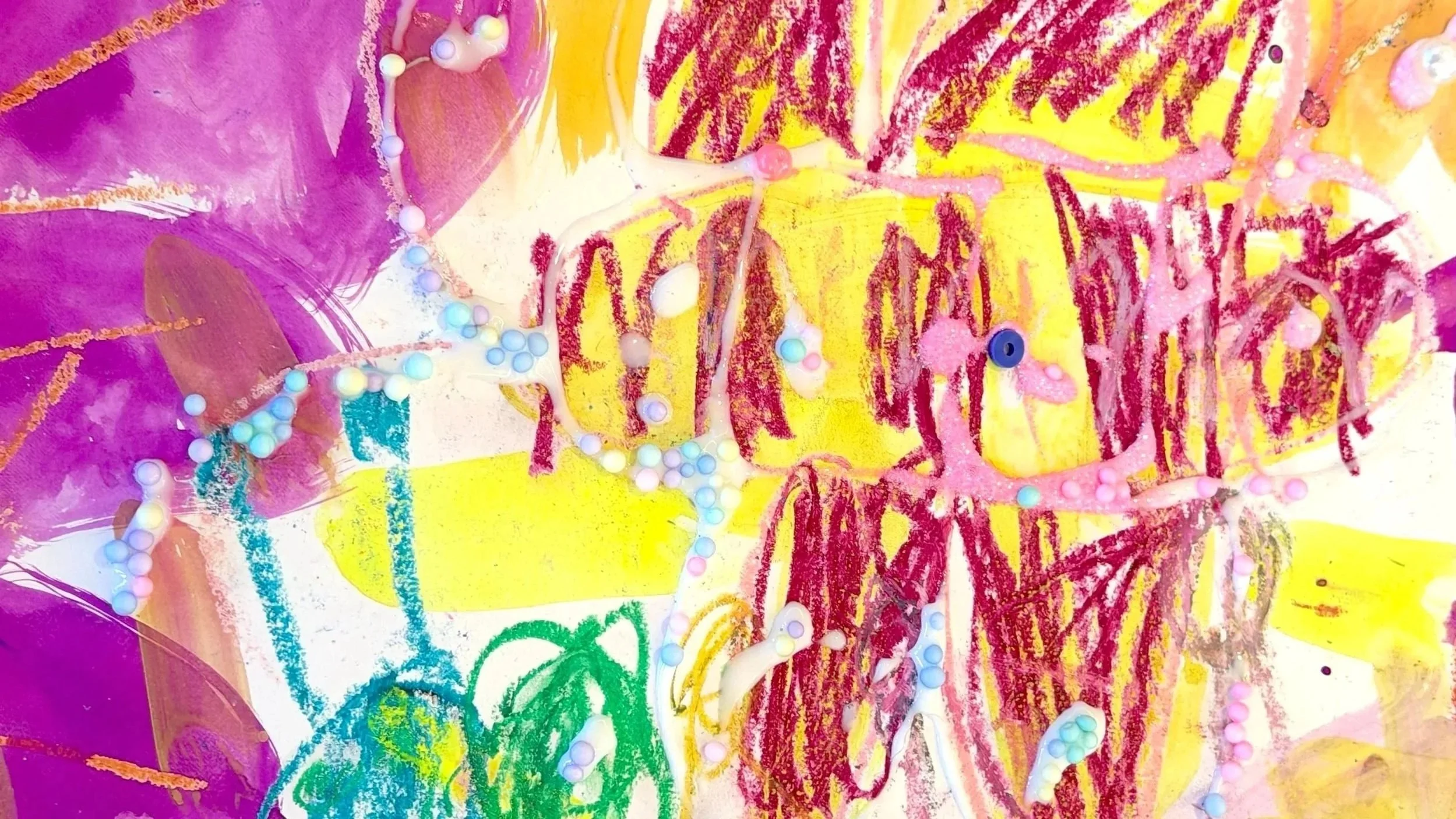
How material-based creative practice supports attention, judgment, frustration tolerance, and self-direction before polished performance emerges
In an age shaped by visual culture, social media, and artificial intelligence, many learning brands are becoming increasingly refined. Spaces are more curated. Language is softer. Narratives are smoother. Educational experiences are often packaged through lifestyle, leadership, or personal growth.
This kind of presentation has value. It makes ideas easier to access and allows people to approach learning through beauty, aspiration, and belonging.
CCH, however, is concerned with an earlier and deeper layer of human development. Before a person can speak with confidence, participate in high-level social environments, or perform with elegance, they first need to form more fundamental capacities: attention, judgment, frustration tolerance, self-direction, and the ability to keep acting when outcomes remain uncertain.
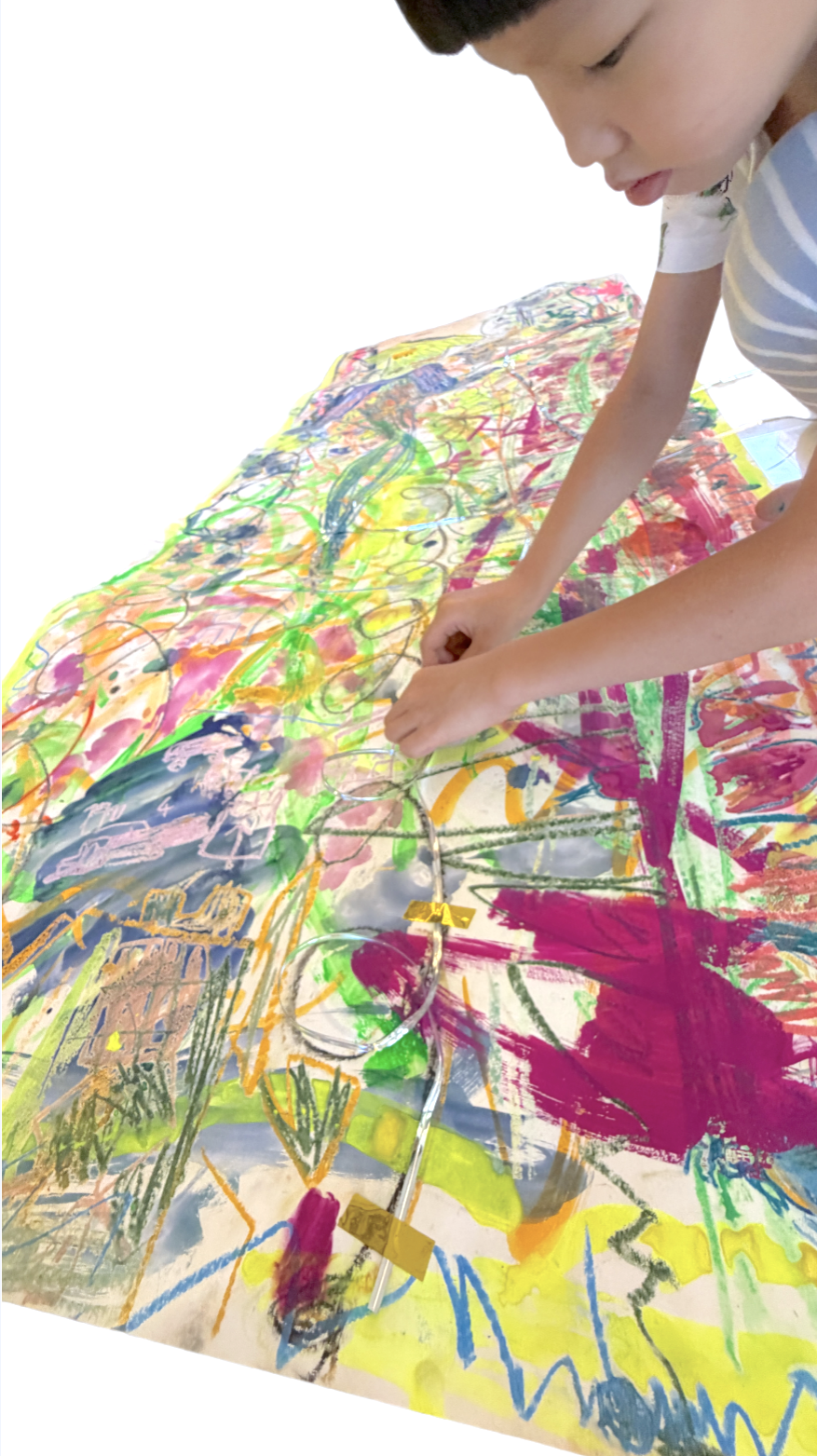
These capacities are rarely visible in polished final images. They usually emerge in quieter, more difficult, and more honest moments: when a learner hesitates before making a mark, wants to start over after a material decision does not work, becomes frustrated when the work does not match the original imagination, or slowly moves from resistance, delay, and emotional tension back into creative engagement.
In a process without templates or immediate answers, the learner begins to take ownership of decision-making. These moments may not look glamorous, but they are often where education truly begins.
Foundational Does Not Mean Basic
Foundational capacities are not low-level skills. They are the deeper structures that support long-term learning, creativity, and human agency.
This view is aligned with research in learning psychology and developmental science. Executive function research describes capacities such as thinking before acting, resisting distractions, staying focused, and meeting novel challenges as central to learning and adaptive behavior (Diamond, 2013). In early education, self-regulation research also suggests that children’s ability to manage frustration and use coping strategies plays an important role in how they respond to difficulty and continue engaging with challenges (Veijalainen, Reunamo, Sajaniemi, & Suhonen, 2019).
When information can be generated by AI, answers can be searched instantly, and images can be produced within seconds, education must reconsider what is truly worth cultivating.
The question is no longer only whether a child can acquire knowledge.
The more urgent questions are:
Can the learner pause and observe?
Can the learner make decisions without a fixed answer?
Can the learner accept material and reality-based limitations?
Can the learner recover from frustration and continue?
Can the learner gradually move from adult-dependent instruction toward internal judgment?
These capacities cannot be rushed. They cannot be built through decorative outcomes alone. They require time, material engagement, spatial stability, and a learning environment that respects the developmental process.
Materials as a Training Ground for Inner Order
In CCH studio practice, materials are not merely tools for producing artwork. Materials are a form of reality.
Paper can tear. Glue can dry. Paint can mix unexpectedly. Structures can collapse. Some decisions, once made, cannot fully return to their original state.
These material conditions allow learners to encounter limits in a concrete way. Because there are limits, learners have opportunities to practice observation, adjustment, patience, repair, and responsibility.
The central question is not only what the learner produces at the end, but how the learner responds when the process becomes uncertain. Can the learner remain present? Can the learner reorganize after frustration? Can the learner notice what the material is doing? Can the learner make a new decision without abandoning the entire process?
This kind of learning is subtle. It appears in the pause of the hand, the shift of attention, the change in breathing, the return to the work, and the moment when the learner begins again.
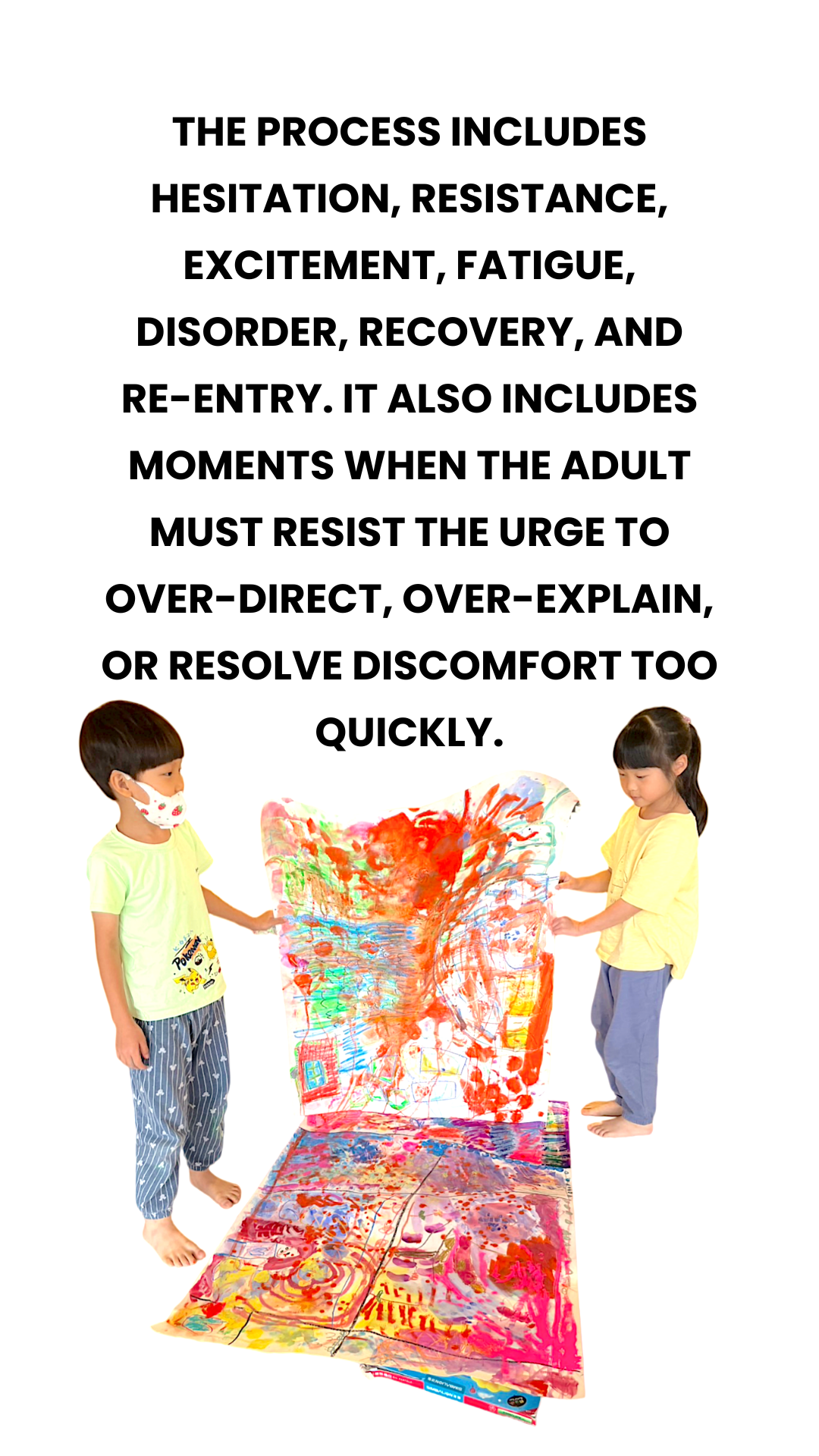
The Real Studio Is Harder Than the Polished Image
Many educational products are easy to display through final outcomes. A completed artwork can be photographed, edited, arranged, and shared.
The process is more complex.
The process includes hesitation, resistance, excitement, fatigue, disorder, recovery, and re-entry. It also includes moments when the adult must resist the urge to over-direct, over-explain, or resolve discomfort too quickly.
This is where CCH places its attention.
The challenge of studio-based education is not simply to design a beautiful class. The deeper challenge is to stand beside a learner in an unfinished state and recognize what is actually happening.
Is the learner avoiding the task, or observing more deeply?
Is the learner losing control, or searching for another point of entry?
Is the learner wasting time, or processing a difficult material decision?
Is the learner working slowly, or developing a more sustained form of attention?
These distinctions require trained observation, long-term teaching experience, artistic sensitivity, and developmental awareness.
For this reason, the work is not easily replicated.
Studio Practice as a Developmental Environment
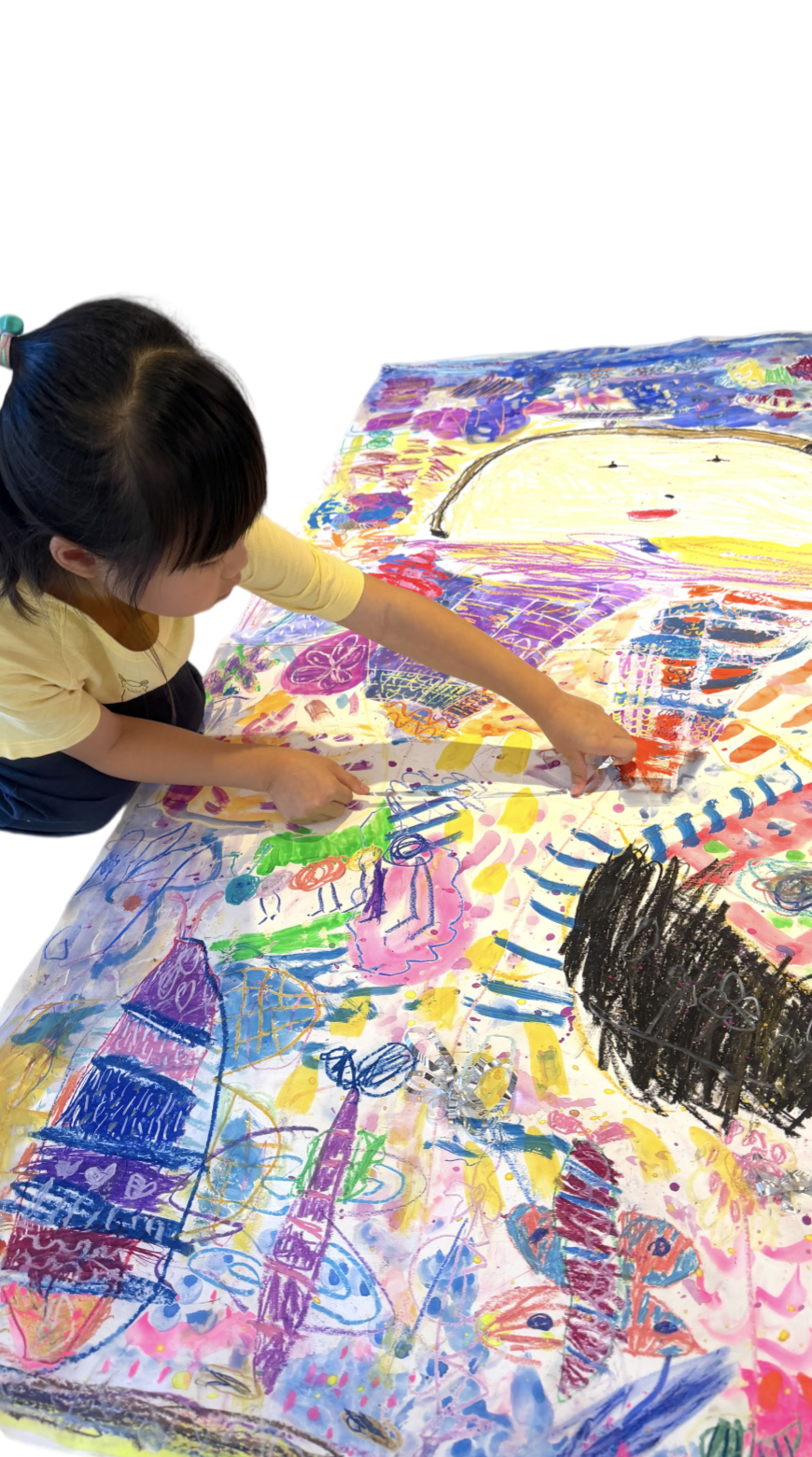
Arts education research has long argued that studio learning is not limited to technical skill acquisition. The Studio Thinking framework, developed through research on visual arts classrooms, describes how studio practice can cultivate habits of mind such as observing, engaging and persisting, envisioning, reflecting, stretching and exploring, and understanding the art world (Hetland, Winner, Veenema, & Sheridan, 2007).
This matters because CCH does not view the studio as a place where learners simply produce attractive objects. The studio is a developmental environment where learners encounter uncertainty, practice sustained attention, make decisions, revise their actions, and gradually strengthen internal direction.
In this sense, the artwork is not the only outcome. The process itself becomes evidence of learning. The way a learner pauses, observes, tests, repairs, accepts limits, re-enters the task, and completes a cycle of attention can reveal important developmental movement.
This is especially relevant in an age when external performance can be quickly manufactured. Polished images can be generated. Impressive language can be assisted by AI. Visual outcomes can be accelerated.
But inner order cannot be instantly generated.
It must be developed through repeated encounters with reality, resistance, and choice.
Turning Raw Process into Method
Many people can organize salons, podcasts, workshops, or visually refined learning experiences. These formats can be meaningful. They are often effective for sharing mature ideas, building communities, and creating professional networks.
CCH works closer to the stage before human capacities are fully formed.
Before a learner can express confidence, they must learn to tolerate uncertainty.
Before a learner can create independently, they must encounter material resistance.
Before a learner can demonstrate creativity, they must develop attention and internal rhythm.
Before a learner can articulate a personal vision, they must experience that their own decisions matter.
These developmental movements do not always appear in the most polished images. They need to be observed, named, organized, and translated into a coherent educational language.
The work of CCH is to take these real, subtle, and often overlooked studio moments and transform them into a developmental framework that can be understood by families, educators, institutions, and future collaborators.
What Remains Human in the Age of AI
AI can generate images, organize information, support communication, and accelerate many forms of knowledge work. It can assist with language, produce polished visual outcomes, and increase the speed of external performance.
But AI cannot experience material frustration on behalf of a child. It cannot make a body-based decision inside a real creative process. It cannot replace the lived transition from confusion to stability, from dependence to autonomy, or from emotional disruption to renewed engagement.
These transitions remain central to human development. For this reason, CCH does not approach art education as technical instruction alone, nor does it treat the finished artwork as the only meaningful result.
CCH understands the studio as a developmental environment. Through materials, time, and non-template creative practice, learners build deep attention, judgment, emotional regulation, and creative autonomy.
These capacities are quiet. They may not look immediately impressive, and they are not always easy to package or display. Yet they form the internal foundation a person needs to meet learning, creativity, technology, and uncertainty with greater resilience.
Conclusion
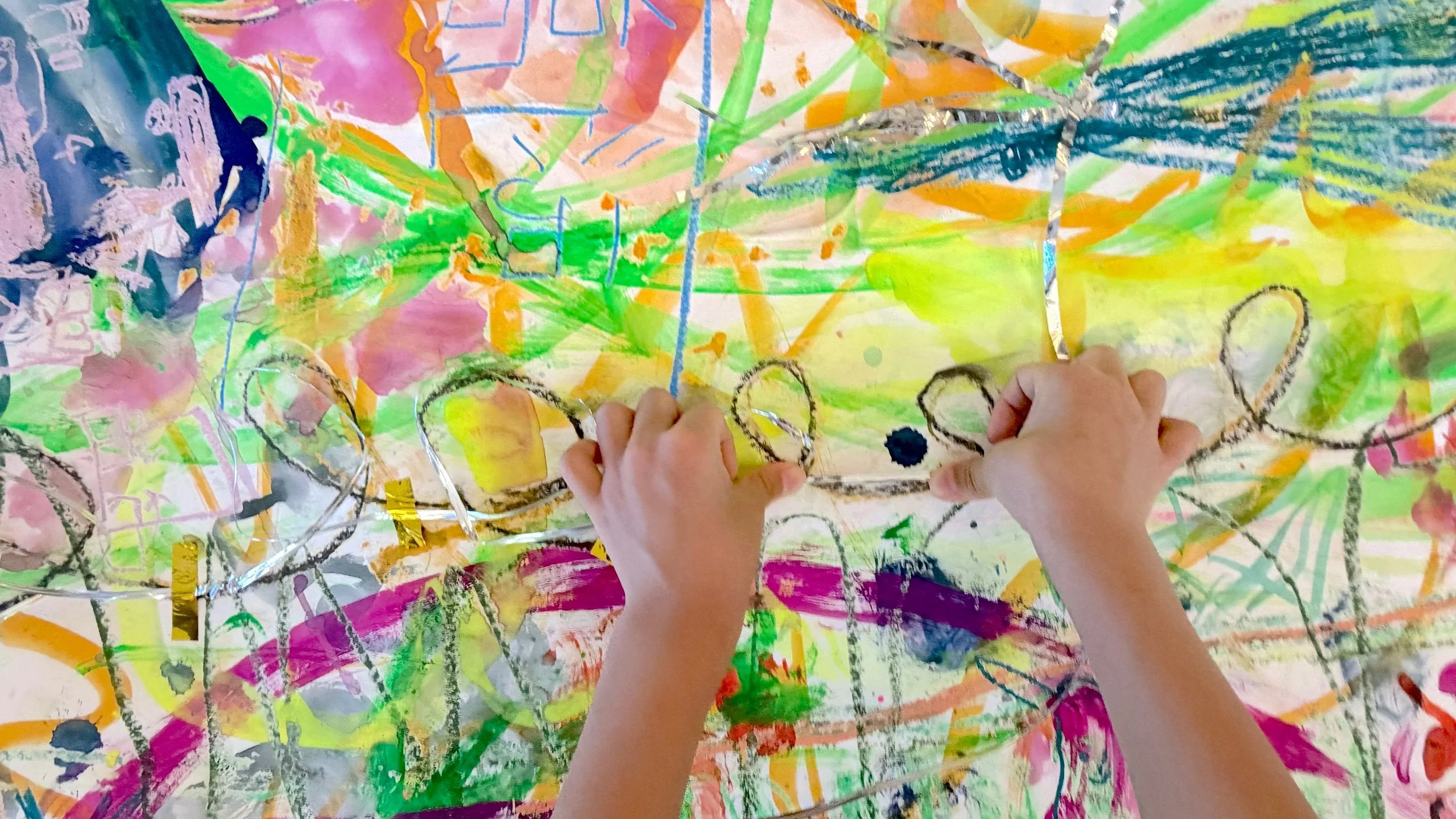
Education does not happen only when a work is completed. It also happens when a learner pauses, hesitates, fails, reorganizes, and begins again.
CCH is concerned with these real moments before they are polished into performance. Attention, judgment, and self-direction are not formed through achievement alone. They are developed through repeated encounters with uncertainty, material reality, and the gradual rebuilding of inner order.
In the age of AI, education must protect more than knowledge transmission. It must protect the conditions through which human beings learn to become present, capable, and internally directed.
Selected References
Diamond, A. (2013). Executive functions. Annual Review of Psychology, 64, 135–168.
Hetland, L., Winner, E., Veenema, S., & Sheridan, K. (2007). Studio Thinking: The Real Benefits of Visual Arts Education. Teachers College Press.
Veijalainen, J., Reunamo, J., Sajaniemi, N., & Suhonen, E. (2019). Children’s self-regulation and coping strategies in a frustrated context in early education. South African Journal of Childhood Education, 9(1).