
Creativity, Autonomy, and the Social Conditions of Learning
What Bourdieu’s The Rules of Art Helps Us See About Education
Creative learning is often described as a private and spontaneous act: a learner expresses an idea, experiments with materials, and produces something original. Yet creativity never develops in isolation. It is shaped by educational expectations, cultural classifications, institutional authority, market values, family beliefs, and the language available to describe what counts as meaningful learning.
Pierre Bourdieu’s The Rules of Art offers a useful framework for understanding this larger structure. His work examines how artistic value is produced within a cultural field rather than simply discovered inside an artwork. Artists, institutions, critics, publishers, collectors, schools, and audiences all participate in determining what becomes visible, legitimate, and valuable.
For CCH ART NOW, this perspective raises an important educational question:
What happens when meaningful development is occurring, but the surrounding culture does not yet possess the language to recognize it?
A learner may spend two hours making decisions, revising structures, negotiating frustration, and returning to a difficult process. To an educator trained to observe attention and judgment, this may represent substantial development. To an observer expecting a polished final product, the same session may appear unstructured or incomplete.
The difference lies not only in what happened. It also lies in how learning is classified, interpreted, and valued.
Educational Value Is Not Automatically Visible
Within conventional art education, value is often attached to recognizable outcomes:
technical accuracy;
visual neatness;
resemblance to a model;
completion within a fixed period;
alignment with adult expectations.
These criteria are easy to display and compare. They allow teachers, parents, and institutions to quickly determine whether a learner has “succeeded.”
However, many of the capacities that matter most in long-term development are less immediately visible:
beginning without a prescribed answer;
sustaining attention through uncertainty;
making independent choices;
adjusting an unsuccessful structure;
recognizing fatigue or frustration;
requesting appropriate assistance;
returning to a process after disruption;
accepting responsibility for one’s own decisions.
Such capacities do not automatically become legible simply because they occur.
They require observation, documentation, language, and professional interpretation.
This is one reason CCH treats documentation as part of the educational process rather than as promotional decoration. Observation reports, process photographs, learner reflections, parent feedback, and longitudinal cases help translate invisible development into evidence that others can understand.
The purpose is not to exaggerate ordinary activity. It is to describe with precision what conventional outcome-based assessment frequently overlooks.
Creativity Is More Than Free Expression
Bourdieu’s analysis also complicates the romantic idea that artistic creation is simply an unrestricted expression of the self.
Artists work within inherited categories, institutions, histories, genres, and systems of recognition. Even acts that appear radically independent acquire meaning in relation to existing conventions. A gesture becomes significant partly because it interrupts, reorganizes, or challenges an established structure.
The same principle applies to learning.
Creativity does not emerge merely because a learner is told to “do anything.” Unlimited choice can produce confusion, imitation, or disengagement. Meaningful autonomy develops when a learner encounters a real situation containing both possibility and resistance.
In CCH practice, this situation may include:
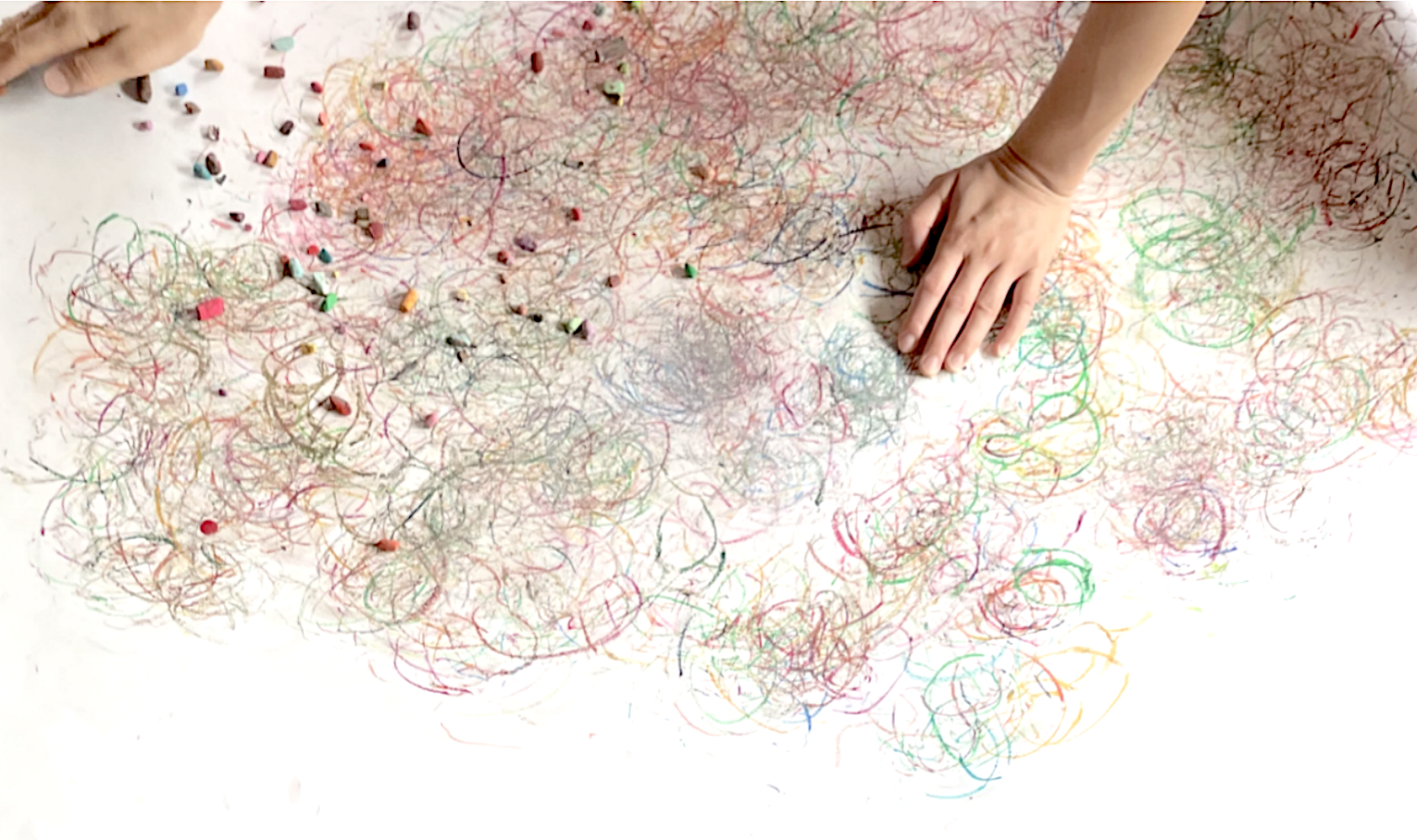
a large and initially empty surface;
unfamiliar or ordinary materials;
limited time and physical space;
structural problems that require revision;
emotional fluctuations during a sustained process;
the absence of a predetermined visual answer.
The learner is free to make decisions, but those decisions must interact with reality.
Paper tears. Glue fails. Weight affects balance. Materials bend differently from what was expected. An idea that appeared simple may become structurally difficult. These conditions transform creativity from fantasy into judgment.
For this reason, CCH does not define autonomy as the absence of boundaries.
Autonomy is the capacity to form and revise one’s own decisions within real conditions.
Materials Allow Learners to Reorganize the World
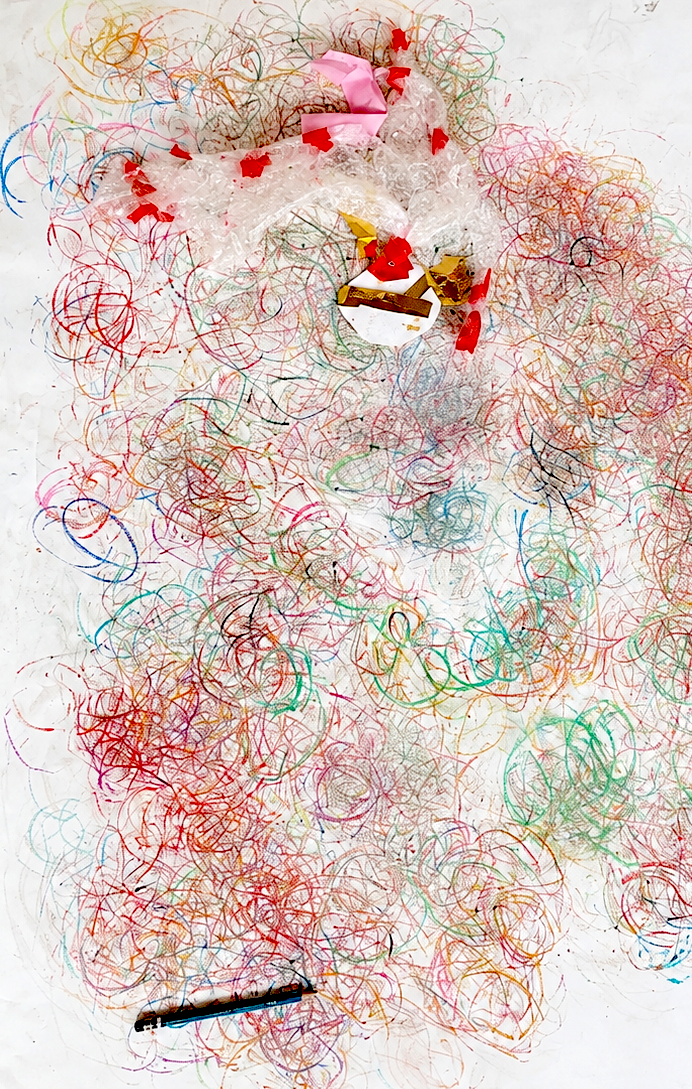
One of the most important functions of artistic practice is the transformation of ordinary materials into new relationships and meanings.
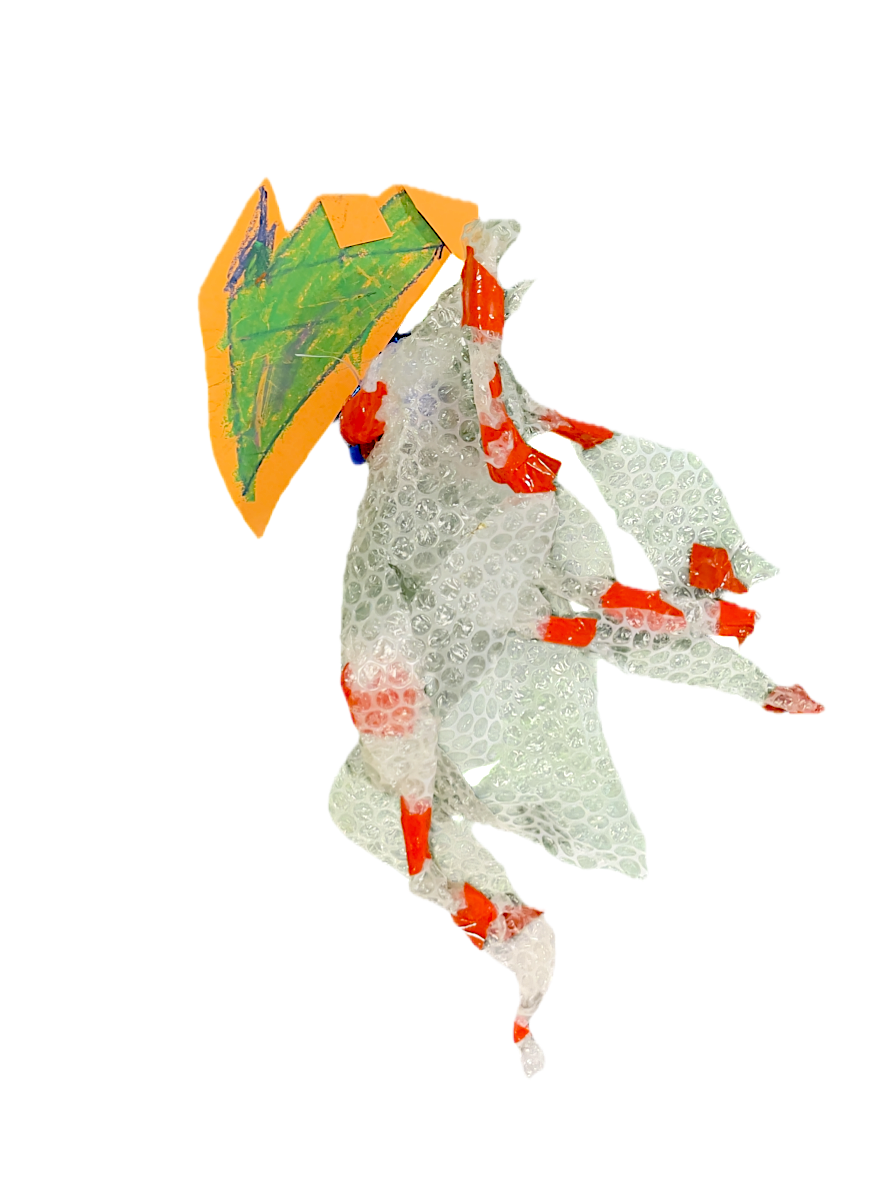
A ribbon does not have to remain decoration. It may become a route, a burst of energy, a bridge, a boundary, or an invented spatial system. A foam sphere may become a moving object whose direction must be controlled. Paper can shift from a passive drawing surface into a structure that folds, extends, supports, or collapses.
This process is often described loosely as imagination. A more precise description is:
The learner is reorganizing the possible functions, meanings, and relationships of the material world.
That reorganization requires more than novelty. It requires observation and judgment:
What can this material do?
What happens when it is joined to another material?
What does the structure need?
What should remain?
What must be changed?
What meaning is emerging through the process?
The educational significance lies not in whether the resulting object resembles professional art. It lies in whether the learner can generate and develop a relationship that was not prescribed in advance.
This is why CCH distinguishes creative construction from template completion.
A template asks the learner to reproduce an existing decision. Creative construction asks the learner to produce, test, and revise decisions of their own.
Autonomy Is Not Isolation
Bourdieu’s concept of relative autonomy is also relevant to education.
No creative practice exists entirely outside society. Artists and learners are influenced by family expectations, institutional rules, cultural taste, economic structures, social status, and systems of recognition. Autonomy therefore cannot mean complete independence from every external influence.
A more realistic form of autonomy involves understanding external conditions while developing the capacity to respond to them selectively.
For a learner, this may mean being able to:
recognize an adult suggestion without automatically following it;
use a demonstrated technique without surrendering authorship;
distinguish help from replacement;
tolerate a result that differs from conventional expectations;
revise a decision without interpreting revision as failure;
maintain an idea while remaining responsive to material evidence.
The educator’s role is therefore delicate.
Too little support may leave the learner overwhelmed. Too much intervention transfers authorship from learner to adult. The task is not to disappear, nor to complete the work on the learner’s behalf. It is to provide enough structure for the learner to remain an active decision-maker.
This distinction is central to CCH.
When an educator temporarily demonstrates how to attach, balance, mix, or control a material, the learner is expected to observe and then resume the action. The purpose of assistance is capability transfer, not adult substitution.
Why Some Families Recognize This Work—and Others Do Not
Bourdieu’s theory further suggests that cultural products are not received by a neutral public. Different audiences possess different expectations, forms of knowledge, and ways of assigning value.
The same is true in education.
Some families immediately recognize the importance of a learner independently resolving a difficult process. Others may primarily evaluate whether the final object looks polished, displayable, or similar to an adult example.
Neither response is random. Each reflects a different educational framework.
Families and institutions are more likely to understand CCH when they already value:
long-term capability rather than immediate performance;
independent judgment rather than automatic compliance;
developmental evidence rather than decorative outcomes;
process complexity rather than visual uniformity;
reflective observation rather than constant correction.
This does not mean that every family must agree with the method. It means that educational alignment matters.
A method designed to cultivate sustained attention and judgment cannot be accurately evaluated by standards designed only to reward speed, neatness, and imitation.
CCH therefore does not aim to persuade every possible audience. It seeks partnerships with families, educators, and institutions capable of recognizing the developmental purpose of the work.
The Difference Between Educational Value and Market Recognition
There is also a practical tension between cultural value and economic value.
A teaching practice may be educationally substantial yet commercially difficult to communicate. Conversely, a visually attractive activity may be easy to sell even when its developmental demands are limited.
This does not justify romanticizing economic failure. Nor does it mean that commercial success proves educational quality.
It means that the two forms of value are produced differently.
Educational value emerges through what learners actually experience and develop.
Market recognition depends on whether that value can be:
named;
demonstrated;
trusted;
compared;
communicated;
situated within an intelligible professional category.
For CCH, the task is not to simplify the work until it resembles a conventional craft class. The task is to construct an accurate translation between studio practice and public understanding.
For example:
Studio observation
Publicly legible developmental language
Continuing after a failed attempt
Recovery and persistence
Choosing among materials independently
Autonomous decision-making
Revising an unstable structure
Adaptive modification
Remaining engaged for an extended period
Sustained attention
Refusing adult replacement
Ownership and agency
Reorganizing materials into new functions
Generative thinking
This translation is part of responsible educational design. Without it, significant development may remain private, anecdotal, and easy to dismiss.
What CCH Draws From This Framework
Bourdieu’s work does not provide direct evidence that material-based art practice improves attention or cognitive resilience. Those claims require separate support from developmental research, learning science, studio observation, and longitudinal evidence.
What his framework does clarify is the social dimension of educational value.
It helps explain why:
Meaningful learning does not automatically become recognizable.
Creative autonomy is formed within—not outside—structures and constraints.
Institutions and professional language shape what society accepts as legitimate education.
Different audiences perceive the same learning process through different cultural expectations.
A method must build not only practice, but also the interpretive infrastructure that allows practice to be understood.
CCH develops from this position.
It treats creative learning as an encounter among attention, material resistance, decision-making, emotion, time, and cultural interpretation. The finished object remains part of the evidence, but it is not the only evidence.
The deeper educational question is:
What kind of person is being formed through the process of making?
Conclusion: Creation as a Practice of Agency
Creative work does not matter only because it produces original objects.
It matters because it gives learners repeated opportunities to relate to reality as active participants.
They observe. They choose. They test. They encounter resistance. They revise. They continue. They discover that a decision can be neither guaranteed nor arbitrary—it can be made responsibly through attention.
This is the educational position at the center of CCH:
Creative autonomy is not freedom from reality. It is the ability to remain present within reality, form one’s own judgment, and construct a meaningful response.
In an era increasingly shaped by automated outputs, predefined interfaces, and externally generated suggestions, this capacity becomes especially significant.
The objective is not to turn every learner into a professional artist.
It is to preserve the human capacity to encounter the world directly, reorganize what is given, and participate in the creation of what comes next.
Reference
Bourdieu, P. (1996). The Rules of Art: Genesis and Structure of the Literary Field (S. Emanuel, Trans.). Stanford University Press.