
Not in Trend
Early Visual Research into Attention, Fragmentation, and Independent Judgment
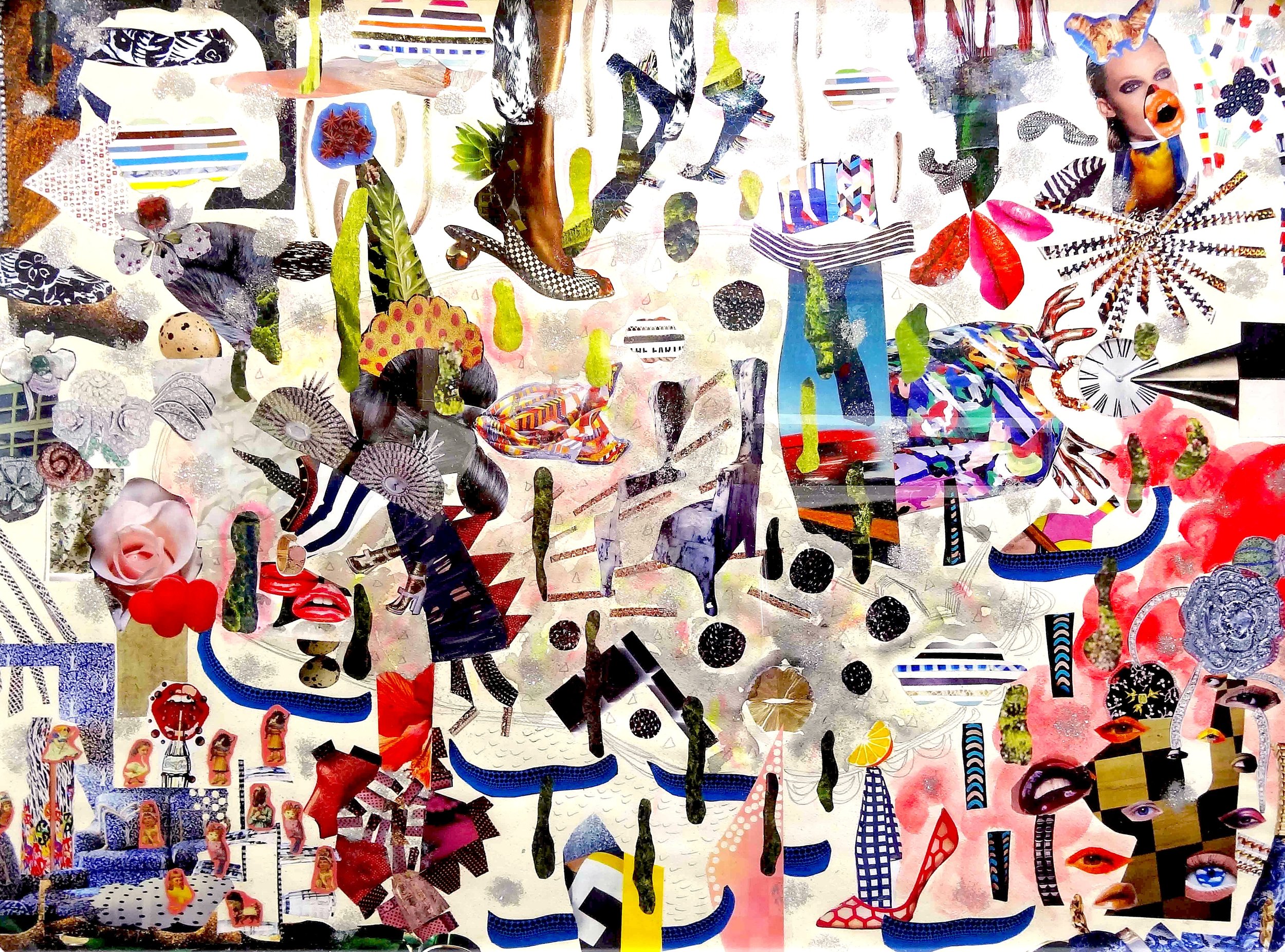
Before CCH ART NOW became a formal educational framework, many of its central questions had already appeared in my studio practice.
The Not in Trend series was created through collage, painting, drawing, repetition, interruption, and layered visual construction. At the time, I understood these works primarily as explorations of cultural movement, memory, identity, and visual experience. Looking back, I can now see that they were also early investigations into attention, judgment, and the human capacity to construct meaning under conditions of complexity.
The works were not created to follow a recognizable visual trend. They emerged from a different question:
How can an individual maintain an independent visual logic while surrounded by competing images, cultural expectations, and external systems of value?
Working Through Visual Density
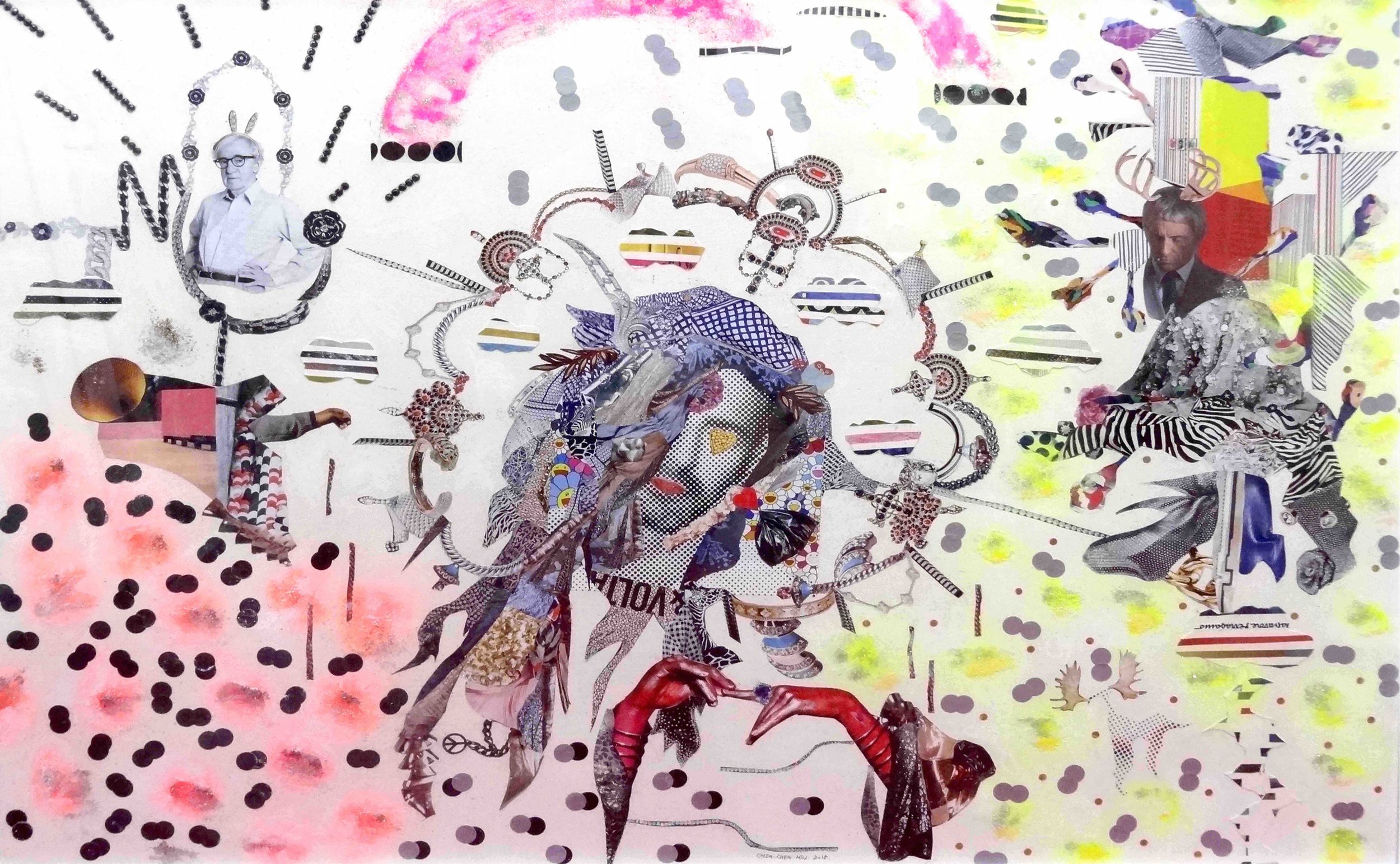
The works contain fragments from different visual worlds: natural forms, bodies, landscapes, printed images, decorative patterns, repeated marks, architectural structures, and cultural references.
These elements do not belong naturally together.
They must be selected, cut, displaced, covered, connected, and reorganized. Each decision changes the structure of the whole composition. An image that initially appears dominant may later be partially erased. A decorative element may become structural. A small mark may redirect the rhythm of the entire surface.
The process is therefore not simply additive.
It requires continuous judgment:
What should remain visible?
What should be interrupted?
Which elements can coexist?
When does complexity become noise?
When does repetition create structure?
When should the artist stop?
The final image is not based on a predetermined template. It develops through prolonged negotiation between intention, material conditions, visual memory, and unexpected outcomes.
Not Following a Trend
The title Not in Trend does not mean rejecting everything contemporary or refusing cultural participation.
It describes a refusal to allow external trends to determine the internal logic of the work.
Trends can provide visibility, recognition, and a shared language. They can also create pressure to simplify, imitate, or make work immediately legible. When an artist becomes overly dependent on external approval, visual decisions may begin to serve recognition rather than inquiry.
The works in this series resist that form of dependence.
They do not ask to be understood instantly. They preserve contradiction, density, and ambiguity. Instead of reducing multiple experiences into one polished statement, they allow different cultural and visual systems to remain in tension.
This was not a strategy for appearing unconventional. It was a way of protecting the work’s cognitive independence.
Attention as Construction
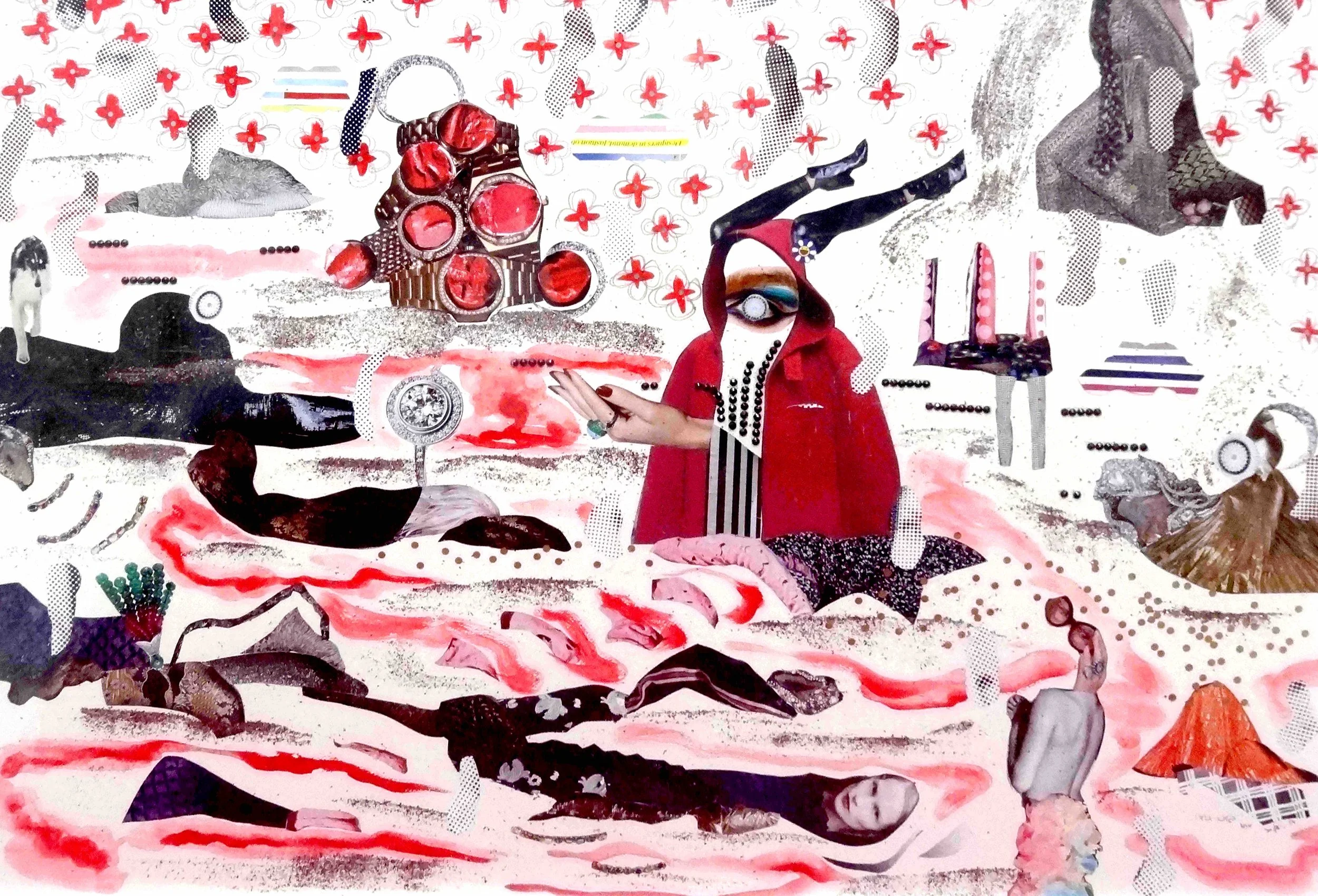
Collage is sometimes understood as the simple combination of existing images. In practice, it can demand a high level of sustained attention.
Every fragment carries its own history, scale, direction, symbolism, and visual weight. Once placed beside another fragment, its meaning changes. The artist must repeatedly move between detail and total structure, observing how local decisions affect the wider composition.
This requires several forms of attention at once:
attention to material resistance;
attention to visual relationships;
attention to emerging patterns;
attention to contradiction;
attention to when the original plan is no longer useful.
The process does not reward speed.
It depends on remaining present long enough for a structure to emerge.
This understanding later became central to CCH ART NOW. Attention is not treated as passive concentration or simple obedience. It is understood as an active capacity to remain engaged, notice change, make decisions, tolerate uncertainty, and reorganize one’s actions.
Fragmentation Without Collapse
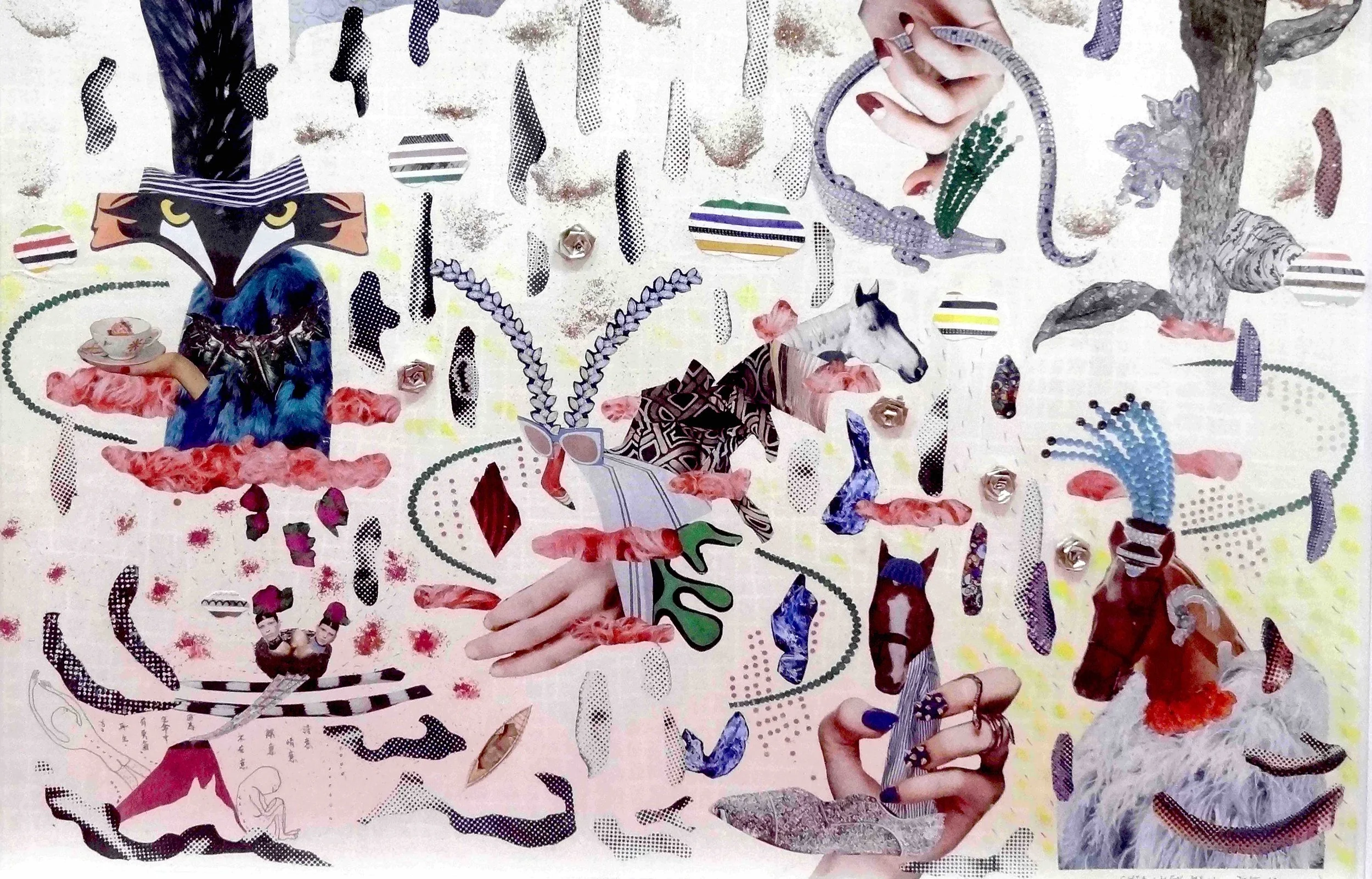
The visual density of the series also reflects a broader human condition.
Modern life is filled with competing information, cultural references, memories, identities, expectations, and images. Fragmentation itself is not necessarily the problem. The deeper question is whether a person can organize these fragments without surrendering judgment.
The works do not attempt to eliminate complexity. They explore how complexity can be held, examined, and restructured.
This distinction matters.
A simplified environment may reduce immediate confusion, but it does not automatically develop the capacity to navigate complexity. Independent judgment emerges through repeated encounters with uncertainty, contradiction, and material consequence.
In this sense, the works are not only about fragmented visual culture. They are about preventing fragmentation from becoming internal collapse.
From Studio Practice to CCH ART NOW
Years later, the same questions returned through education.
In the CCH studio, learners are not asked to reproduce a model or follow a fixed sequence toward a standardized result. They encounter materials, resistance, incomplete ideas, visual choices, and changing conditions.
The central concern is not whether every work looks successful.
The concern is whether the learner can:
begin without complete certainty;
remain engaged when the material resists;
make choices without constant external approval;
revise an idea without interpreting revision as failure;
construct an internal logic across time.
These principles were not invented separately from my artistic practice. They developed from the same long-term inquiry.
The Not in Trend series explored how visual structure could emerge from cultural and material fragmentation. CCH ART NOW extends that investigation into the development of human attention, decision-making, and cognitive autonomy.
A Continuous Research Question
My work as an artist and my work as an educator are not separate careers.
They are two forms of the same research.
The medium has changed—from large-scale collage and painting to studio systems, learner observation, material environments, and developmental documentation—but the underlying question remains:
How can a person preserve the capacity to see, select, judge, and construct meaning in a world shaped by external pressure and increasing complexity?
Not in Trend was an early visual response to that question.
CCH ART NOW continues the inquiry through education.
The objective is not to train people to reject influence, technology, or culture. It is to help them develop enough internal structure to engage with those forces without being entirely organized by them.
In the age of AI, this capacity is becoming more—not less—important.
When images, answers, and stylistic possibilities can be produced instantly, human value does not depend only on generating more content. It increasingly depends on judgment: knowing what matters, what belongs, what should be questioned, and what should be constructed with care.
That inquiry began in the studio long before it became a protocol.