

AI Makes Images. Studio Practice Builds Minds.
ACADEMIC ARTICLE + EVIDENCE CHARTS
STUDIO-BASED LEARNING
FOR HUMAN ADVANTAGE
Why Studio-Based Practice Matters for Attention in the AI Age
AI and digital tools are not the problem. The problem is that human attention is increasingly trained by interruption, acceleration, and output. Studio-based practice offers a counter-environment: slow, material, embodied, screen-free, and rich in decisions.
Abstract
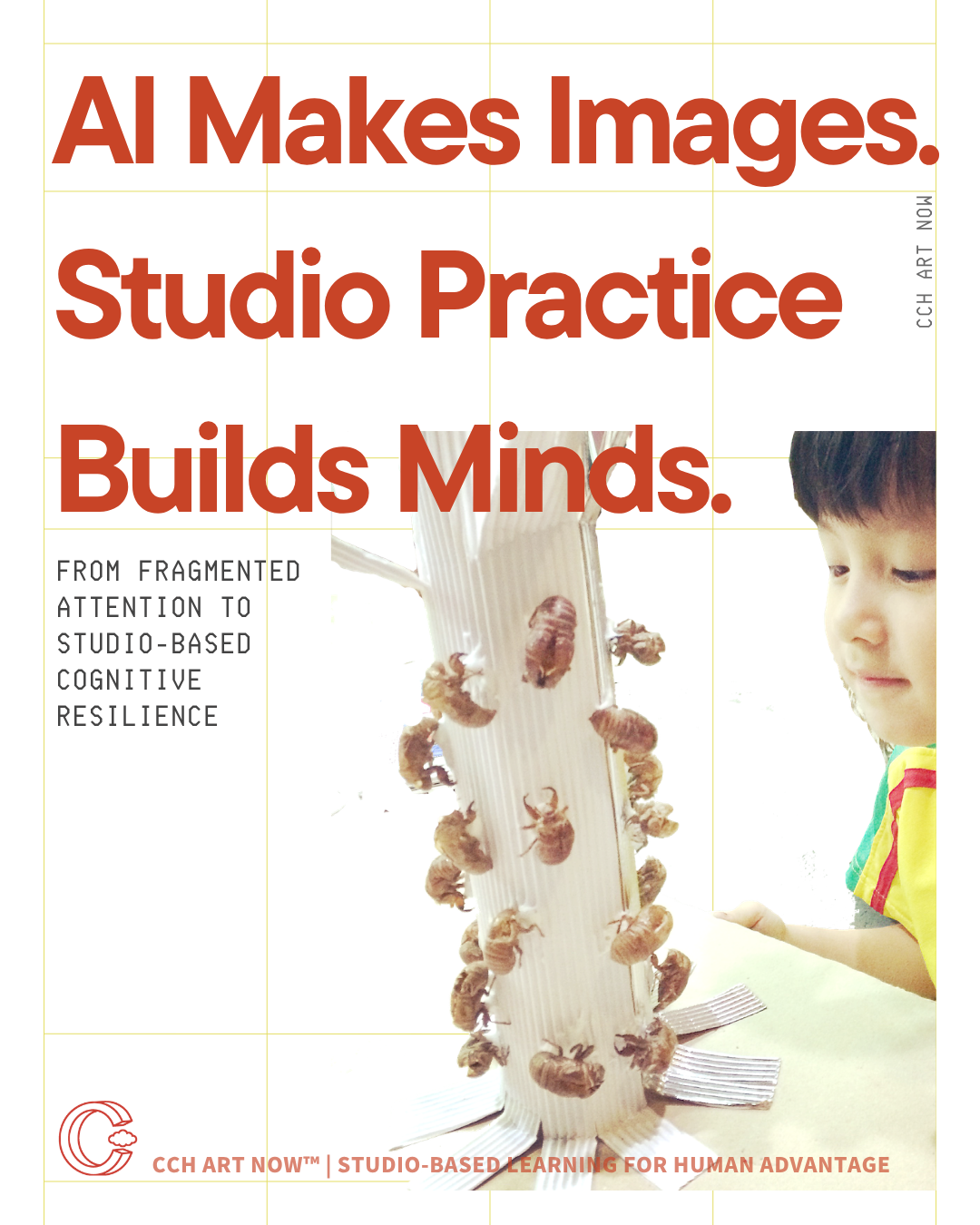
Artificial intelligence can now generate images, texts, summaries, simulations, and decision-like outputs in seconds. This acceleration does not make human creativity irrelevant; it changes the conditions under which human learning must be protected. When output becomes easier and faster to obtain, the more important question is whether learners can stay with a problem long enough to observe, test, adjust, tolerate uncertainty, and form a judgment.
This article argues that attention should not be treated merely as an individual trait, a classroom behavior issue, or a productivity technique. Attention is a foundational human capacity shaped by environments. Digital environments often train interruption, speed, and visible output. Studio-based practice offers a counter-environment: long-duration, screen-free, material, embodied, and decision-rich. In this setting, the learner does not simply produce an image. The learner practices staying.
AI and digital tools are not the problem. The problem is that human attention is increasingly shaped by interruption, speed, and output. Studio-based practice offers a counter-environment: slow, material, embodied, screen-free, and rich in decision-making.
Artificial intelligence and digital tools are not the problem. The problem is that human attention is increasingly being trained by interruption, acceleration, and output. In many contemporary learning and work environments, people are expected to respond faster, switch more frequently, produce more visibly, and remain constantly available to digital stimulation. These conditions do not merely affect behavior. They shape the conditions under which attention develops.
In the AI age, this issue becomes more urgent. Generative technologies can now produce images, texts, summaries, simulations, and decision-like outputs within seconds. This acceleration changes the meaning of learning. When output becomes easier and faster to obtain, the central question is no longer whether a learner can produce something. The deeper question is whether the learner can remain with a problem long enough to observe, test, adjust, tolerate uncertainty, and form judgment.
Screen media use among children and adolescents has become a significant part of the contemporary attention environment (Common Sense Media, 2022, 2025). OECD’s PISA analysis further suggests that digital distraction is associated with students’ learning environments and mathematics performance (OECD, 2024). Research on task switching also shows that frequent switching carries measurable cognitive costs (American Psychological Association, n.d.). Within this broader context, Amishi Jha’s framework in Peak Mind helps explain attention as a trainable system that shapes cognition, emotion, and social connection (Jha, 2021).
1. Attention Is an Environmental Condition
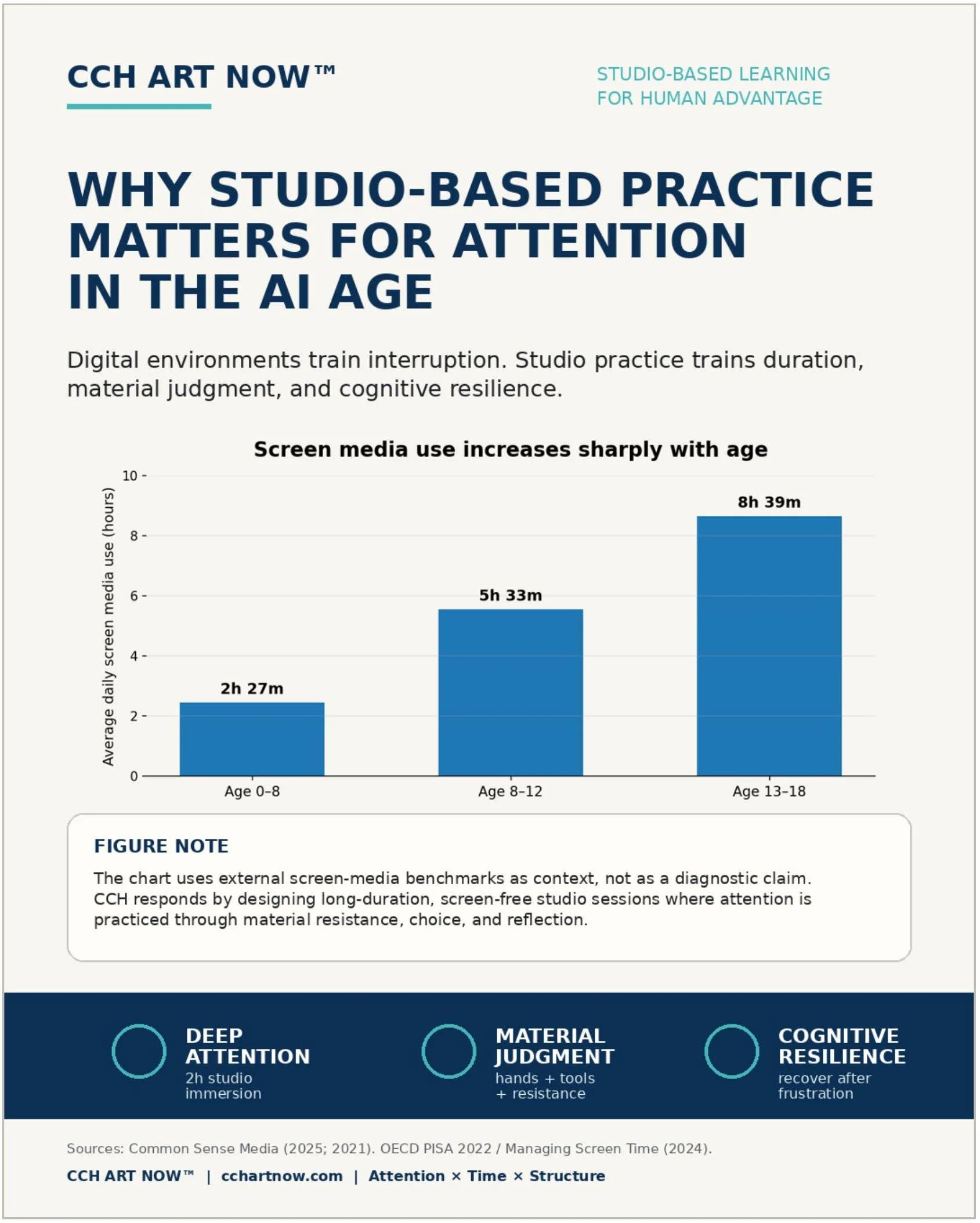
Figure 1.Screen media use increases sharply with age.
This figure should be used as contextual evidence, not as a diagnostic claim. It shows that childhood and adolescence are increasingly shaped by screen-media environments, which makes attention a developmental and educational concern.
2. The Issue Is Not Technology Itself
AA careful argument must avoid a simplistic anti-screen position. Digital tools can support learning, connection, access, creativity, and exploration. AI can help learners search, generate, translate, summarize, simulate, and test ideas. The issue is not the existence of technology. The issue is what happens when the dominant learning environment repeatedly trains the learner toward interruption, speed, and output before duration, perception, and judgment have been developed.
This distinction is crucial. The goal of CCH ART NOW™ is not to reject digital tools or romanticize pre-digital learning. The goal is to identify what human capacities need to be protected and strengthened as automated output becomes easier to access. In this sense, studio-based practice functions as a counter-environment. It slows down the conditions of learning. It brings the learner back to material, body, time, resistance, and decision.
OECD PISA research on screen time is useful because it does not simply argue that all device use is harmful. Instead, it distinguishes between learning-related digital use, leisure-oriented digital use, and device-related distraction. This distinction supports the CCH position: the problem is not technology itself, but the attention environment produced by repeated habits of interruption, stimulation, and switching.
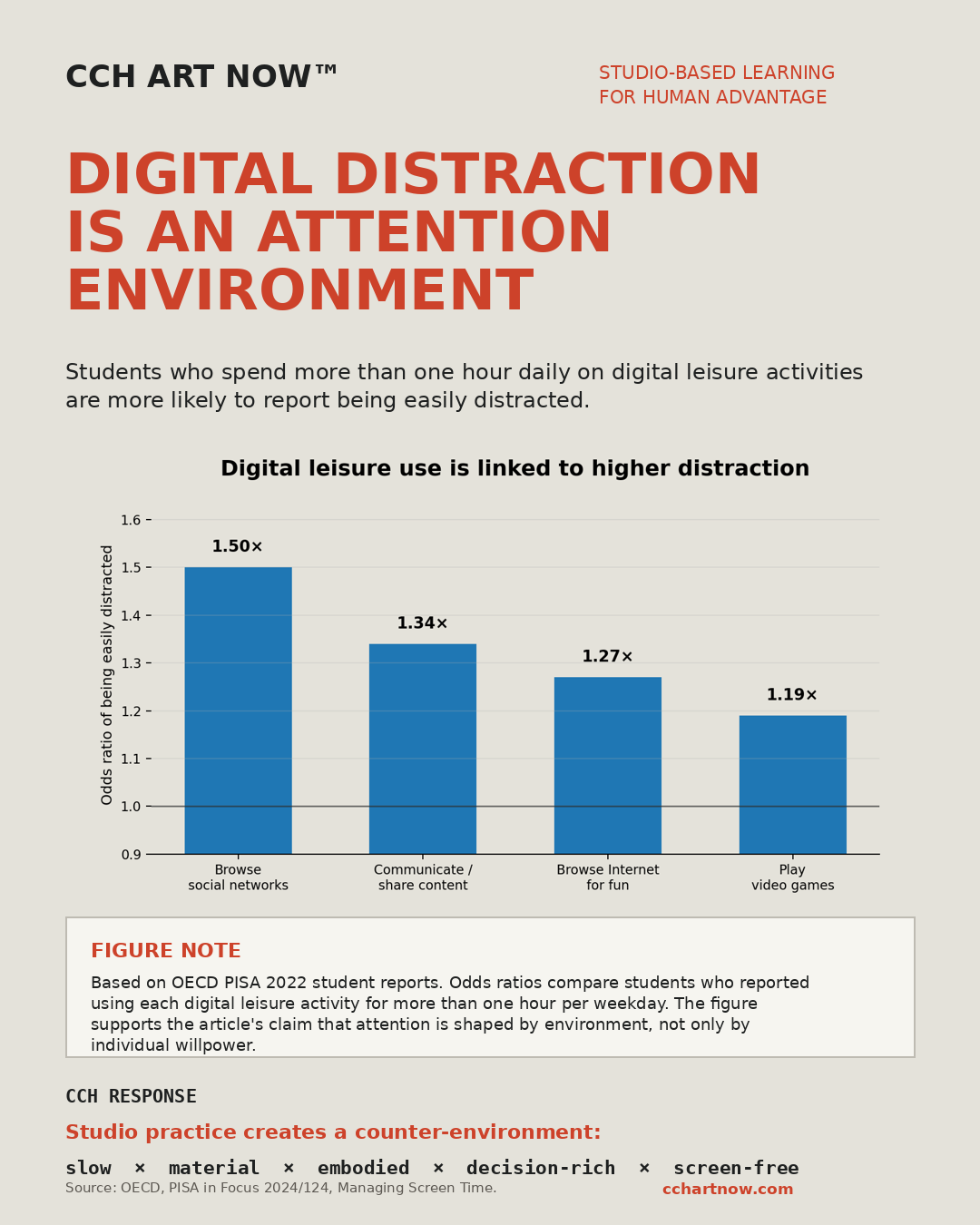
Figure 2. Digital distraction is an attention environment.
This figure supports the argument that attention is shaped by context and repeated behavior patterns, not only by individual willpower.
Attention should not be treated only as an individual personality trait, a classroom behavior issue, or a productivity technique. Attention is a foundational human capacity shaped by environments. It influences how a person observes, manages frustration, relates to others, and makes decisions under uncertainty.
Amishi Jha’s work in Peak Mind is especially relevant because it frames attention as a system that shapes cognition, emotional regulation, and social connection. When attention is optimized, people are better able to plan, observe, organize, connect, and respond with awareness. When attention is compromised, thought becomes scattered, emotional response becomes less regulated, and meaningful connection becomes more difficult.
This framework helps explain why attention matters beyond academic performance. A learner who cannot stay with a task may also struggle to manage uncertainty, recover from frustration, or form independent judgment. A child who becomes dependent on immediate correction, external approval, or rapid output may appear productive while losing the capacity to remain present with an open-ended problem.
For this reason, attention must be understood as part of the architecture of human development. It is not only about concentration. It is about the ability to stay, perceive, regulate, connect, decide, and return.
3. Attention as a Foundational Human Operating System
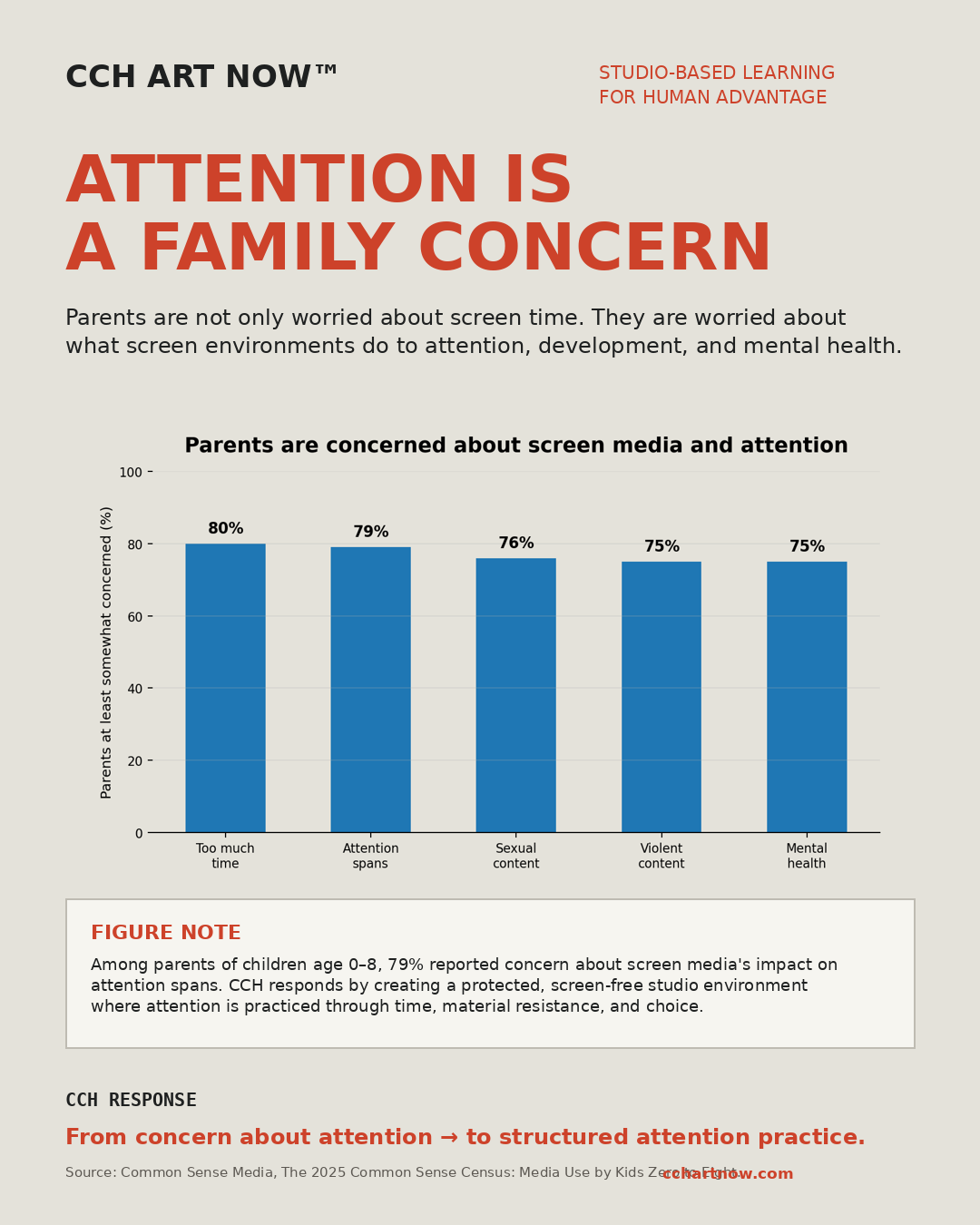
Figure 3. Attention is a family concern.
This figure shows that parents are not only concerned about screen time in general. They are also concerned about screen media’s impact on attention spans, development, and mental health.
4. Why Studio-Based Practice Matters
Studio-based practice offers a counter-environment to the dominant conditions of digital life. It is slow rather than accelerated, material rather than purely symbolic, embodied rather than only cognitive, and decision-rich rather than template-driven. In a studio setting, the learner must negotiate with material resistance, incomplete outcomes, uncertainty, hesitation, error, and choice. These are not interruptions to learning. They are the structure of learning itself.
This is why art practice should not be understood only as image production, self-expression, or creative recreation. In a properly structured studio environment, art practice becomes a serious training ground for attention. A child working with paper, paint, clay, line, scale, pressure, and spatial decisions must continuously regulate perception, movement, emotion, and judgment.
The work does not simply ask the child to make something beautiful. It asks the child to stay.
To stay means to remain with a problem before the answer is clear. It means to continue when the material resists control. It means to make a decision without a template. It means to recover after frustration. It means to observe what has happened, adjust, and continue. These are not secondary benefits of art practice. They are core human capabilities.
CCH ART NOW™ develops studio-based practice as a human capability system for the AI age. Through long-duration, screen-free, material-based sessions, CCH trains deep attention, embodied judgment, creative autonomy, emotional resilience, and material engagement.
5. From Fragmented Attention to Studio-Based Cognitive Resilience
CCH extends the attention-continuum framework into studio practice. The learner’s attention is not trained only through mental exercises. It is trained through touch, pressure, scale, decision, correction, pause, frustration, and return. In this model, material resistance is not an obstacle to learning. It is the medium through which attention becomes visible and trainable.
The CCH Attention Continuum translates attention into five observable domains: cognitive, emotional, social, material/embodied, and creative autonomy. When studio attention is stabilized, the learner can observe, plan, sequence, make choices, tolerate uncertainty, interact with the facilitator, work with material resistance, and gradually form a personal decision path. When attention is fragmented, the learner may jump between ideas, depend heavily on instructions, become anxious or avoidant, withdraw from connection, resist mess or mistakes, and wait for templates.
This framework extends Amishi Jha’s attention-continuum concept into studio-based practice. Jha’s work helps explain why attention matters across cognition, emotion, and social connection. CCH applies this concern through material engagement and long-form creative focus. In this model, the studio becomes a place where attention can be observed, supported, and strengthened through practice.
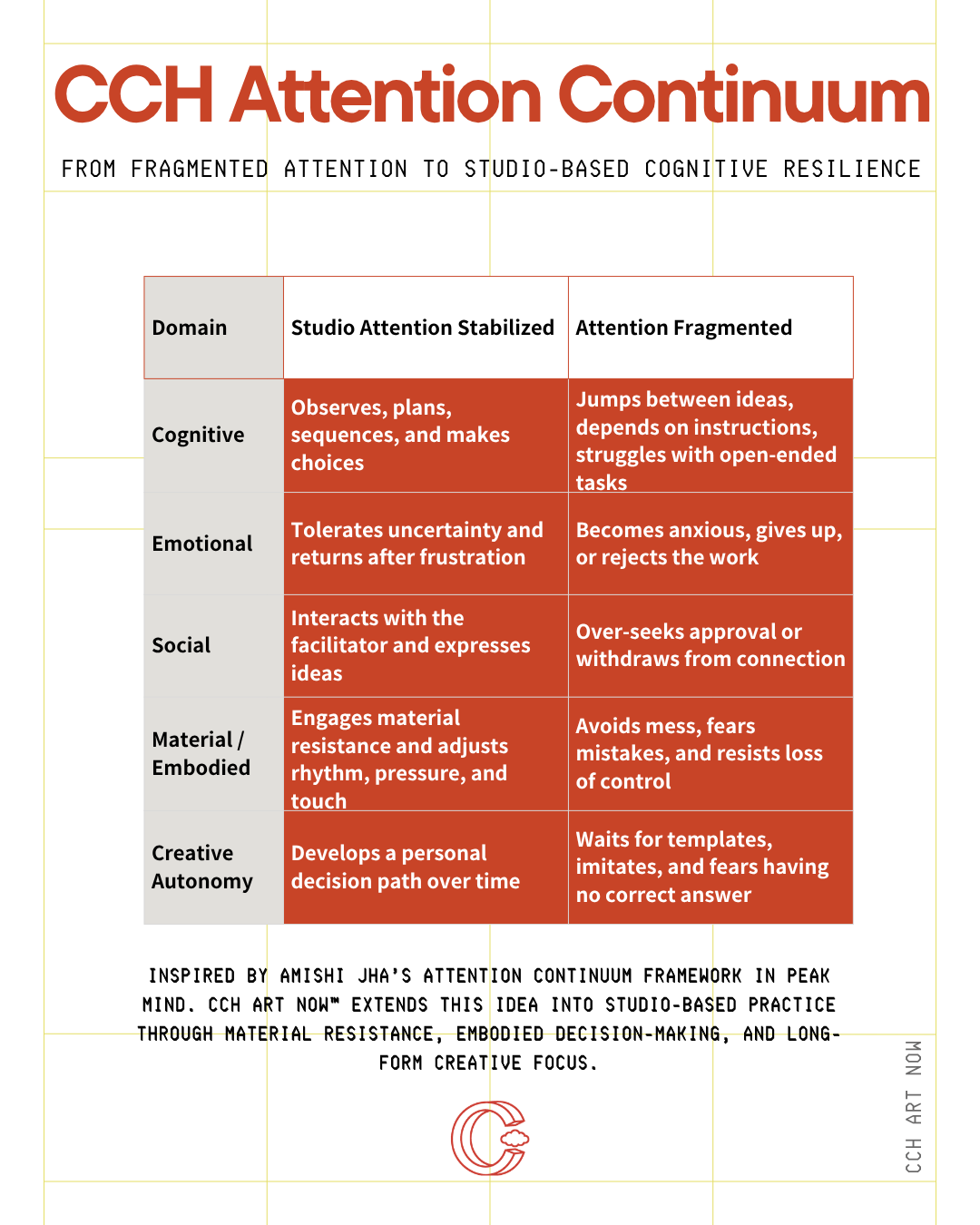
Figure 4. CCH Attention Continuum.
This figure should appear after the paragraph above. It visually explains how CCH translates attention into observable learning domains: cognitive, emotional, social, material/embodied, and creative autonomy.
6.Studio Practice as Attention Architecture

From this perspective, studio-based practice functions as an attention architecture. It creates time, structure, resistance, and relational support for the learner to remain present with a task. The studio becomes a place where attention is not merely demanded, but trained.
This matters because many learning environments ask children to pay attention without designing conditions that actually build attention. CCH reverses this logic. It does not begin by demanding performance. It begins by constructing a protected environment in which attention can emerge through material contact, duration, choice, and guided observation.
The learner experiences the difference between fast output and sustained development, between automatic generation and embodied judgment, and between producing an image and building a mind. In the AI age, human advantage may depend less on producing faster and more on staying longer, sensing deeper, and judging better.
AI can generate images.
Studio practice builds minds.
References
American Psychological Association. (n.d.). Multitasking: Switching costs.
Common Sense Media. (2022). The Common Sense Census: Media use by tweens and teens, 2021.
Common Sense Media. (2025). The Common Sense Census: Media use by kids zero to eight, 2025.
Jha, A. P. (2021). Peak Mind: Find your focus, own your attention, invest 12 minutes a day. HarperOne.
OECD. (2024). Managing screen time: How to protect and equip students against distraction. PISA in Focus No. 124. OECD Publishing.