CC
H
Developmental Contexts Across Age Groups
CCH case studies examine how studio environments support
attention stability, identity development,
and learning recalibration across educational stages.
The focus is not artistic output,
but the evolution of perception,
decision-making, and cognitive regulation.
Adolescent Development
Performance Anxiety Recalibration
Students preparing for competitive academic transitions often experience attention fragmentation despite high capability. Creative engagement supported emotional regulation, resulting in improved focus stability and successful progression.

Learning Bottleneck Identification
High-achieving students sometimes encounter structural learning inefficiencies rather than knowledge deficits. Targeted phonetic decoding intervention restored learning flow and confidence.
Identity Shift Before Performance Shift
Adolescents pursuing international creative pathways benefited from identity alignment processes, leading to intrinsic motivation and reduced digital distraction.
Adult & Young Adult Contexts
Academic Identity Recovery
Students facing academic setbacks regained confidence through cognitive reframing and reflective creative analysis, enabling renewed academic direction.

Visual Culture Literacy & Metacognition
Cross-cultural cohorts demonstrated increased interpretive depth and critical awareness through structured visual culture analysis
Adult Learning & Adolescent Case Studies
The following cases illustrate how CCH environments support cognitive regulation, identity development, and learning recalibration across different stages of education.
Rather than focusing on artistic output, these cases highlight how attention, perception, and decision-making evolve through structured studio engagement.
Case 1
Performance Anxiety Recalibration
Background
A high-performing student preparing for admission to a highly competitive secondary school experienced severe performance pressure during the final three months before the exam.
Despite significant family investment in tutoring and stress-management tools, the student’s attention and emotional stability were deteriorating.
Approach
Studio-based creative work was used as a regulatory environment.
Material exploration allowed the student to externalize stress and visualize long-term goals, including creating imagery connected to the desired school environment.
Learning strategies were also adjusted to improve listening comprehension efficiency.
Observed Outcome
Emotional stability improved
Attention quality increased
The student successfully achieved the targeted admission result
This case represents performance anxiety recalibration through creative cognitive regulation.
ATTENTION STABILIZATION
PRECEDES
CREATIVE CONSISTENCY
Case 2
Learning Bottleneck Identification
Background
A top-performing student was unexpectedly required to restart English learning from a basic level.
The real issue was not language ability, but a missing foundational skill: phonetic decoding.
Approach
Instead of repeating standard curriculum content, instruction focused on identifying and correcting the core learning bottleneck.
Targeted strategies were introduced to rebuild phonetic decoding skills and restore learning efficiency.
Observed Outcome
Learning resistance disappeared rapidly
Confidence returned
Academic progress resumed smoothly
This case illustrates how precise identification of learning bottlenecks can dramatically restore learning flow.
Approach
The learning environment emphasized identity alignment rather than immediate portfolio production.
Students were guided to understand international art education structures, clarify long-term direction, and restructure daily learning habits.
Observed Outcome
The student voluntarily removed gaming distractions
Motivation shifted from external pressure to internal commitment
Parents reported noticeable maturity and independence
Case 3
Identity Alignment for International Art Education
Background
A 15–16-year-old student aiming to apply to international art schools faced a major mismatch between Taiwan’s exam-focused education system and global art school expectations.
identity transformation precedes performance transformation
Case 4
Academic Identity Recovery
Background
A university student who failed to enter a desired institution experienced a significant decline in motivation and confidence.
Approach
Through reframing exercises and visual-cultural exploration, the student restructured self-perception and long-term goals.
The focus shifted from short-term academic ranking to broader cognitive capability development.
Observed Outcome
Confidence gradually returned
The student later transferred successfully to a preferred institution
Long-term learning motivation stabilized
This case reflects academic identity recovery through cognitive reframing.
CLARITY OF DIRECTION
PRECEDES
SUSTAINED MOTIVATION
Case 5
Visual Culture Literacy & Metacognitive Development
Background
An international university cohort with non-art backgrounds participated in visual culture analysis sessions.
Approach
Students analyzed cultural symbols, media imagery, and aesthetic strategies within popular visual environments.
Topics included:
music and sound aesthetics
clothing and character design
visual tempo and editing
emotional symbolism in media
Observed Outcome
deeper analytical thinking
stronger cultural awareness
improved metacognitive reflection
These sessions developed visual culture literacy and critical thinking skills within media-saturated environments.
Across these cases, CCH environments consistently support:
attention stabilization
identity clarification
learning strategy recalibration
improved cognitive resilience
Rather than teaching artistic techniques alone, the studio functions as a cognitive environment where perception, decision-making, and self-direction can be strengthened over time.
Cross-Case Observations
CCH environments frequently attract individuals with high potential who experience friction within conventional educational systems.
These learners often benefit from environments that emphasize attention stability, reflective thinking, and adaptive learning strategies.
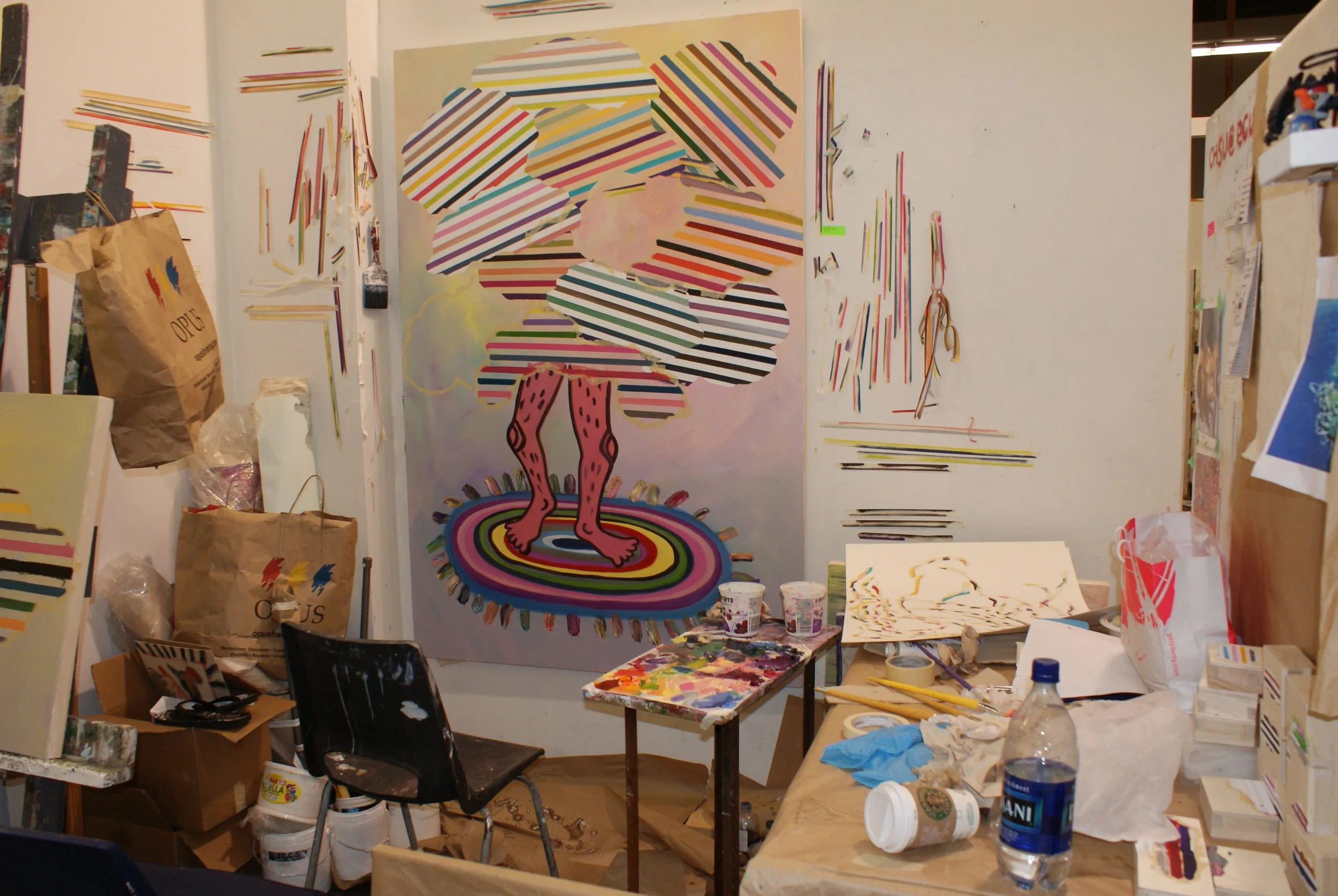
Intergenerational Studio Model
Mixed-age learning environments supported perspective-taking, psychological safety, and sustained attention across age groups.
Institutional Collaboration Examples
CCH has collaborated with diverse educational contexts including:
secondary school transition support
cross-cultural university cohorts
adult cognitive renewal programs
mixed-age studio environments
Observed outcomes include:
improved sustained attention capacity
enhanced reflective thinking
stronger identity coherence
increased learning resilience in high-stimulation environments
Programs are designed as developmental frameworks rather than standardized curricula, allowing adaptation across institutional contexts. Rather than focusing on artistic production alone, CCH studio environments function as developmental systems that support sustained attention, cognitive flexibility, and independent judgment across educational stages.