
Why One Work Can Mean Deep Learning
A CCH studio observation on sustained attention, material testing, and structural thinking.
Studio Observations|Children
CCH ART NOW™
Evidence type: Studio observation
Focus area: Output, thinking, material testing, and sustained attention
Our View on Output and Thinking
What kind of thinking did the child sustain while making?
In CCH practice, children are not evaluated by how many works they complete.
Some children explore through quantity. Others explore through structure, testing, and sustained thinking. Both are valid learning paths.
What we observe instead includes:
whether thinking is active during making
whether hands remain engaged in exploration
whether adjustments and persistence are present
whether the child is building understanding rather than rushing toward completion
whether the work shows decision-making, testing, revision, or material reasoning
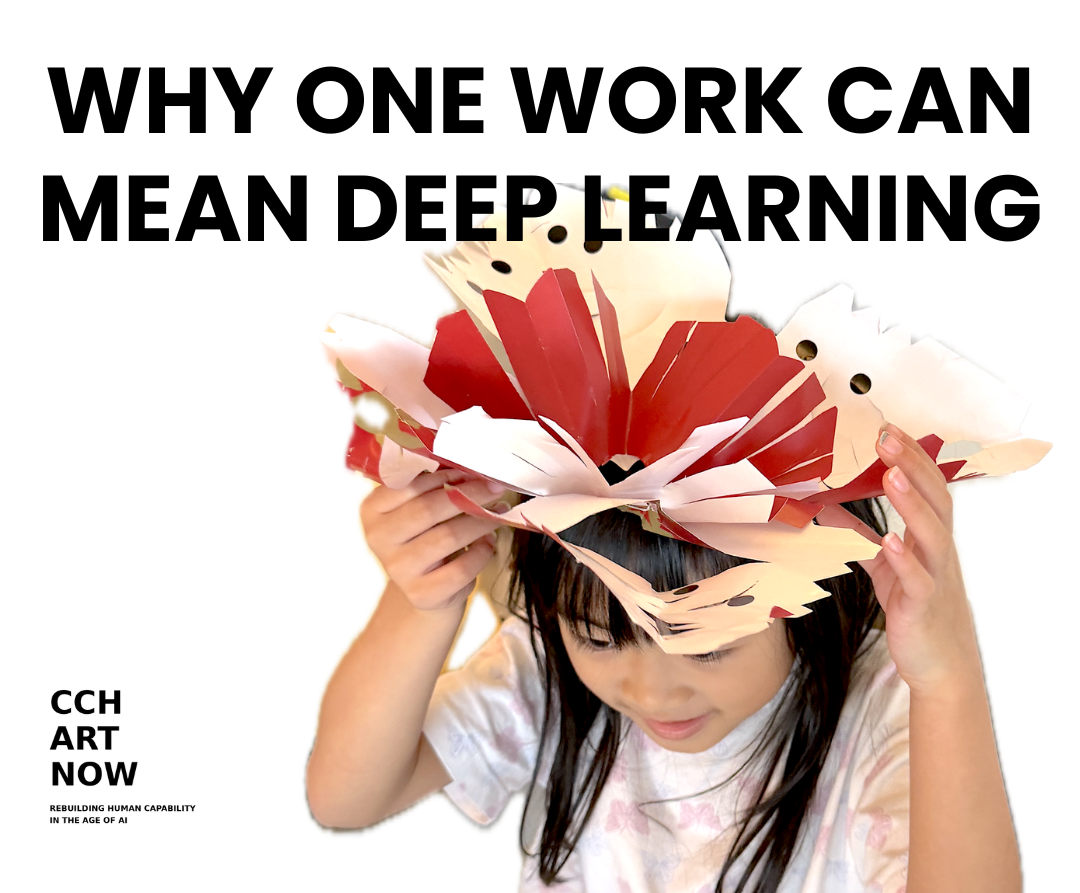
Completing one piece over two hours can indicate focused attention and cognitive processing. It does not necessarily suggest slow learning. In many cases, it reflects deep learning in progress.
Creative work naturally varies in pace. Sometimes it unfolds quickly. At other times, it requires pauses, testing, adjustment, and reflection.
Our core principle remains:
Creation is not defined by how much is produced, but by how deeply it is understood.
Studio Observation: Deep Structural Exploration
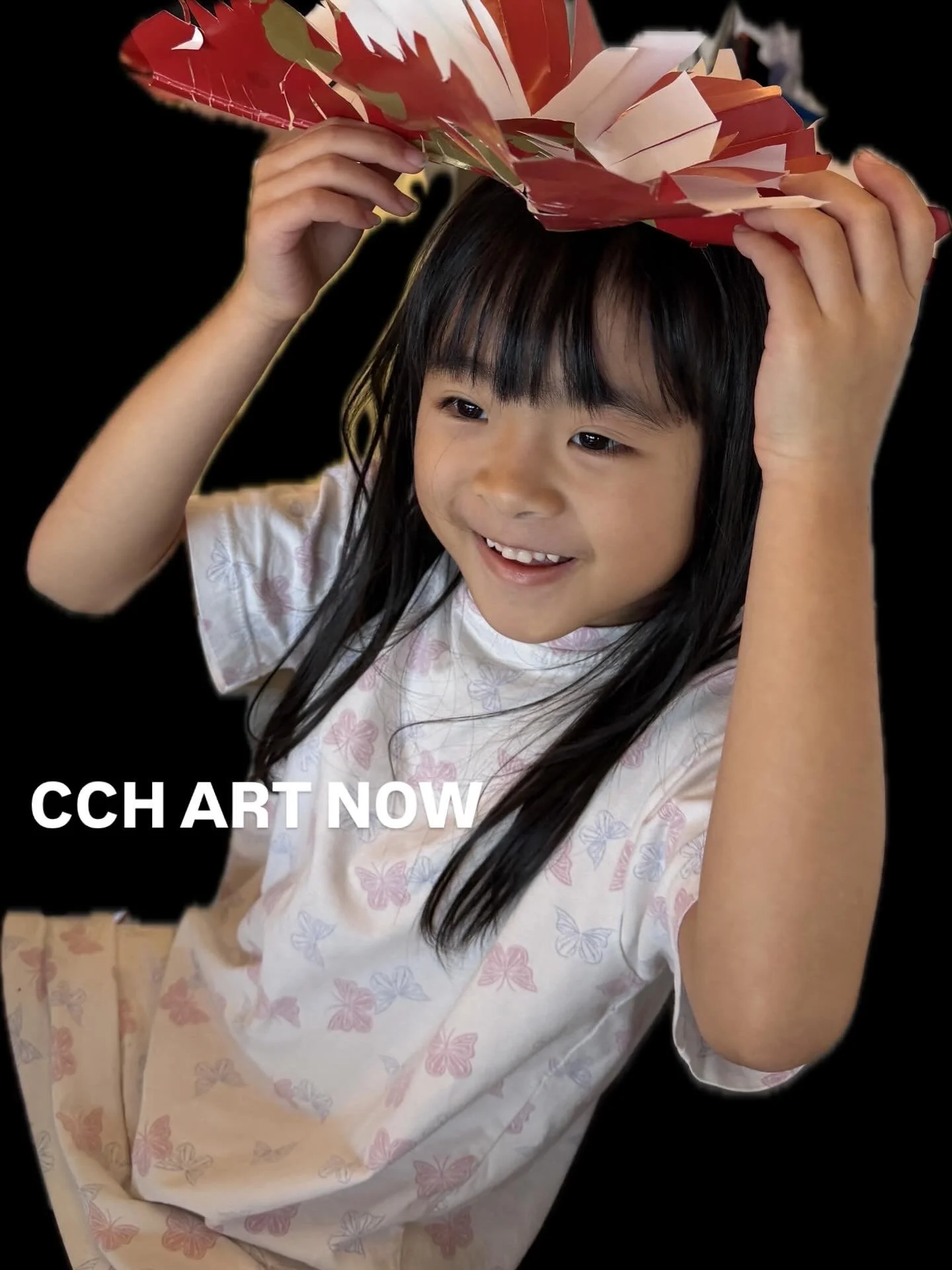
DEEP EXPLORATION
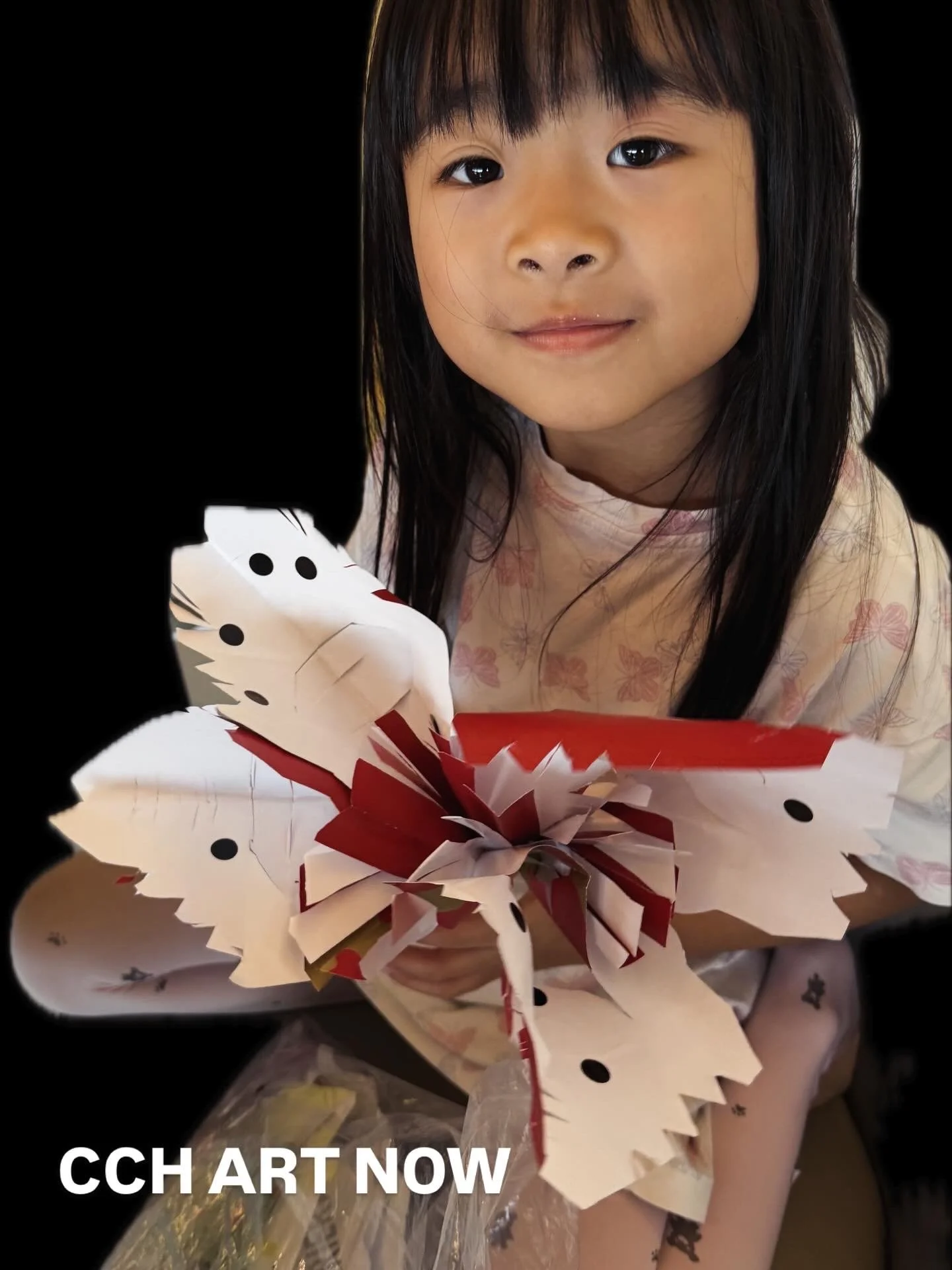
Child spent nearly two hours working on a single sculptural piece
During one studio session, one child spent nearly two hours working on a single sculptural piece.
Much of the time was devoted to testing materials, stabilizing structure, and thinking through how elements could hold together. From the outside, the output appeared minimal. Internally, however, the child remained continuously engaged.
Hands were active.
Attention remained with the material.
Decisions were ongoing.
The structure was repeatedly tested and adjusted.
This kind of process can be easily misread in conventional output-based learning environments. If the evaluation focuses only on quantity, the child may appear to have done “less.” But within a studio observation framework, the learning signal is different.
The important question is not:
How many works did the child finish?
The more precise question is:
What kind of thinking did the child sustain while making?
CCH Interpretation
This observation suggests that a single work can carry significant cognitive value when the child remains actively engaged in testing, adjusting, stabilizing, and making decisions.
The piece becomes a visible record of process rather than simply an object of display. Its value lies not only in its final appearance, but in the attention, persistence, material reasoning, and structural judgment that developed through the making.
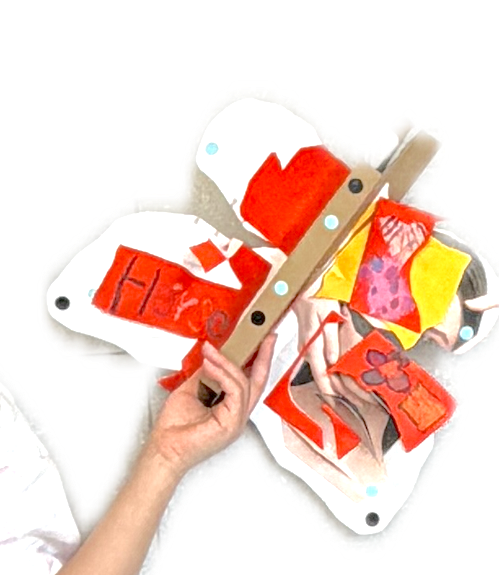
Within CCH, this type of work is interpreted as deep structural exploration.
It shows that:
minimal output can still contain rich learning activity
slow progression may indicate sustained cognitive processing
material difficulty can support problem-solving
repeated adjustment may reflect persistence rather than inefficiency
one object can become a site of extended attention and decision-making
Educational Significance
This observation challenges a common assumption in children’s art education: that more finished works indicate more learning.
In CCH, productivity is not dismissed, but it is not the primary measure of development. A child who makes many works may be exploring variation, speed, and expressive range. A child who remains with one work may be exploring structure, resistance, stability, and depth.
Both modes matter.
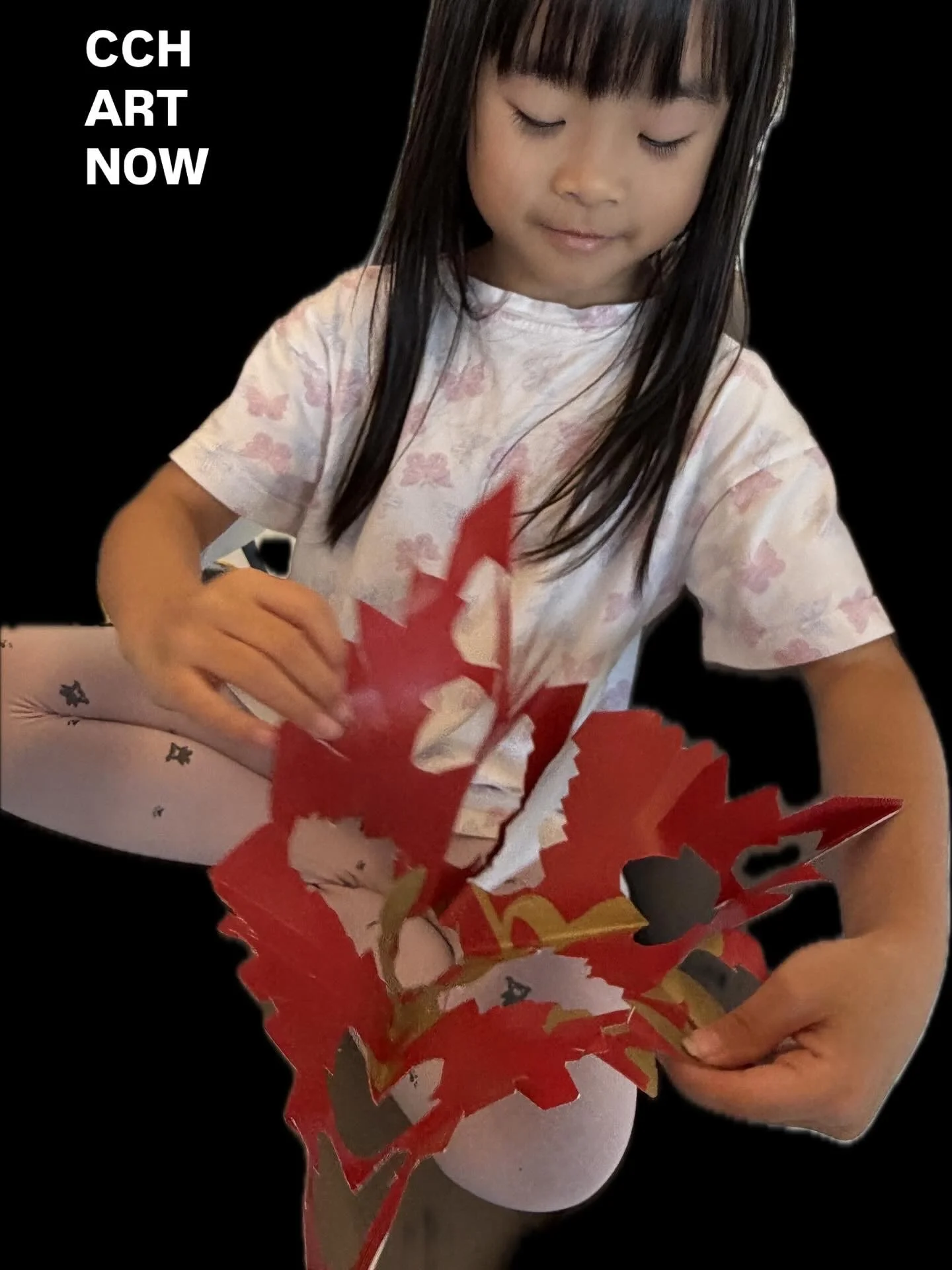
Reframing Negative Space Through Cutting
The educator’s role is to observe the nature of engagement rather than impose a single standard of productivity.
When a child spends extended time on one sculptural piece, the process may reveal:
sustained attention
tolerance for uncertainty
material-based problem-solving
developing structural judgment
emotional regulation through persistence
independence from immediate external validation
These are not always visible in the final object alone. They become visible through close observation of the process.
Evidence Boundary
This article presents a qualitative studio observation. It is not a clinical assessment, psychological diagnosis, therapeutic claim, or completed third-party impact evaluation.
The observation is used to clarify how CCH interprets output, process, and learning depth within a studio-based developmental environment.