

When a Mistake Cannot Be Undone
A CCH observed case on emotional containment, irreversibility, and return to engagement.
Studio Observations|Children
CCH ART NOW™
Evidence type: Observed case
Developmental range: Ages 5–6
Focus area: Emotional regulation, reality-based thinking, action–outcome awareness, and return to task engagement
Overview
This observed case documents a moment in which a young participant experienced a strong emotional response after a material outcome changed in an irreversible way.
Within the CCH framework, this type of moment is not treated as disruption alone. It is understood as a developmental threshold: a situation in which the child encounters the limits of personal expectation, material reality, and action–outcome consequence.
The learning observed in this case was not emotional suppression. The goal was not to stop the child from feeling. Rather, the learning appeared through the child’s gradual movement from emotional intensity toward recognition of irreversibility, emerging ownership of the situation, and self-initiated return to task engagement.
This case is presented as a qualitative studio observation. It is not a clinical assessment, therapeutic claim, or psychological diagnosis.
Case Focus
Observed case: Emotional Regulation Under Structural Limits
The central question of this observation was not whether the participant could remain calm at all times. The more precise question was:
Could the participant recover from emotional intensity while remaining connected to the material reality of the situation?
In CCH, emotional regulation is not understood as forced compliance or immediate adult-managed quietness. It is observed through the child’s ability to remain within a stable learning environment, recognize what has happened, and eventually re-enter the work with greater reality-based awareness.
Material Conditions: Fragility, Temporality, and Irreversibility
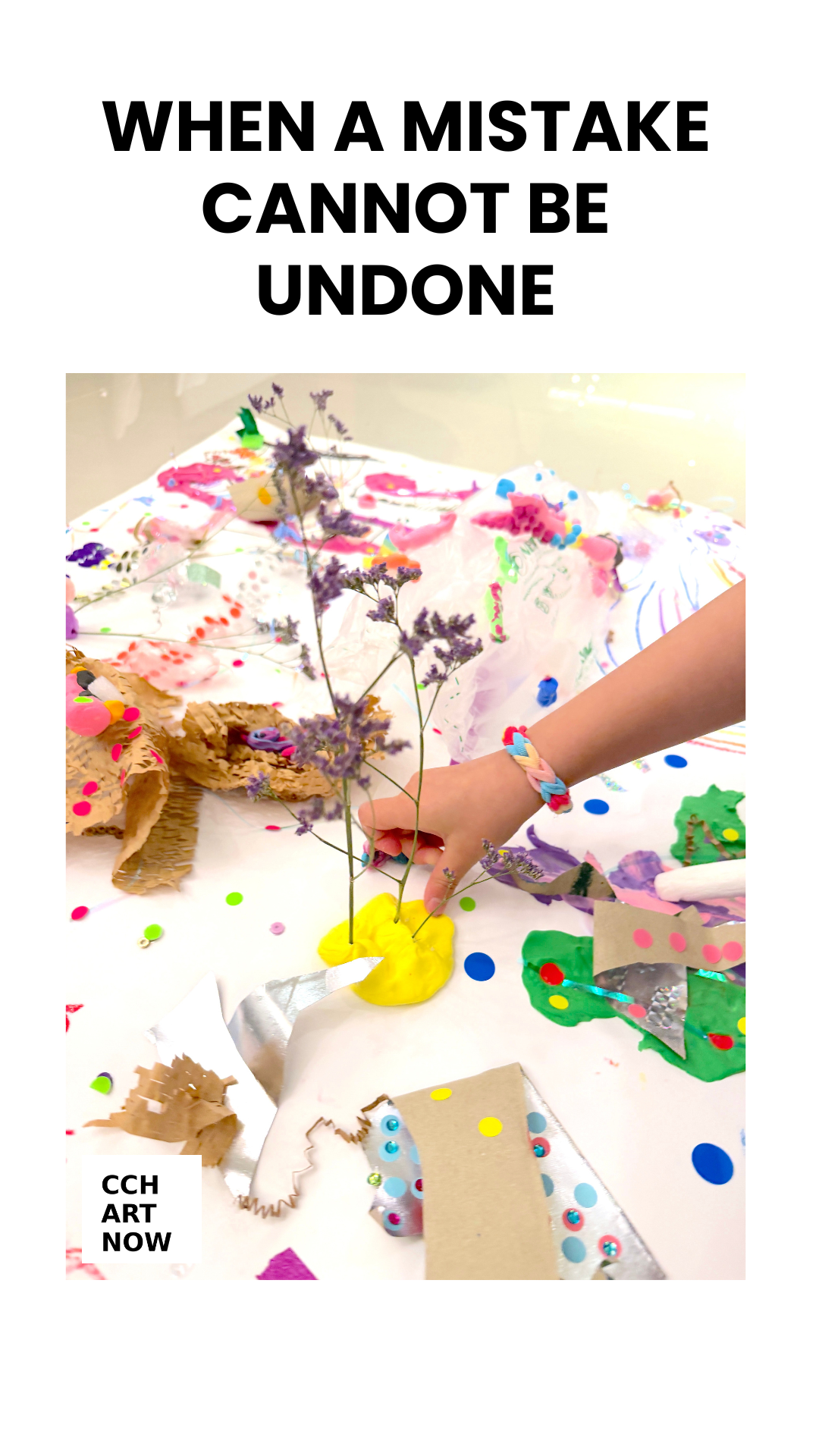
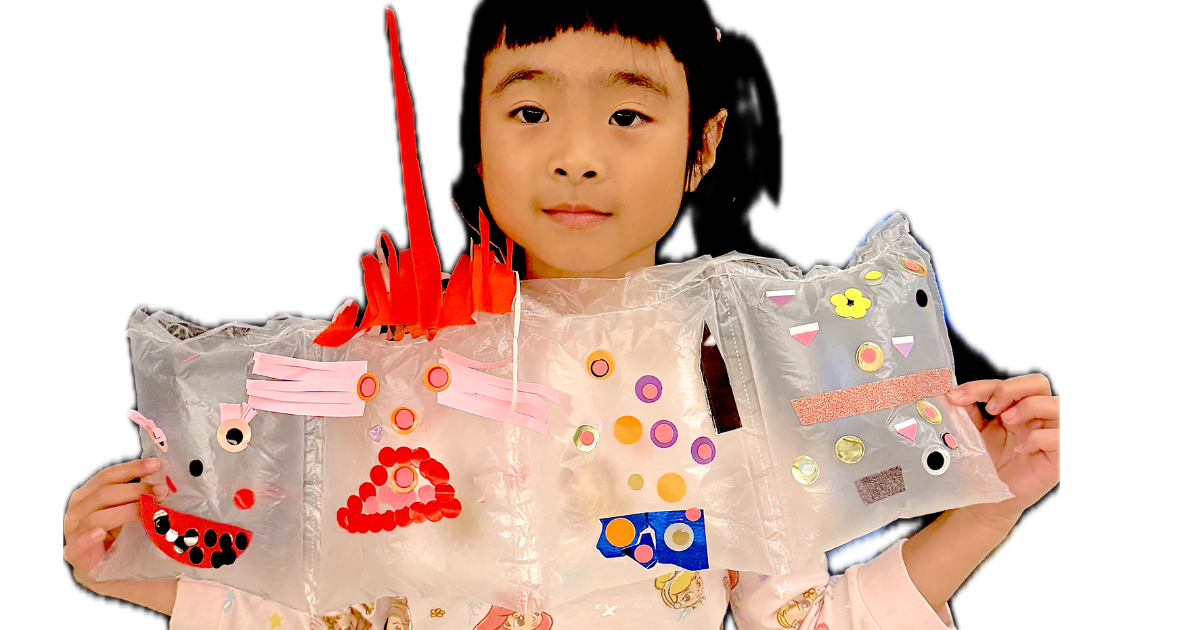
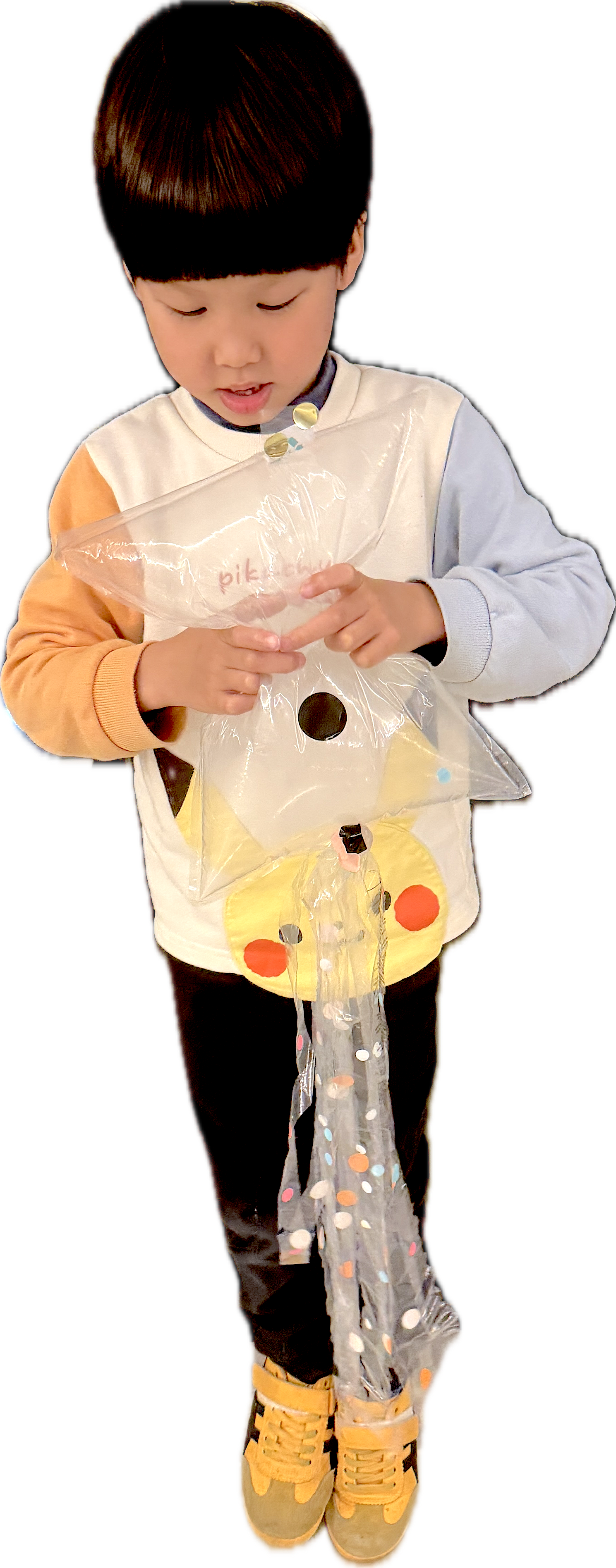
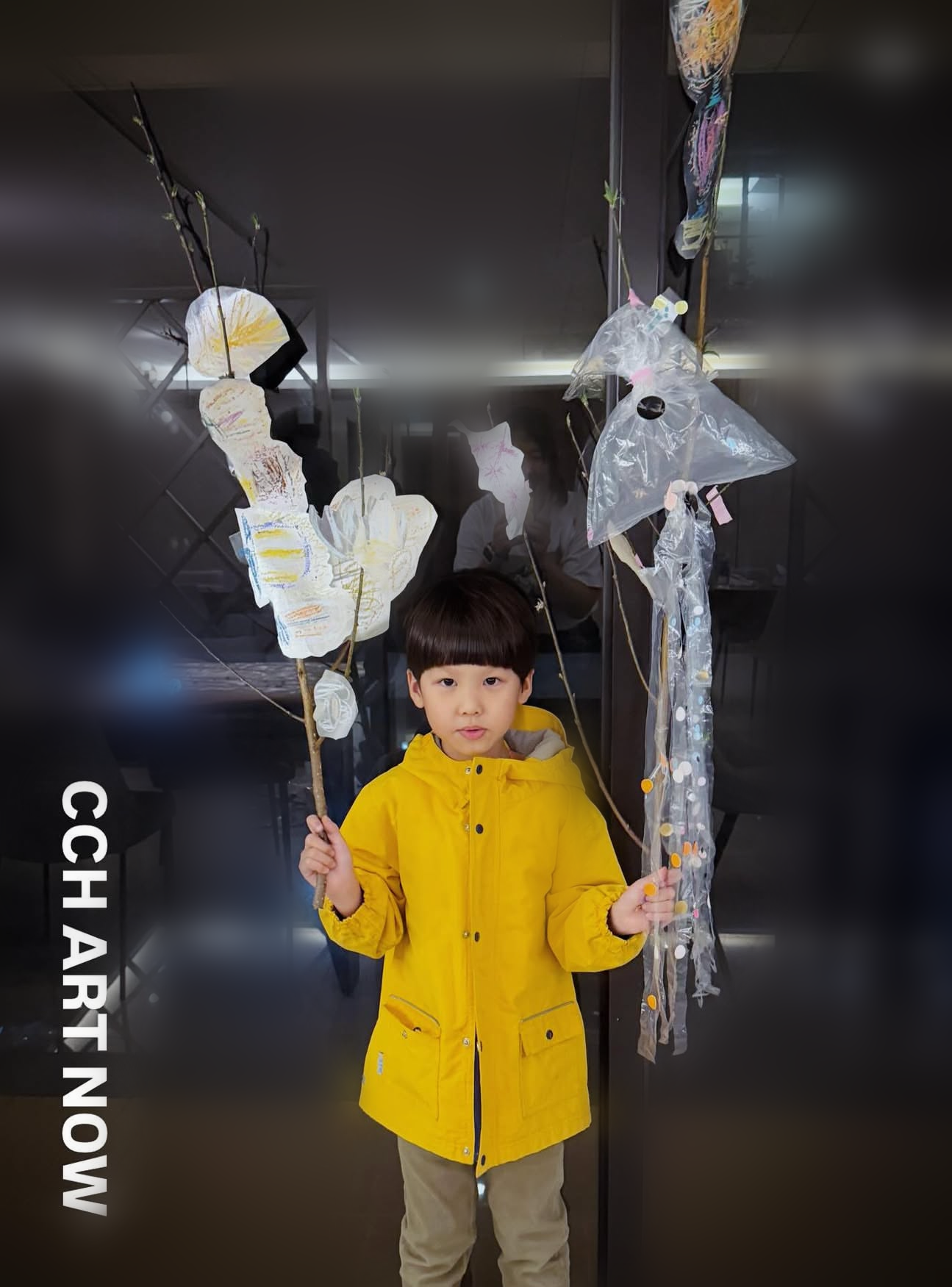
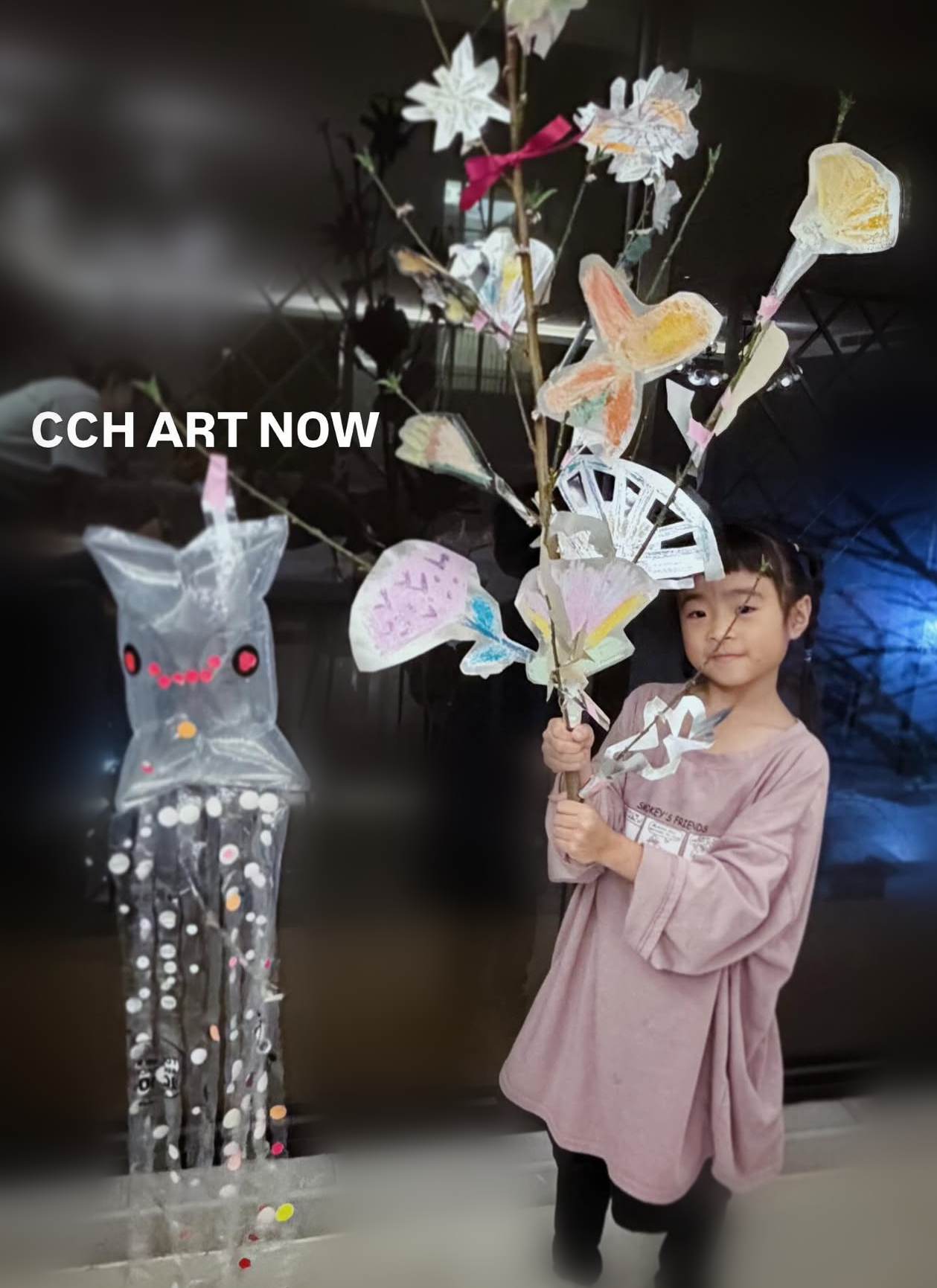
The material system included fragile and time-sensitive elements: fresh flowers that would eventually dry, wilt, and decay; clear bubble wrap and air-cushion packaging that could collapse, tear, or lose form if handled too forcefully; and lightweight void-fill packaging materials that required careful touch, placement, and adjustment.
These materials introduced a different kind of learning condition. They were not infinitely reusable or fully restorable. Once a flower dried or broke, it could not return to its earlier state. Once the air-filled packaging was punctured, compressed, or damaged, its original volume and transparency could not be fully recovered.
For this reason, the materials made consequence visible. The child had to work with care, restraint, and awareness of material limits. The learning environment therefore included not only creative freedom, but also fragility, temporality, and irreversible change.
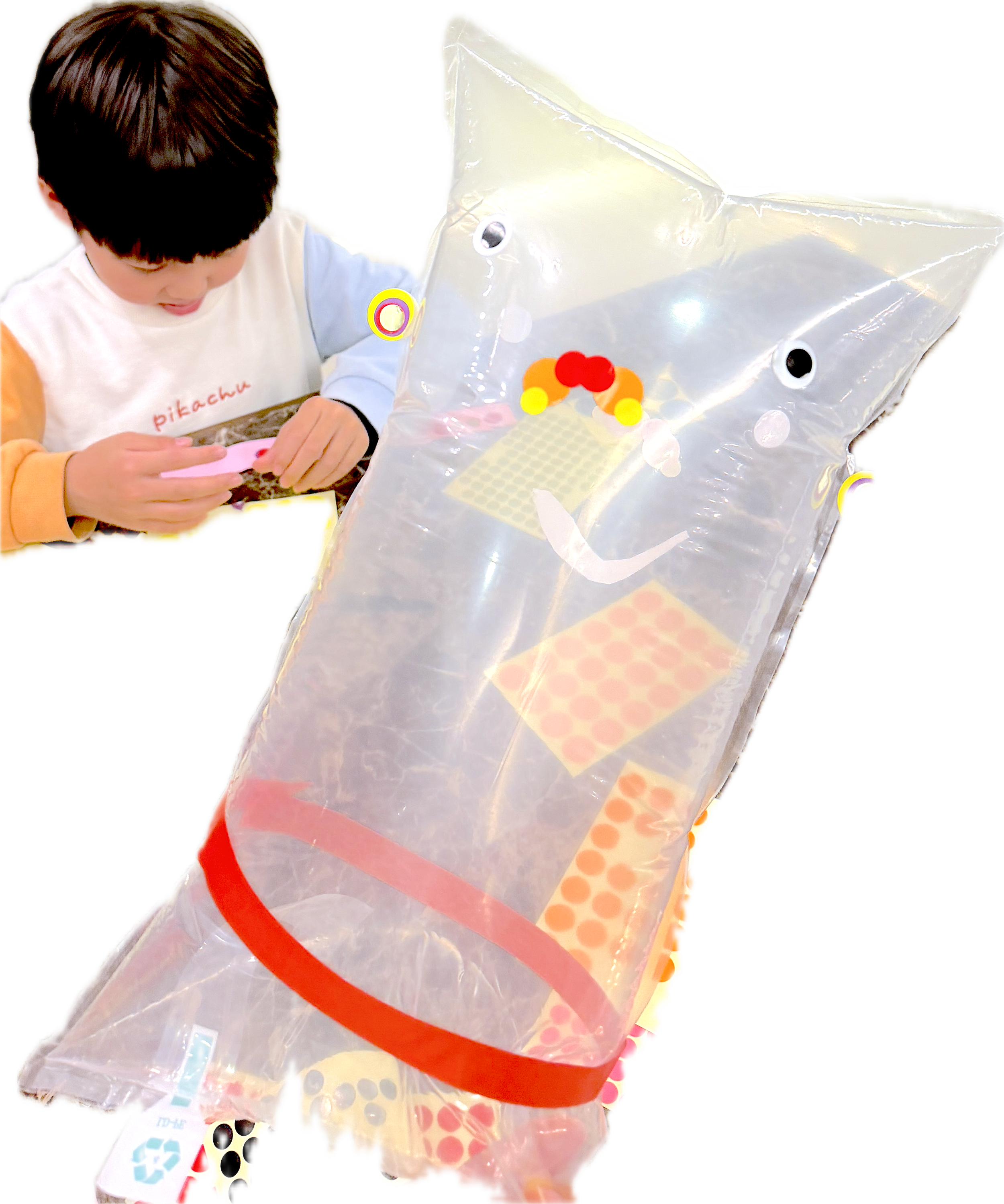
Front-and-Back
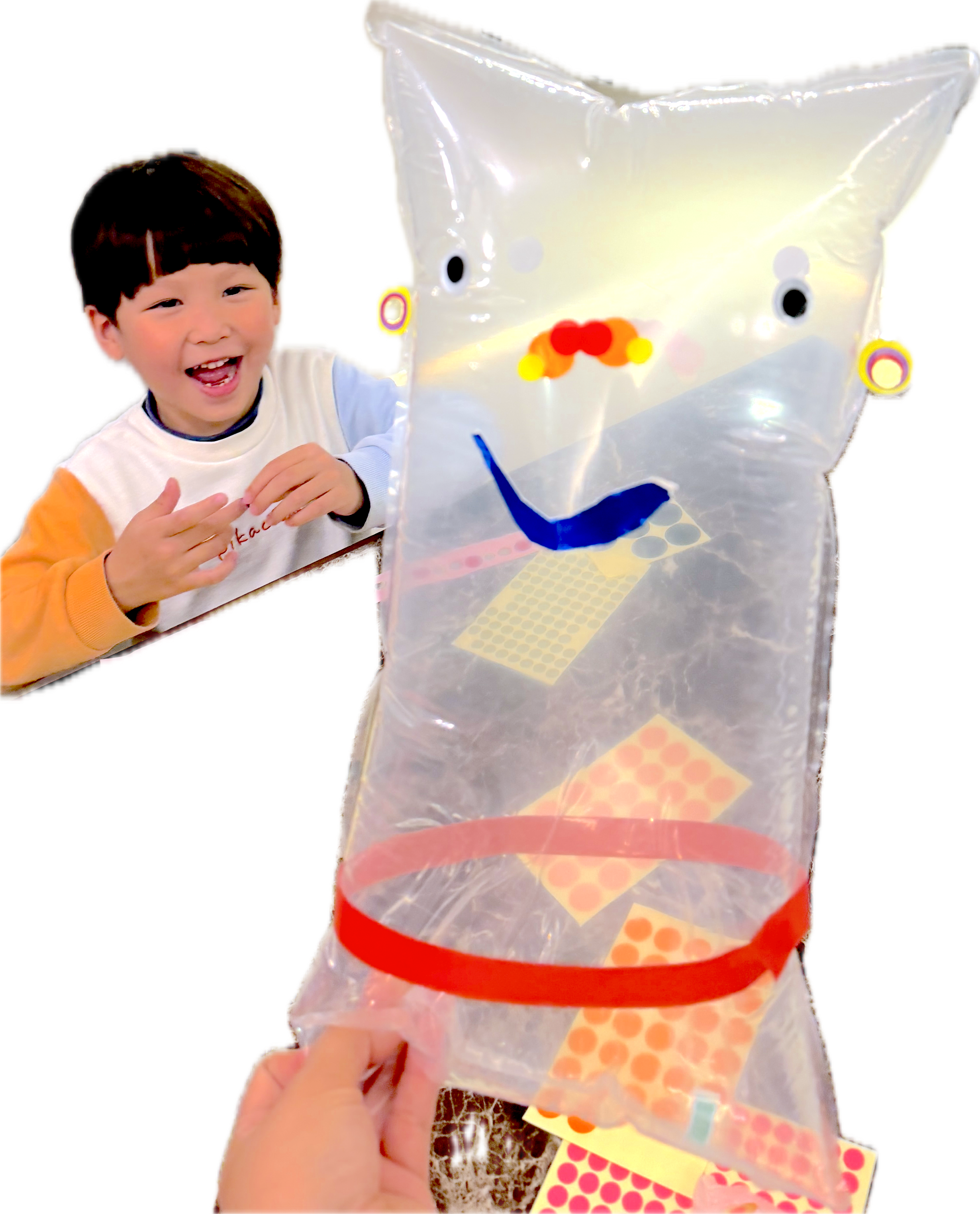
Spatial Thinking
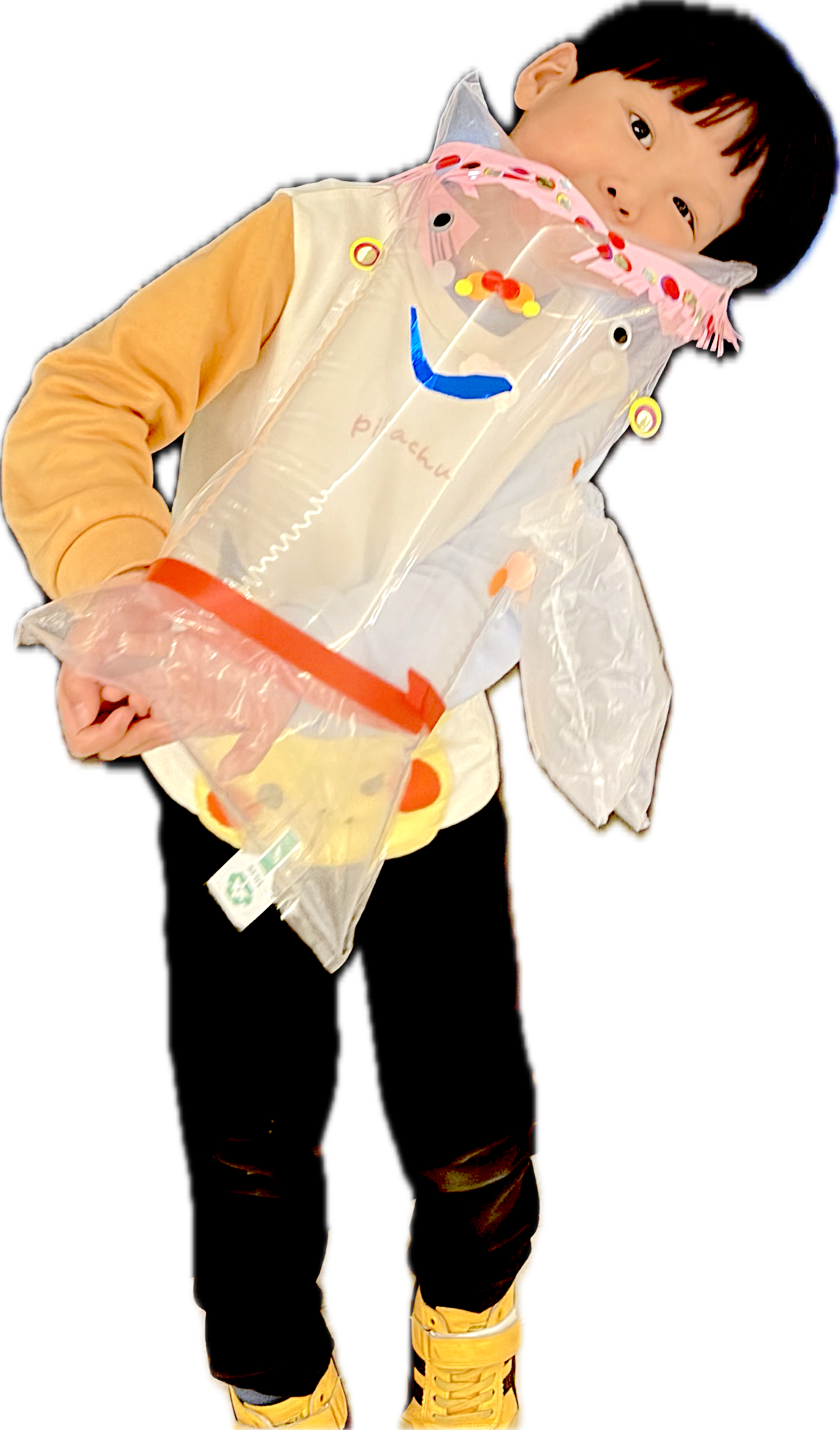
Transparency
Situation
During a studio session, a participant experienced a strong emotional response when an object was altered in a way that conflicted with their expectation.
The emotional response was understandable. The child had invested attention, intention, and attachment into the object. When the object changed, the situation created a conflict between desired outcome and physical reality.
This type of conflict is common in material-based learning. Materials bend, tear, shift, collapse, stain, or change in ways that cannot always be reversed. For young learners, these moments can feel disproportionally intense because the material change is not only external. It may also challenge the child’s sense of control, expectation, authorship, and fairness.
Within CCH, the educational value of such a moment depends on how the environment responds.
Response Structure
The participant’s emotional expression was acknowledged without interruption. The working environment remained stable. No immediate adult solution was introduced to erase the consequence, and no external intervention was used to artificially restore the object to its prior state.
The physical outcome was irreversible.
This response structure was important. If the adult immediately repaired, replaced, or dismissed the outcome, the child might have been relieved, but the learning opportunity would have shifted away from reality-based recognition. If the adult over-controlled the emotional response, the child might have complied externally without integrating the experience internally.
Instead, the environment preserved both emotional safety and material reality.
The child was allowed to feel.
The object was not magically restored.
The situation remained real.
The studio condition remained stable.
Observed Shift
After emotional intensity decreased, the participant demonstrated several learning signals:
recognition of irreversibility
emerging ownership of the action–outcome relationship
reduced dependence on immediate adult rescue
self-initiated return to task engagement
renewed contact with the material process
The most important shift was not that the participant became quiet. Quietness alone is not sufficient evidence of regulation.
The more meaningful shift was that the participant moved from emotional reaction toward reality-based re-engagement. The child began to recognize that the altered outcome could not be undone, and that the next step was not to erase the event but to continue from the existing condition.
This is a subtle but important developmental movement.
Learning Recognition
The learning observed in this case was not emotional suppression.
It was the development of emotional containment alongside reality-based thinking.
Emotional containment means that the child’s feeling was not denied, punished, or rushed away. Reality-based thinking means that the child gradually recognized the physical condition of the object and the consequences of prior action.
Together, these two capacities allowed the participant to return to engagement without requiring the environment to remove all discomfort.
Within CCH, this matters because creative work inevitably involves moments of instability, disappointment, error, and irreversible change. A child who learns only to produce pleasing outcomes may not develop the capacity to remain with difficulty. A child who learns to encounter material consequence, feel emotional intensity, and return to the process may begin building a more durable form of cognitive and emotional resilience.
CCH Interpretation
This case supports a central CCH claim: meaningful studio learning is not measured only by speed, output quantity, or visual completion.
Some of the most important learning occurs at the moment when a child faces a limit.
In this case, the limit was structural and irreversible. The object could not return to its previous state. The child could not solve the situation by simply demanding restoration. The adult did not remove the consequence. Instead, the child was supported by a stable environment that allowed emotional expression, preserved reality, and made return possible.
The CCH interpretation is that the studio functioned as a holding structure for both feeling and thinking.
The child was not forced to “be calm.”
The child was not rescued from consequence.
The child was not abandoned inside distress.
The environment held the situation long enough for the child to reorganize.
Educational Significance
This observed case is educationally significant because it demonstrates how studio practice can support emotional and cognitive development through material reality.
In many learning environments, emotional regulation is confused with obedience. A child who stops crying quickly may be seen as regulated. A child who continues expressing frustration may be seen as disruptive.
CCH uses a different lens.
The key question is whether the child can eventually recognize the situation, tolerate the consequence, and return to meaningful engagement.
This case suggests that emotional growth may become visible when the child:
experiences a mismatch between expectation and reality
is allowed to express emotional intensity
encounters an irreversible material outcome
is not immediately rescued from the consequence
gradually recognizes the action–outcome relationship
returns to the task through self-initiated engagement
This type of learning cannot be measured by how quickly the child finishes work. It also cannot be measured by how visually pleasing the final object appears. It becomes visible through close observation of process, response, recovery, and return.
Evidence Boundary
This article presents a qualitative studio observation. It is not a clinical assessment, psychological diagnosis, therapeutic claim, or completed third-party impact evaluation.
The observation is used to clarify how CCH recognizes learning within moments of emotional intensity, material irreversibility, and return to engagement.
The case should be read as early process-based evidence within the CCH ART NOW™ documentation framework. Further structured observation, repeated documentation, parent feedback, and external review would strengthen the evidence base over time.
References
Center on the Developing Child at Harvard University. (n.d.). A Guide to Executive Function.
Diamond, A. (2013). Executive functions. Annual Review of Psychology, 64, 135–168.
Malafouris, L. (2013). How Things Shape the Mind: A Theory of Material Engagement. MIT Press.