

Why First-Principles Thinking, Childhood Exploration, and Human Agency Matter in the Age of AI
By Chia-Chen Jane Hsu
Founder, CCH ART NOW | Founder Research Reflection
October 16, 2026
01. When a Car Leaves the Ground, What Really Changes?
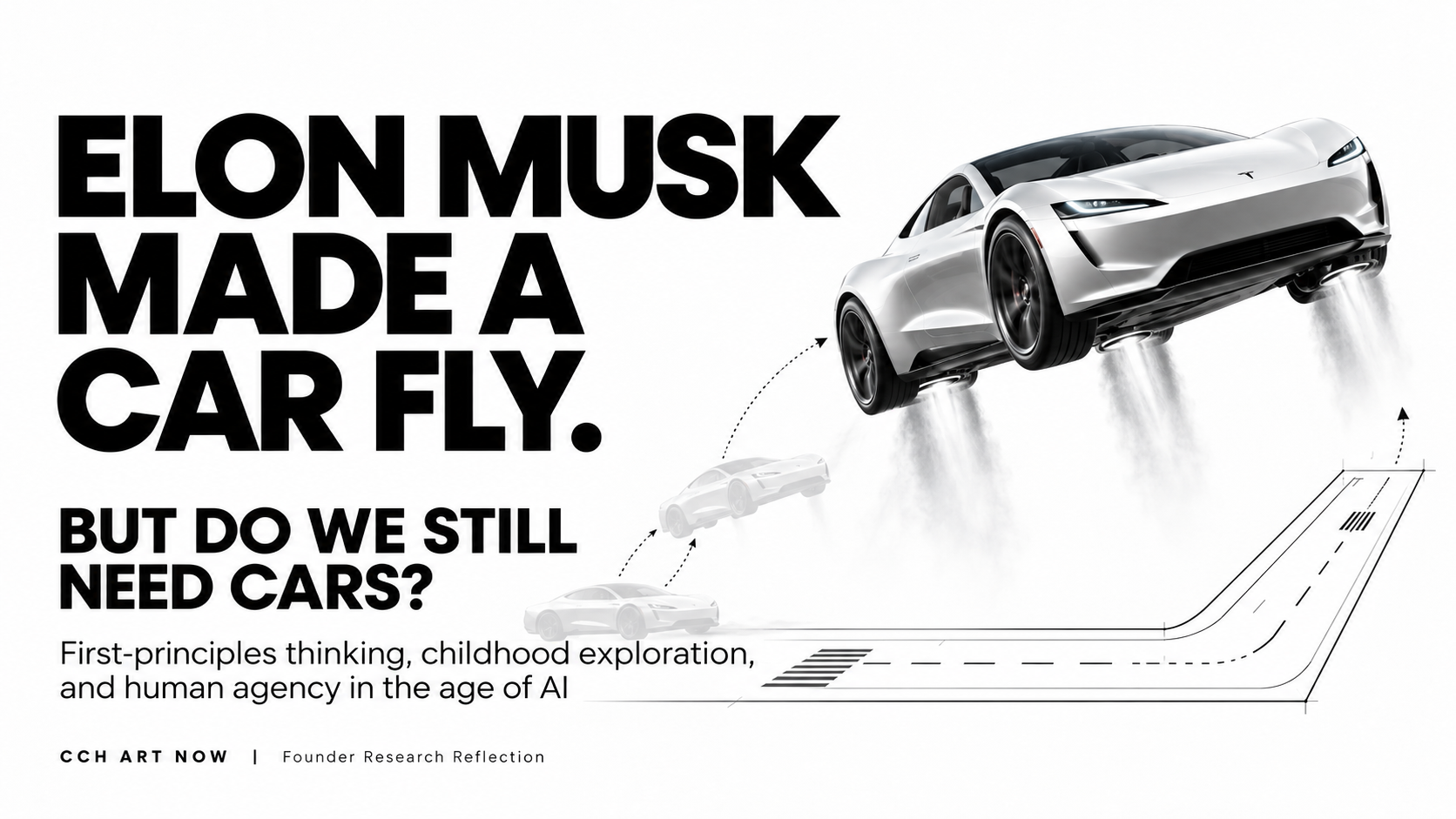
On October 15, 2026, Tesla unveiled its next-generation Roadster, demonstrating a vehicle capable of briefly leaving the ground using advanced propulsion technology developed with SpaceX.
For many, the spectacle represented another extraordinary engineering achievement. A machine designed to travel along roads could now perform aerial maneuvers.
But watching a car fly raises a different question in my mind:
Do we actually need cars?
Consider the question from first principles.
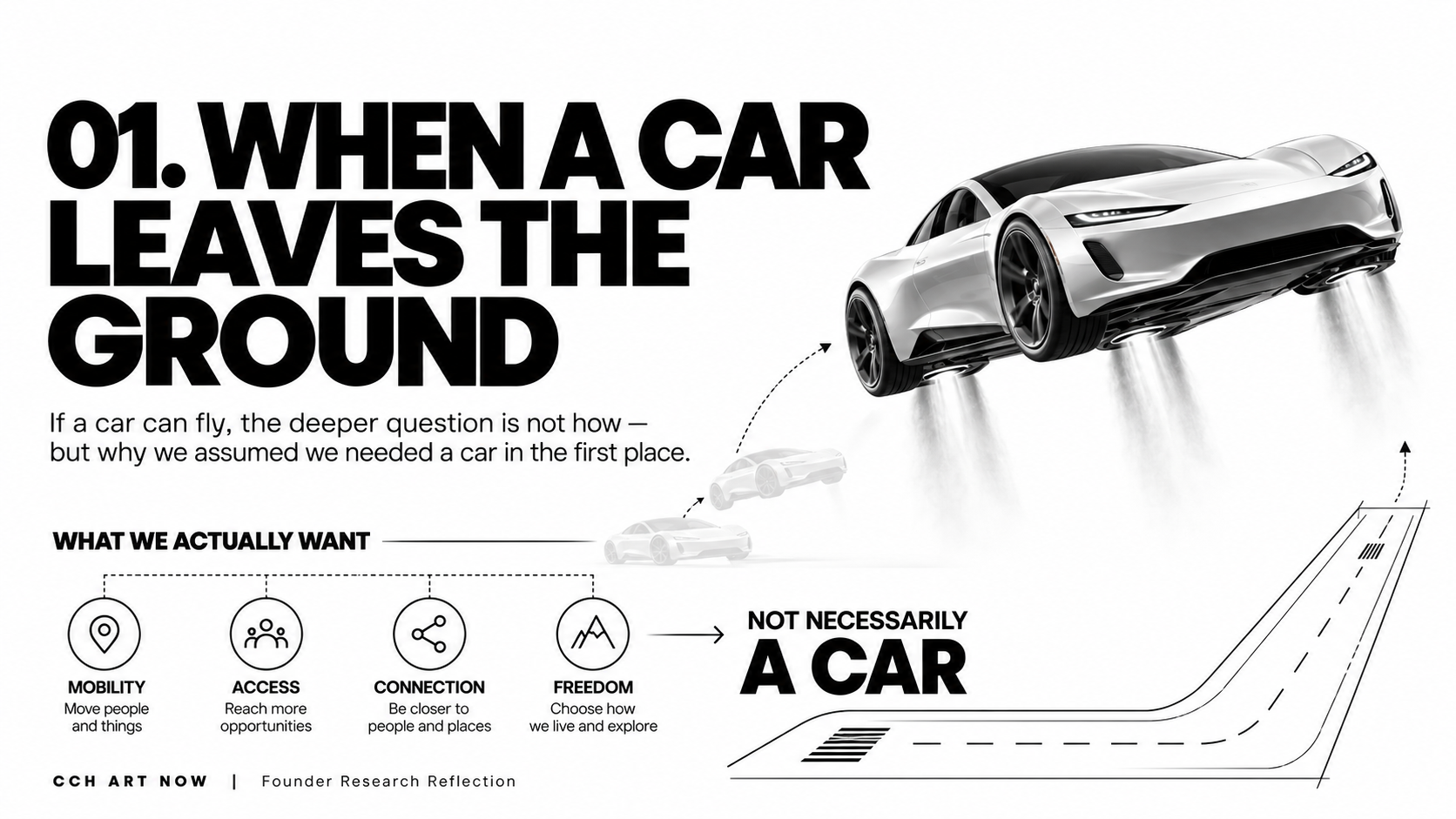
A car is a technological solution to a human need: mobility. It is essentially a container designed to transport people and objects through physical space.
Yet human beings do not fundamentally desire cars. We desire access, movement, connection, freedom, and experiences.
If our objective is mobility, why should our imagination remain confined to a vehicle?
Could we rethink transportation entirely? Could future technologies reduce the need to move physically? Could we develop forms of mobility that have not yet entered our collective imagination?
The fictional Anywhere Door from Doraemon offers an amusing example. It eliminates the journey altogether.
Of course, human bodies remain subject to physical laws, energy requirements, and material constraints. An imaginary door cannot simply become an engineering reality.
But that distinction leads to another question:
Should physical limitations determine where imagination begins, or should they become challenges that imagination eventually confronts?
02. The Hidden Limitation of Problem-Solving
Modern education places considerable emphasis on problem-solving.
Students learn to identify a problem, apply knowledge, follow procedures, and produce solutions.
These capabilities are essential.
Yet problem-solving often begins with an assumption: the problem has already been correctly defined.
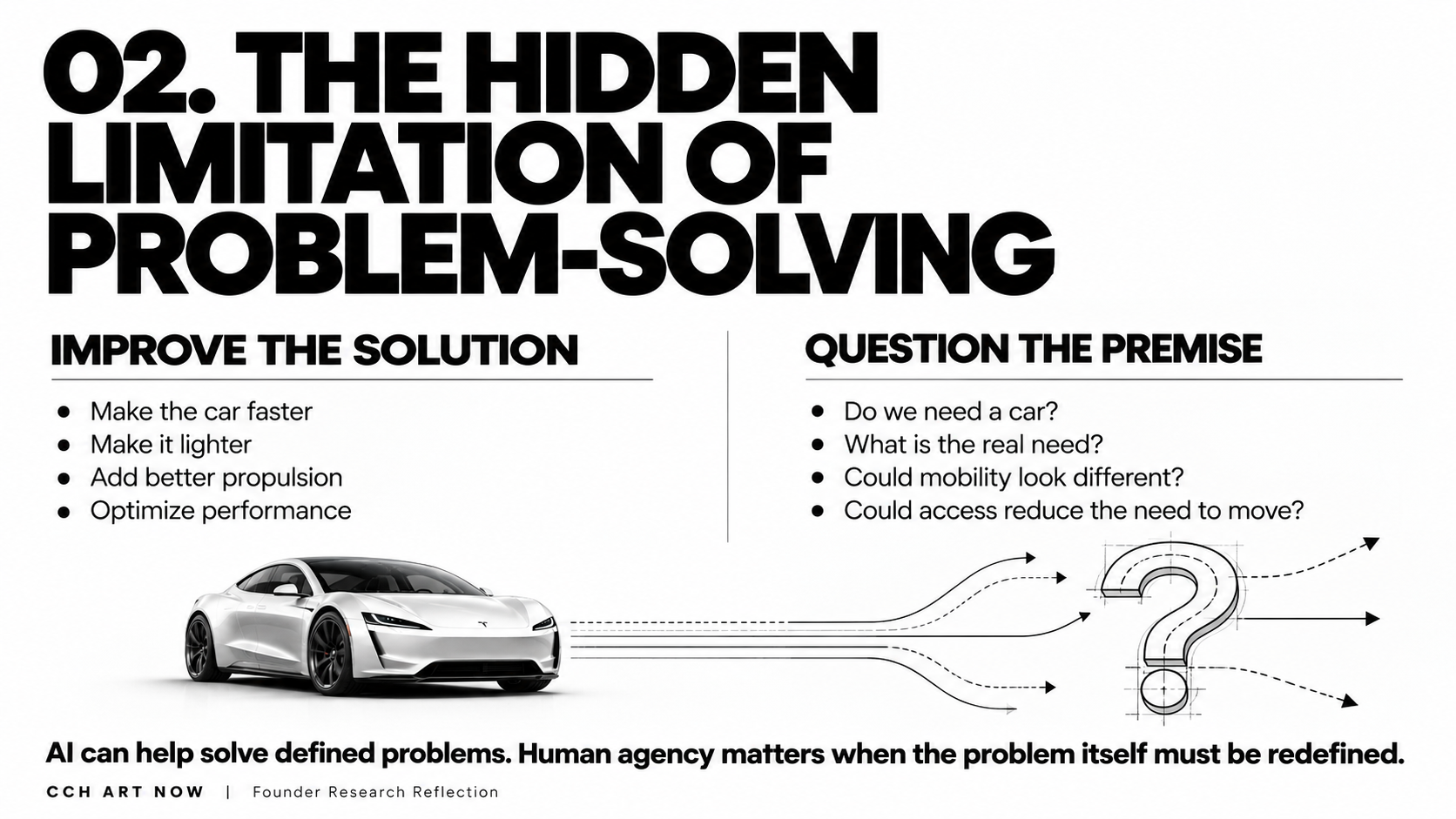
If the task is to build a faster car, students may investigate aerodynamics, propulsion, materials, and energy efficiency.
But what happens when a child asks whether transportation requires a car at all?
The original problem changes.
This is the difference between improving an existing solution and questioning the assumptions that produced it.
First-principles thinking invites us to examine the underlying needs, mechanisms, and constraints before accepting familiar solutions.
And in an age when artificial intelligence can rapidly generate answers, models, designs, and technical alternatives, the human capacity to question the original premise may become increasingly significant.
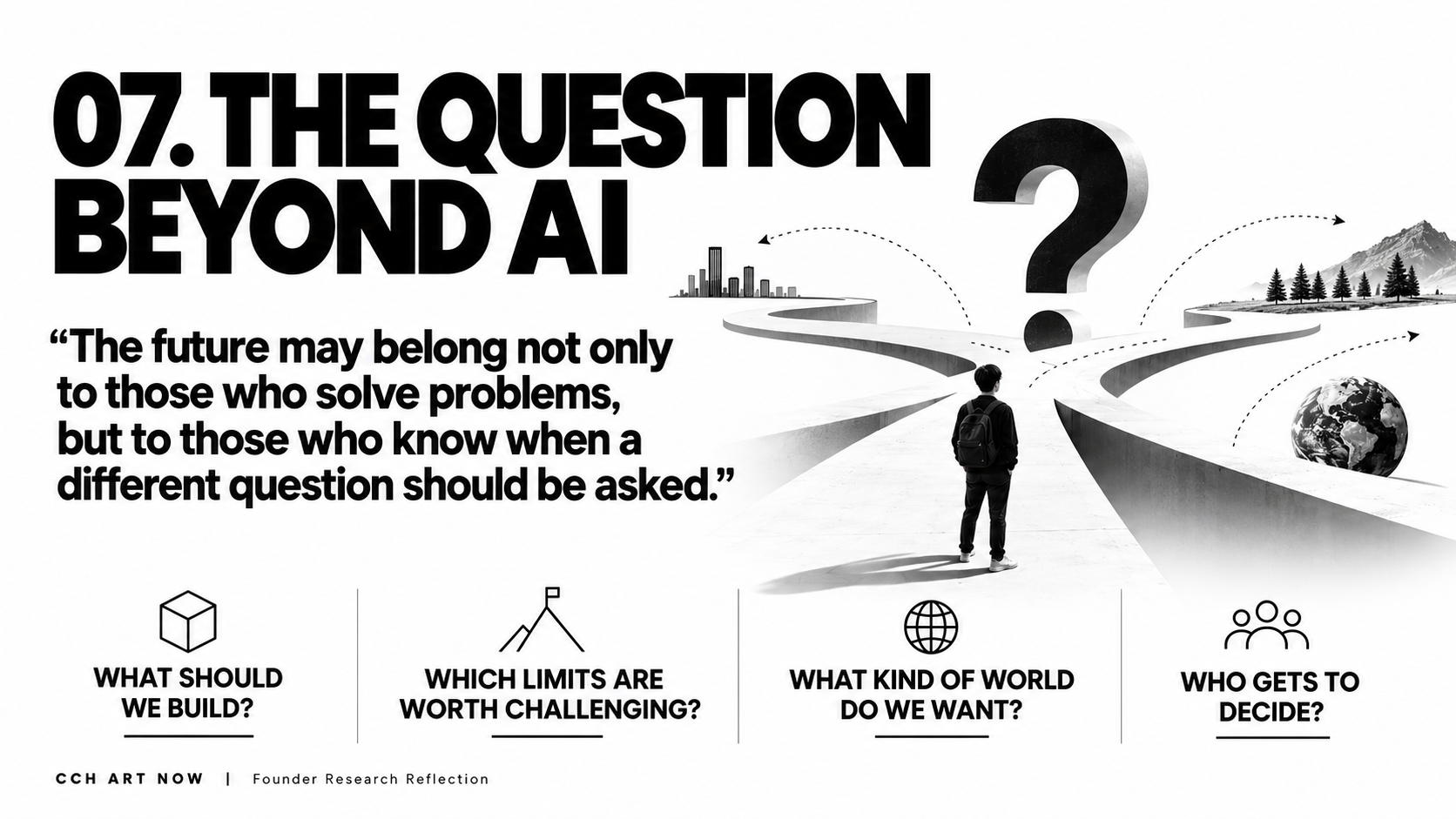
The future may belong not only to those who solve problems efficiently, but also to those who recognise when a different problem should be asked.
03. What Happens When Children Are Allowed to Imagine Before They Know the Rules?
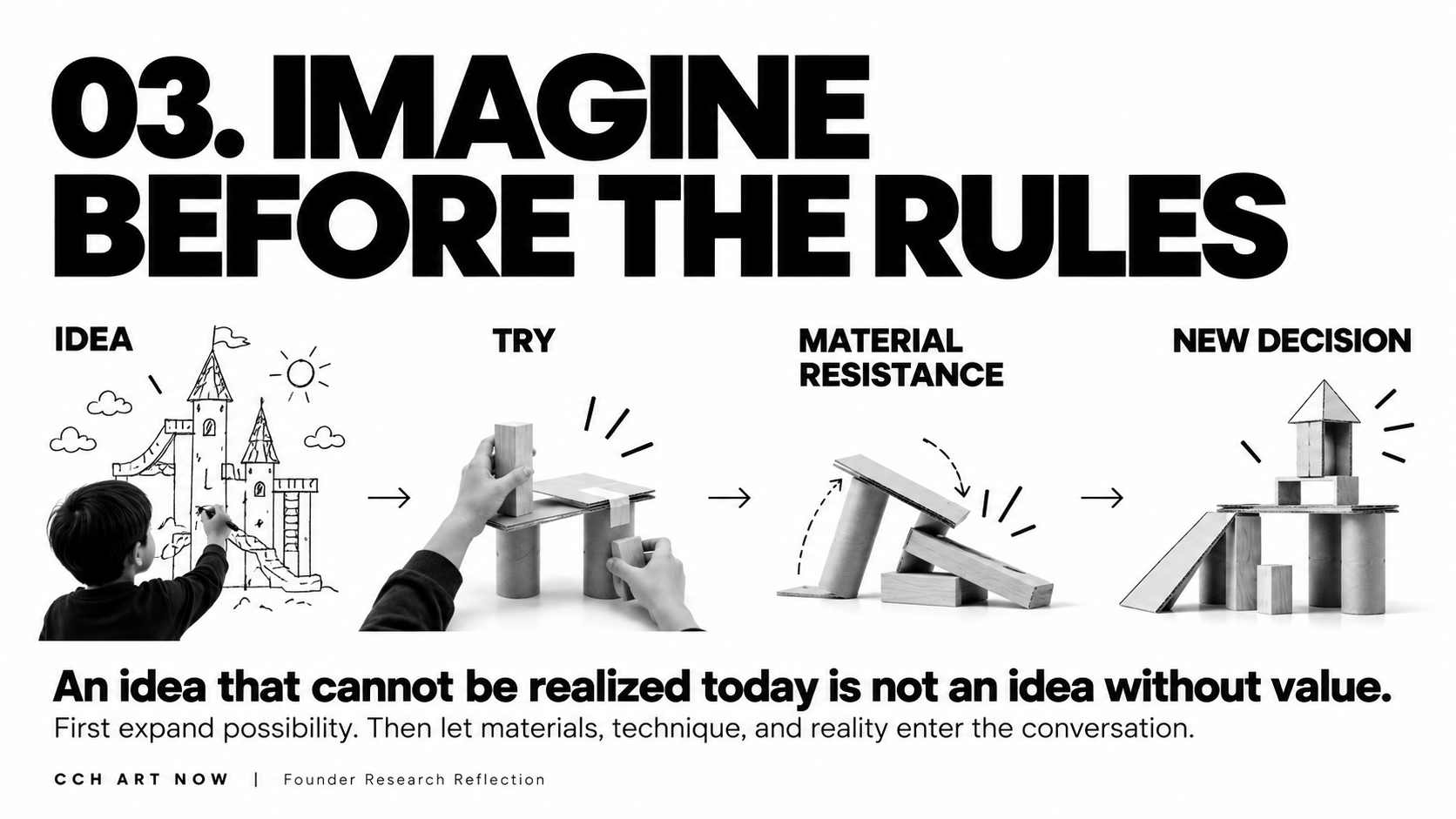
In my educational practice, I often encourage children to explore an idea before becoming overly concerned with its physical limitations.
A child might imagine a structure that appears impossible to construct.
My first response is not necessarily to explain why it cannot work.
Instead, I allow the child to explore the possibility.
What does the child want to create? What materials might support that idea? What happens when those materials are manipulated?
Eventually, physical resistance enters the process.
A structure collapses. Two surfaces refuse to bond. A material bends, breaks, or behaves differently than expected.
At that moment, the material provides information.
I may introduce a few technical possibilities: another connection method, a different structural support, or an alternative material.
Then I return the decision to the child.
The child experiments again, evaluates the outcome, and chooses what to do next.
This process is flexible and iterative. Technical guidance enters when useful, but the child's ownership of the exploration remains central.
Sometimes the imagined structure cannot be realised with the available resources.
That does not necessarily end the inquiry.
An unfinished idea can remain a possibility to revisit when knowledge, materials, or technology develop.
An idea that cannot be realised today does not automatically become an idea without value.
04. The Body Often Reveals What Language Cannot Yet Explain
One of the most important observations from my years of teaching is that young children do not always have the language to describe their thinking.
Their actions can provide another window into the process.
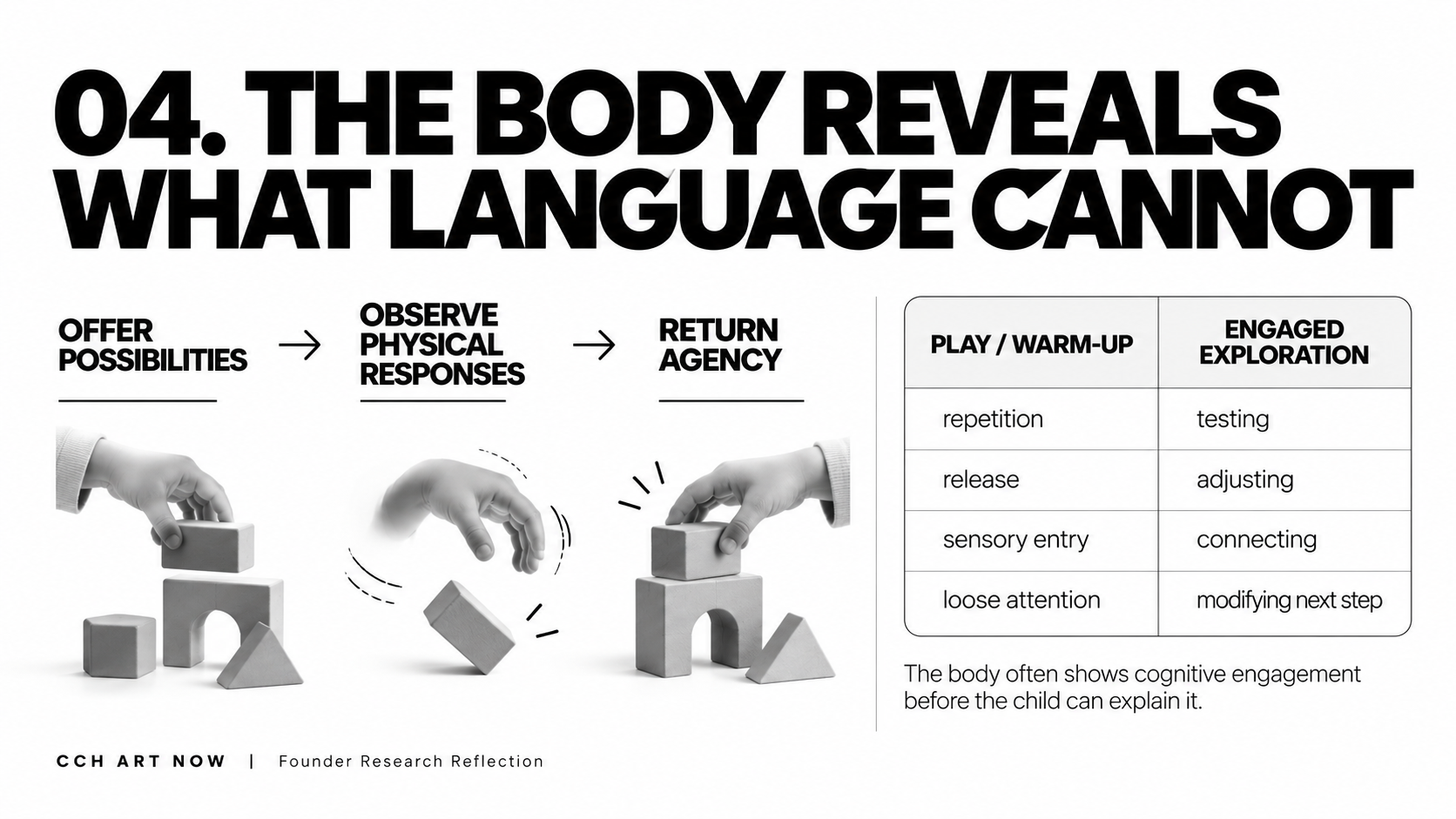
A child may initially handle materials playfully, repeatedly dropping, throwing, or manipulating objects without an obvious construction goal.
Play itself is valuable. It allows children to relax, discover sensory properties, and enter an environment without the immediate pressure to perform.
At other moments, their actions begin to develop a different pattern.
They might twist a cardboard box, connect it to another structure, test an attachment, examine the result, and modify the next attempt.
The difference may appear in the continuity of their actions: one experiment begins to inform another.
As an educator, I observe these shifts closely.
When a child needs a new entry point, I may offer three concrete technical options rather than ask the child to explain what they are feeling or thinking.
A, B, or C.
The child can choose, test, combine, modify, or reject those possibilities.
Sometimes a simple change in physical action is enough to restart the exploration.
This approach resonates with ideas from embodied cognition, which examine the relationship between bodily activity, environmental interaction, and thinking.
It also suggests an important distinction: observable actions offer clues about cognitive engagement, although they do not provide direct access to a child's internal thoughts.
The educator's responsibility is to interpret those clues carefully, introduce possibilities when needed, and progressively return agency to the learner.
05. From Waiting for Instructions to Initiating Exploration
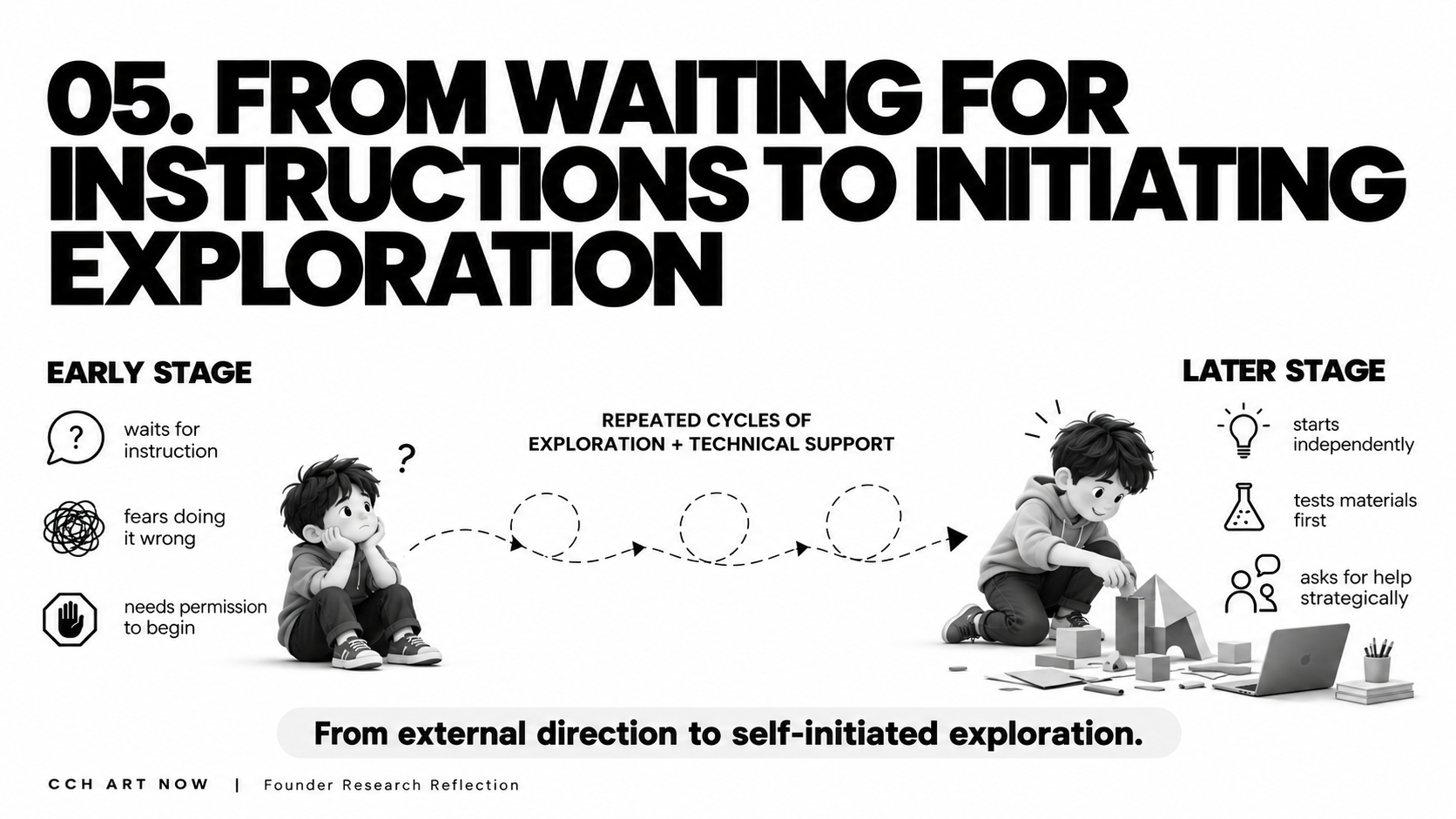
Across approximately two years of working with one child, I observed a meaningful change in learning behaviour.
Initially, the child approached the studio cautiously.
Like many children accustomed to structured instruction, the child waited for guidance, watched the teacher, and sought reassurance before acting.
These behaviours have understandable origins. Following instructions is important when learning rules, developing safety awareness, and acquiring unfamiliar skills.
But learning also requires opportunities to act beyond instructions.
Over time, through repeated experiences of material exploration, technical support, and independent decision-making, the child's behaviour changed.
The child gradually became more comfortable initiating projects without waiting for directions.
Rather than immediately asking what to do, the child began entering the workspace, examining possibilities, experimenting independently, and seeking assistance when it became useful.
The most meaningful development was not simply the ability to work alone.
It was the emerging ability to distinguish between moments that required independent exploration and moments when external expertise could help.
This reflects capacities associated with self-initiation, self-regulation, and adaptive help-seeking.
These observations are drawn from educational practice. A rigorous evaluation would be needed to distinguish the effects of the method from maturation and other influences.
Nevertheless, the longitudinal change presents an important research direction for CCH ART NOW:
How might sustained, material-based creative practice support the development of self-directed exploration and independent decision-making?
06. From Artistic Practice to Human Capability Development
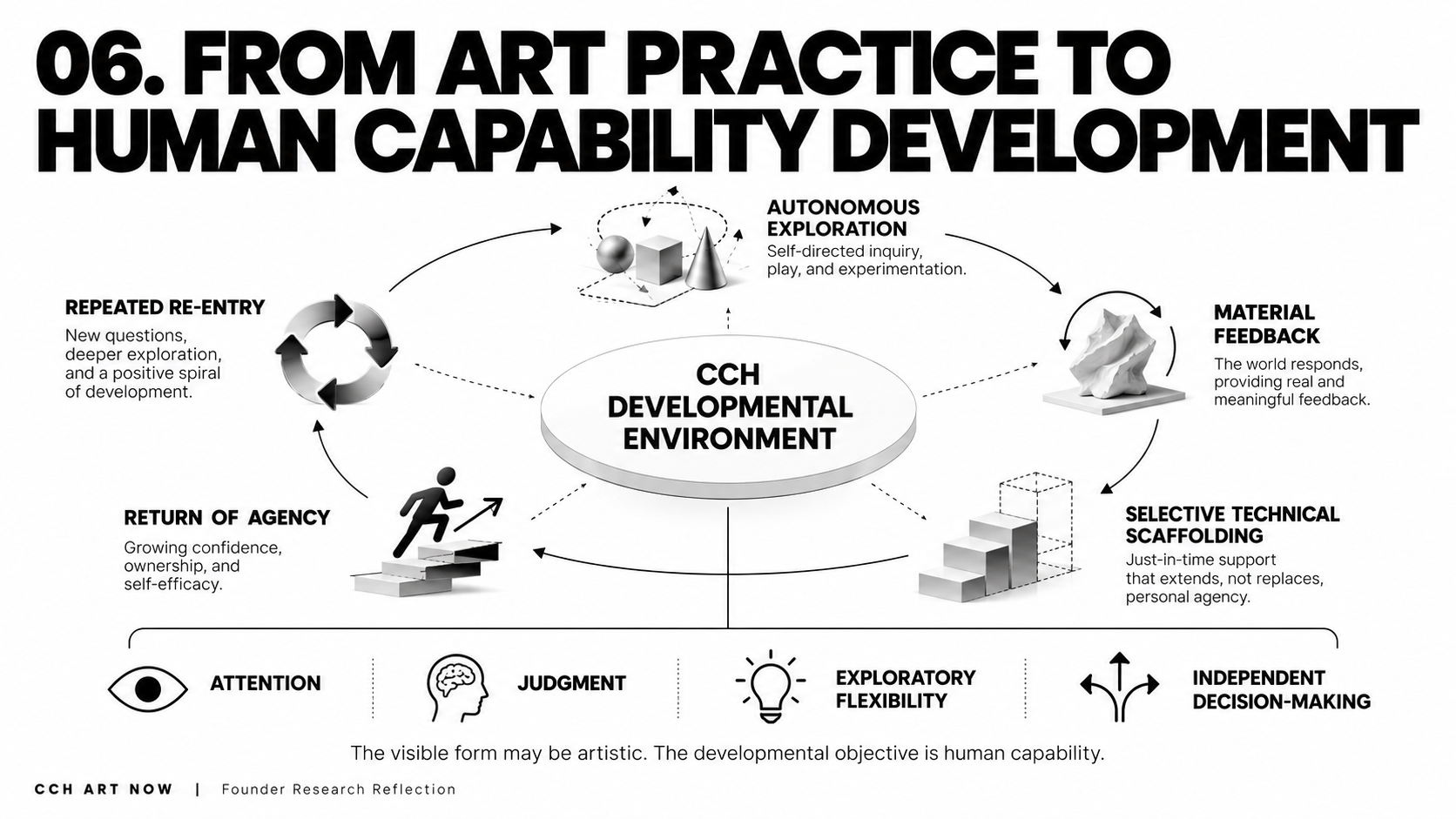
CCH ART NOW uses painting, sculpture, construction, and material experimentation as developmental environments.
The visible products are artistic.
The underlying educational questions extend beyond artistic performance.
What happens when a learner encounters uncertainty?
How does attention change when an unfamiliar material resists an intended action?
When should an educator introduce technical knowledge?
When should the educator withdraw?
How does a learner progress from relying on externally supplied options to generating alternatives independently?
These questions inform the continuing development of the CCH Protocol.
Its working educational approach brings together autonomous exploration, material feedback, selective technical scaffolding, and the return of decision-making authority to the learner.
The objective is to examine and support capacities such as sustained attention, cognitive flexibility, exploratory behaviour, and independent judgment.
These are research aims and educational design principles that require continued documentation and validation.
Importantly, the approach does not treat the teacher's expertise as unnecessary.
Expertise becomes a resource that expands the learner's available choices.
The long-term aspiration is that children progressively become capable of generating and evaluating possibilities without needing an adult to define every next step.
07. The Question Beyond Artificial Intelligence
Tesla's flying Roadster illustrates the extraordinary possibilities that emerge when engineers challenge established technological categories.
But the more consequential question may lie beyond the machine itself.
As AI systems become increasingly capable of generating designs, evaluating technical solutions, and accelerating research, human beings will face new questions about the purposes of innovation.
What should we build?
Which limitations are worth challenging?
What kind of world do we want technological progress to create?
And who gets to make those decisions?
These are questions of human agency, judgment, and values.
A child experimenting with cardboard is not developing a flying vehicle. Nor does an imaginative studio exercise automatically lead to future technological breakthroughs.
But the underlying educational opportunity deserves attention.
When children have opportunities to initiate ideas, experiment with constraints, access expertise, and retain ownership of decisions, they practice ways of engaging with uncertainty.
We can study whether those experiences contribute to capabilities that remain useful beyond the studio.
That is where I see the future potential of CCH ART NOW.
I cannot tell children what technologies they will invent, what challenges they will encounter, or which decisions their generation will face.
I can create an environment in which they are encouraged to imagine, investigate, act, revise, and choose.
Because when a car finally learns to fly, the most important human contribution may still be the capacity to ask:
Why did we assume we needed a car in the first place?
CCH ART NOW explores human attention, independent judgment, and cognitive resilience through material-based creative practice.
Reclaiming Human Attention in the Age of AI